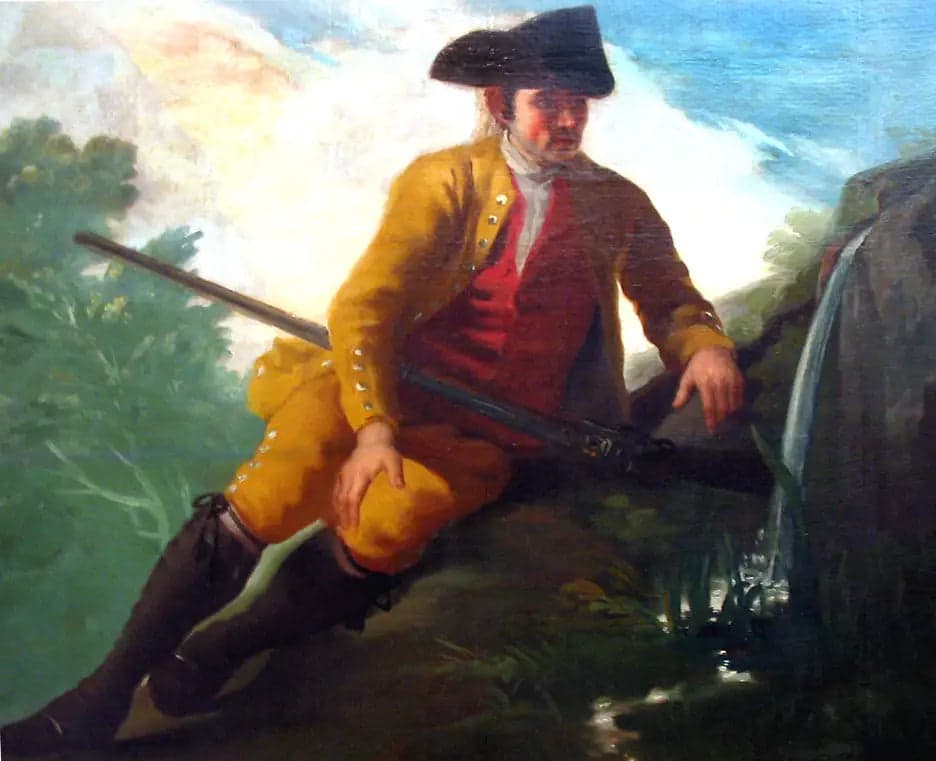
Hunter at a Spring
- Original dimensions
- 131 x 130 cm
- Museum
- Prado Museum
- Year
- 1786
Scene depicted
The painting "Hunter at a Spring" depicts a hunter at rest, frozen in a moment of introspection. Surrounded by lush vegetation, he seems suspended in time, listening to the murmur of the water and the call of the elements. The contrast between man and nature is palpable, creating an atmosphere of deep contemplation. The scene invites the viewer to explore themes of solitude and connection with the environment.
Historical context
Created in the heart of Madrid, the painting "Hunter at a Spring" is set in a time rich with artistic and political upheavals, the 18th century. Evolving under the romantic movement, this canvas highlights Goya's obsession with man in the face of nature. Currently, this painting is preserved in the timeless setting of the Prado Museum, which houses jewels of European painting.
Place in the artist's career
This painting marks a crucial phase in Goya's career, where he begins to merge realism and romantic elements. Alongside other works such as "The Maids of Honor" and "The Naked Maja," Goya asserts himself as a master in transposing human emotions onto the canvas , making "Hunter at a Spring" a milestone in his quest for artistic truth.
Anecdote
Francisco de Goya once stated: "Art is the expression of my deepest emotions." It was during a morning walk by a sparkling spring that he found inspiration for this masterpiece , capturing both the solitude and beauty of a hunter in communion with nature. The painting thus evokes an intimate relationship between man and the environment that surrounds him.