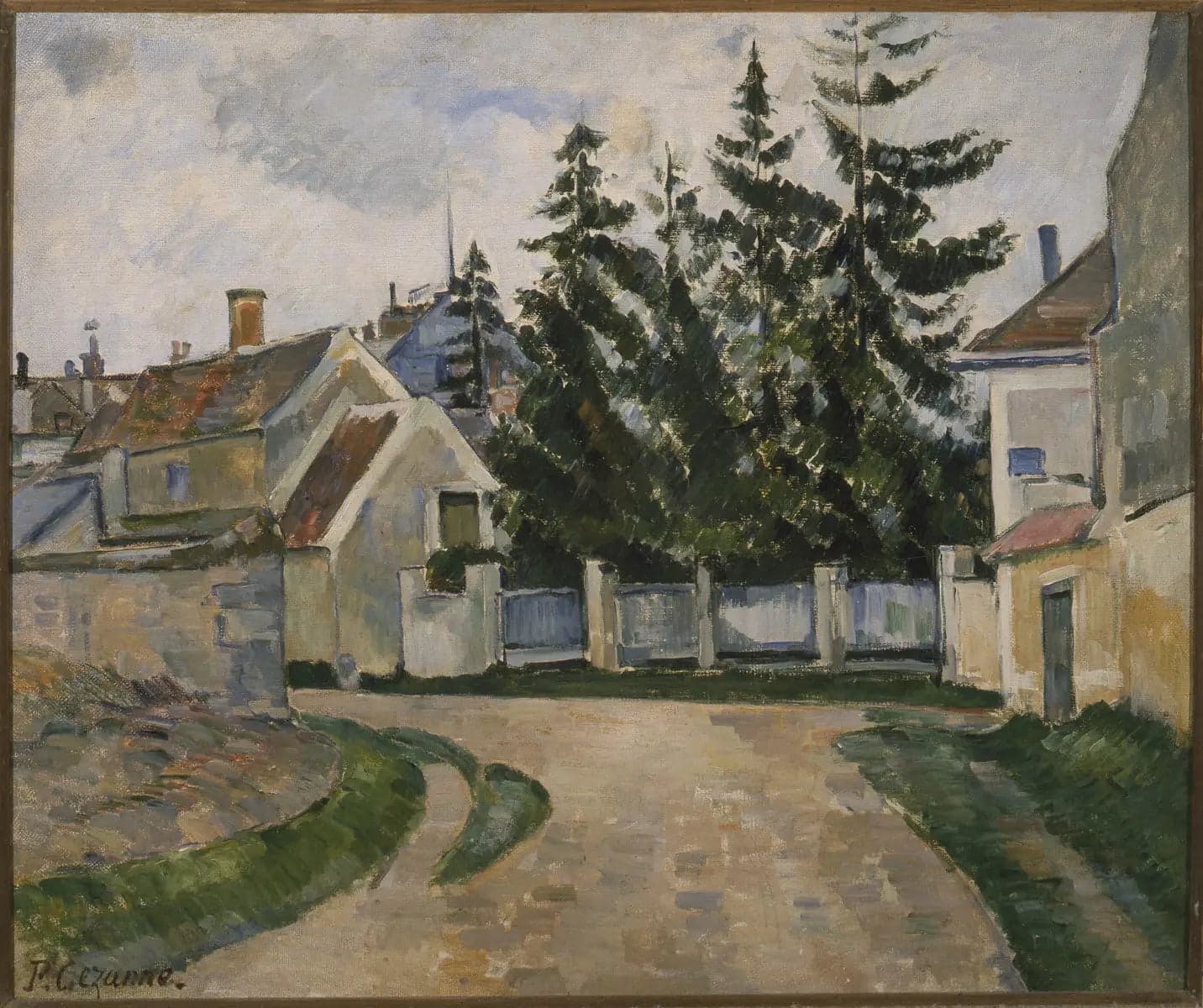
Houses and Pine Trees
- Original dimensions
- 53 x 46 cm
- Museum
- Kreeger Museum
- Year
- 1881
Scene depicted
This iconic painting immerses us in a peaceful landscape, where agricultural houses blend with lush pines. Cézanne, an expert in composition, plays with shapes and colors. Each element, whether trees or architecture, stands with strength and softness at the same time. Light filters through the foliage, creating soft shadows that accentuate the tranquility of this bucolic scene.
Historical context
Created in 1881, this remarkable painting finds its origin in Aix-en-Provence, an iconic city in the south of France. This painting, rooted in the post-impressionist movement, reflects the richness of the encounter between nature and architecture, a slow evolution of an artist in search of light and form. Currently exhibited at the Kreeger Museum in Washington D.C., this painting, with its generous dimensions of 53 x 46 cm, invites one to observe the beauty of the Provençal landscapes through Cézanne's unique perspective.
Place in the artist's career
Situated at a key moment in his career, this painting heralds Cézanne's maturity as an artist. As he oscillates between the impressionist period and precursor of cubism , Maisons et sapins compares to other significant paintings , such as "The Large Bathers" and "Mont Sainte-Victoire", revealing his relentless quest for graphic and emotional perfection.
Anecdote
“Nature is my only master.” Paul Cézanne loved to immerse himself in the landscapes that surrounded him. It was on a spring morning, in the tranquility of Aix, that he felt the impulse to bring this canvas to life. The majestic pines and stone houses emerging from the relief created an atmosphere imbued with serenity, a scene that the painter captured with vibrant emotion, becoming a true pictorial work in its own right.