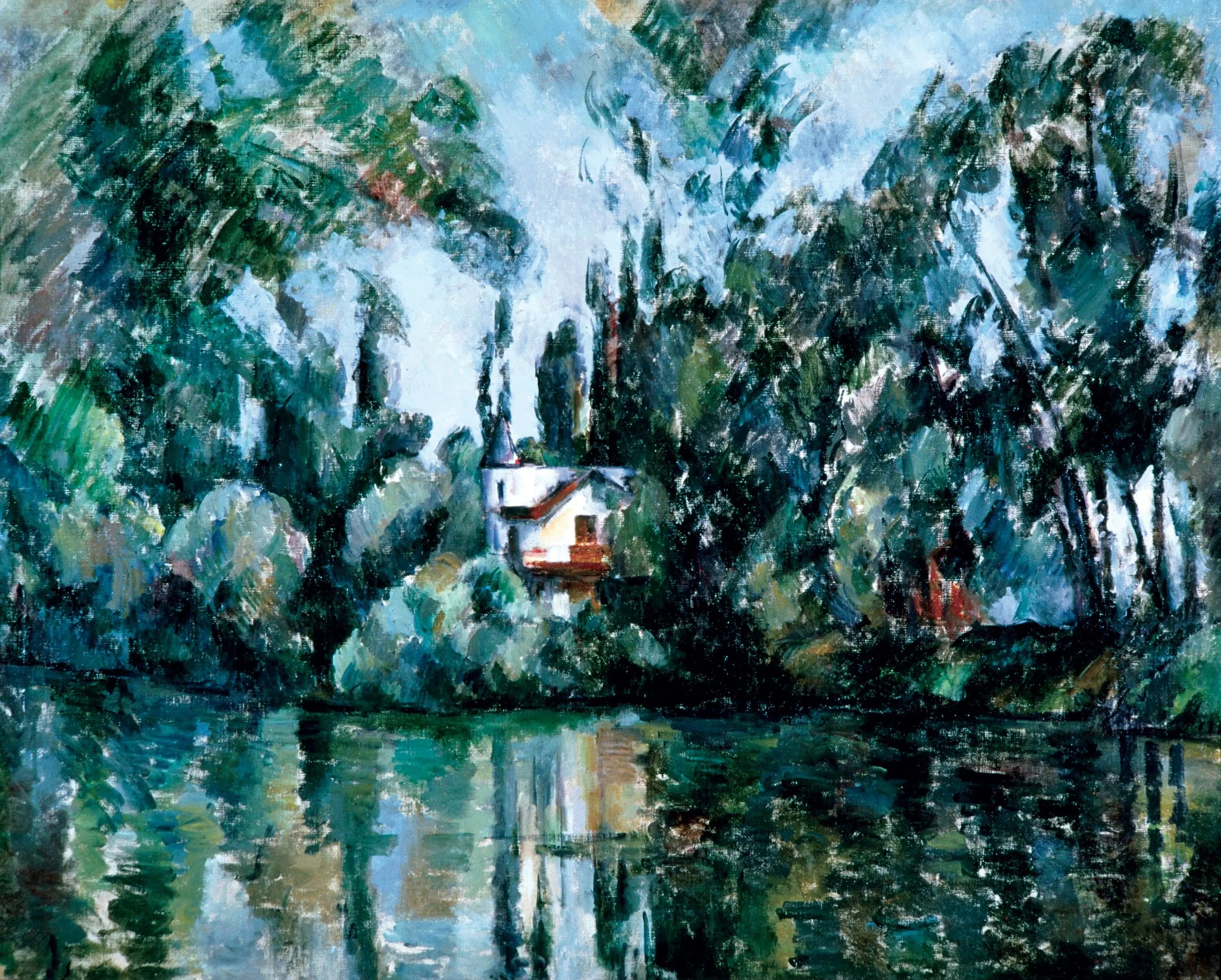
House on the Banks of the Marne
- Original dimensions
- 91 x 73 cm
- Museum
- Maison-Blanche
- Year
- 1888
Scene depicted
The scene painted by Cézanne transports us to the banks of the Marne, where subtle plays of light dance on the lively water. This painting evokes a vibrant tranquility, a harmony between the modest architecture of the house and the surrounding lush nature. The composition, both simple and masterful, highlights the transient beauty of this landscape that seems to cradle both viewer and artist in a gentle embrace.
Historical context
Created in 1888, this painting bears the same name and illustrates a key moment in the history of art. In the soft light of the Parisian region, at the confluence of nature and art, Paul Cézanne captures the essence of the scene in an innovative impressionist style. Currently exhibited at the Maison-Blanche museum, this canvas testifies to the emotional power of plein air painting and the early steps towards post-impressionism .
Place in the artist's career
This canvas , much more than a painting , marks a crucial milestone in Cézanne's career, a peak of his pictorial technique. It appears as an echo to other works such as “The Large Bathers” and “Mont Sainte-Victoire,” revealing a strategic evolution towards a controlled and expressive abstraction that will mark the renaissance of modern art.
Anecdote
“Nature is my true muse,” Cézanne might have said when recalling his inspiration for this masterpiece . It was on a gentle spring morning, surrounded by the murmur of water and the song of birds, that he absorbed the changing nuances of light on the living canvas that the Marne offers, an emotion conveyed by the canvas .