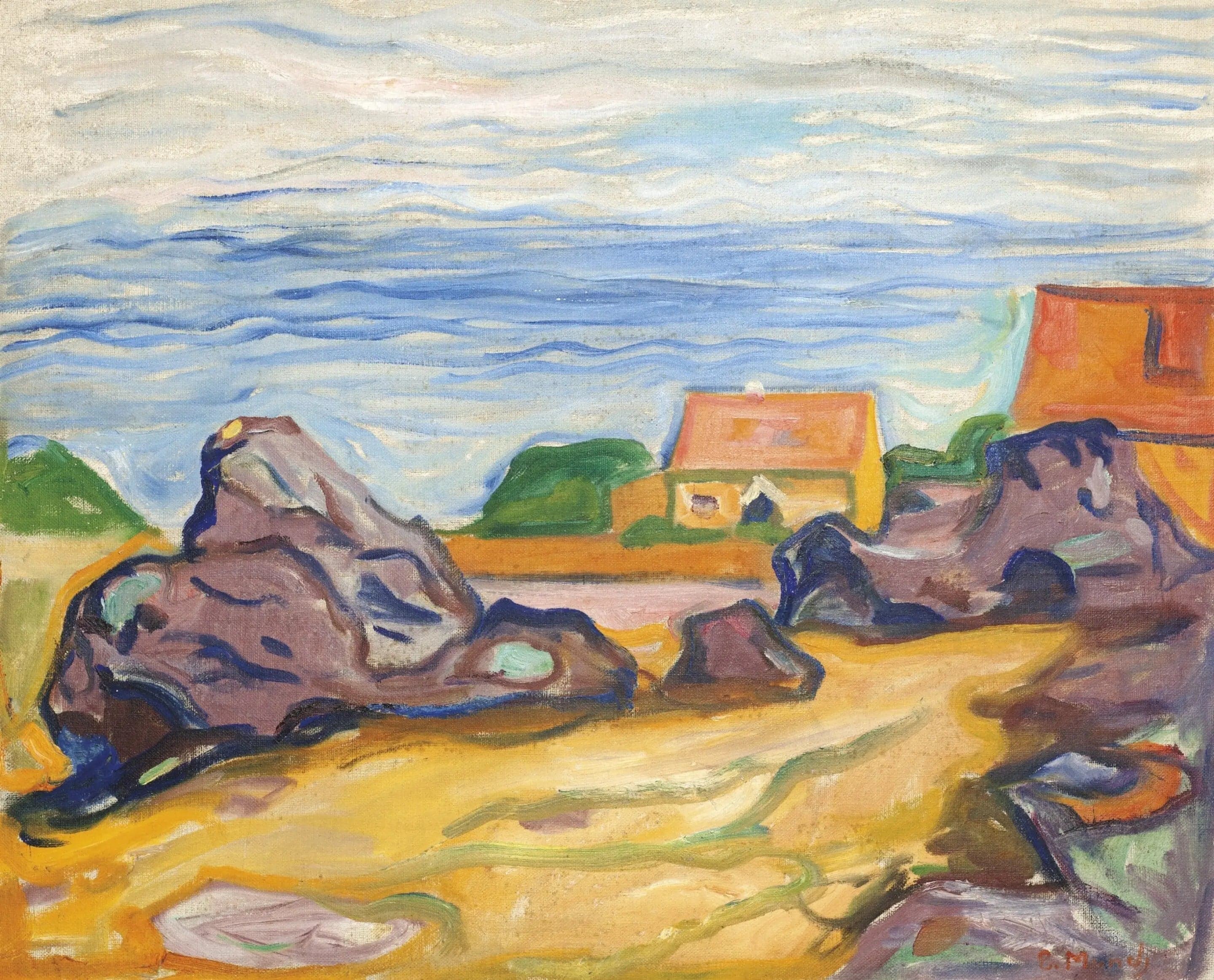
house in Borre
- Original dimensions
- 80.6 x 65.7 cm
- Museum
- Not specified
- Year
- 1904
Scene depicted
The painting "maison à Borre" depicts a tranquil house surrounded by vibrant nature, inviting peaceful contemplation. The lines evoke a refuge, a shelter from the tumult of the world, while highlighting the fragile harmony that unites humanity with its environment. With shades of greens and deep blues, the composition seems to breathe the fresh air of this Norwegian land, full of mystery.
Historical context
Created in 1904, the painting "maison à Borre" is an iconic representation of the famous Norwegian artist, Edvard Munch . Located in the picturesque region of Borre, this canvas bears witness to the Symbolist movement, where the artist merges emotion and nature. The painting is a window into an era marked by tumultuous changes, of which Munch was a privileged witness. Although the hosting museum is not specified, the dimensions of this work are 80.6 x 65.7 cm.
Place in the artist's career
This painting is situated at a key moment in Munch's career, illustrating the transition between his darker works and the bright representations of nature. "The Scream" and "The Dance of Life" serve as points of comparison, showing a notable evolution in his technical and emotional approach. In "maison à Borre," tranquility replaces anguish, while foreshadowing later explorations of light and everyday life.
Anecdote
Edvard Munch often stated that art was an expression of his inner ghosts. One April morning, wandering in the morning mist of Borre, he captured the soul of the landscape with a rare intensity. "Nature always inspires me, like a melody that resonates in the heart," he might have whispered, thus revealing the essence of his painting born from the simple and haunting beauty of his surroundings.