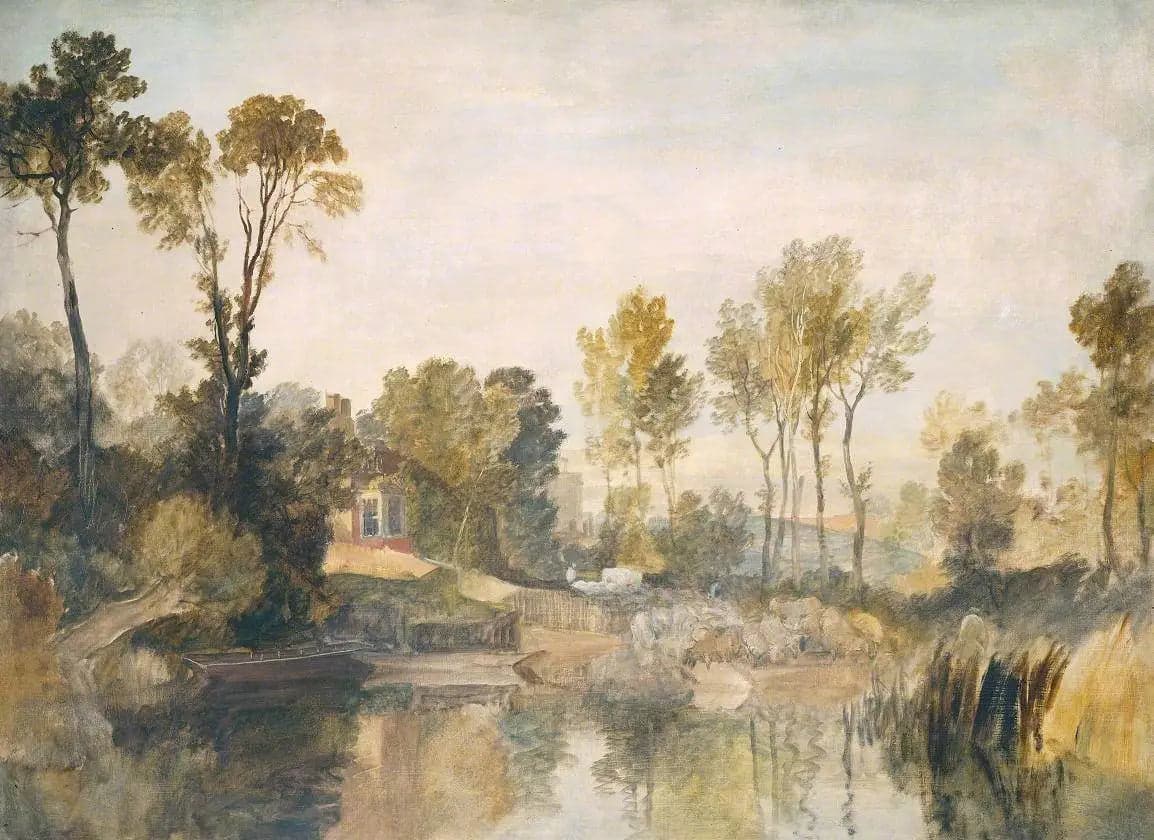
House beside the River, with Trees and Sheep
- Original dimensions
- 90.5 x 116.5 cm
- Museum
- Tate
- Year
- 1806
Scene depicted
This painting depicts a peaceful rural scene where a house, flanked by majestic trees, unfolds by the riverbank. Sheep graze quietly, adding a touch of life to this idyllic composition. The water, reflecting the sky, weaves a harmonious link between the natural and the architectural, highlighting the tranquility of British rural life.
Historical context
Created in 1806, this painting is the result of a brilliant creative mind at the heart of the Romantic era. This painting, currently on display at the Tate , evokes the serene beauty of British landscapes in the early 19th century. Turner, a pioneer in the use of light and color, remains an essential figure in English art, his work resonating with echoes of nature.
Place in the artist's career
House beside the River, with Trees and Sheep represents a turning point in Turner’s artistic progression. At this stage, he was already combining his neoclassical influences with more contemporary techniques, as evidenced by paintings such as The Fighting Temeraire and Rain, Steam and Speed. This painting is situated at the height of his maturity period, revealing a masterful command of color and light.
Anecdote
“Light is the heart of painting,” said Turner, guiding his gaze through the contours of familiar landscapes. Inspired by a tranquil morning by a river, he captured the very essence of nature, both tiny and vast, by composing this vibrant work of art .