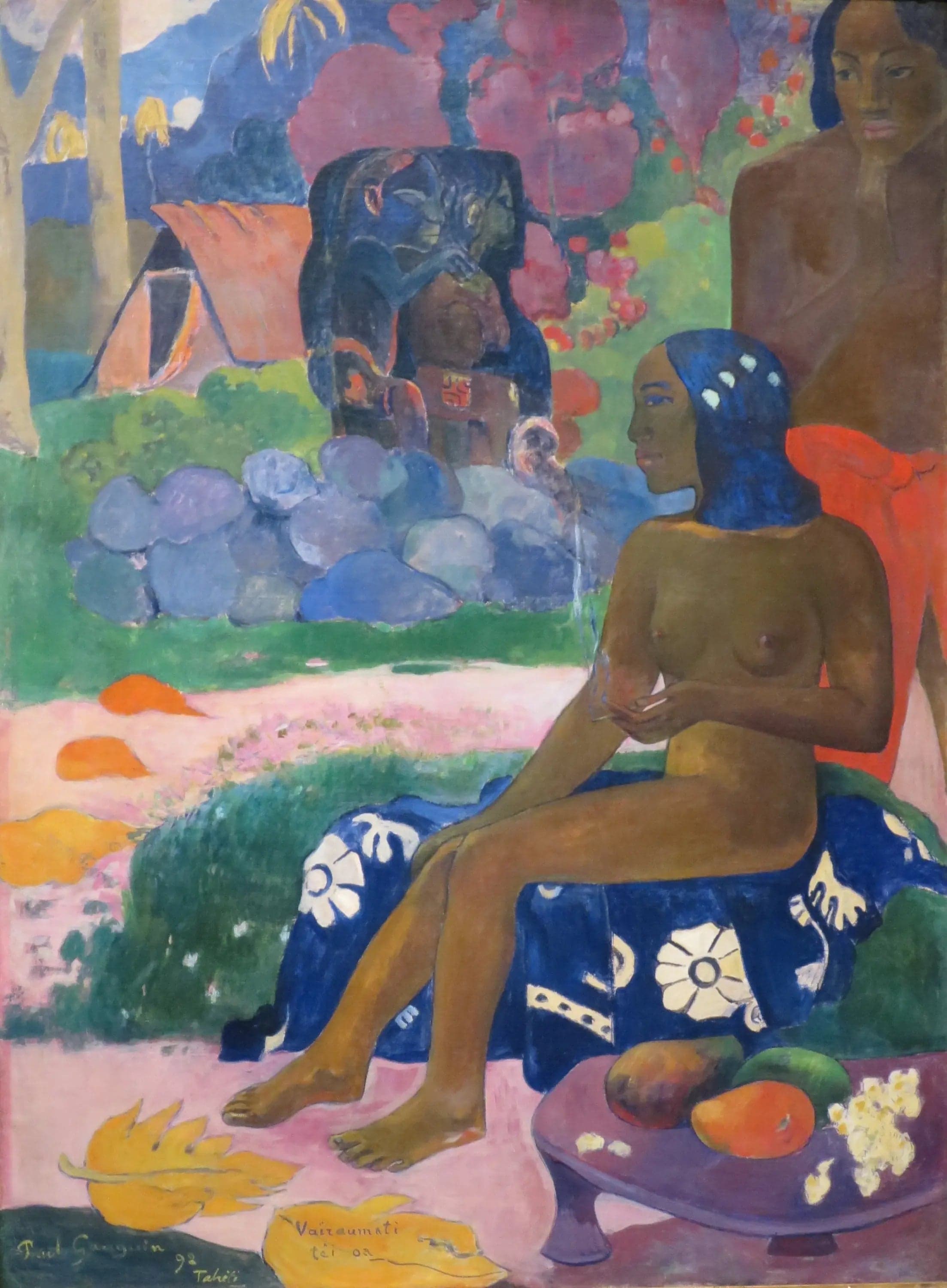
His name is Vairaumati
- Original dimensions
- 68 x 91 cm
- Museum
- Pushkin Museum of Fine Arts
- Year
- 1892
Scene depicted
In this painting , the female figure, majestic and serene, is surrounded by lush flora. It is a celebration of life, mystery, and the very essence of Tahitian sensuality. The tender gaze of Vairaumati invites us to feel peace and harmony, embodying the vibrant breath of the Pacific Islands.
Historical context
Painted in 1892, this iconic work beautifully blends with the enchanting atmosphere of Tahiti, a fertile region for Gauguin's imagination. This painting , now housed in the Pushkin Museum of Fine Arts , is a masterful representation of its time, rooted in the post-impressionist movement that explores emotions through color and form.
Place in the artist's career
His Name is Vairaumati is a pivotal moment in Gauguin's career, representing his shift towards a bolder synthesis of colors and forms. At this time, he explores subjectivity, as evidenced by his earlier paintings such as Vision of the Ferment and The Yellow Christ, marking a decisive stylistic turning point.
Anecdote
“Art does not remain silent, it sings the hidden beauty of the world,” Gauguin might have said upon seeing the inspiration that bursts forth from the Tahitian landscapes. He captured a bright morning as nature gently awakens. The painting , vibrant and full of life, testifies to this fleeting communion between the artist and his environment.