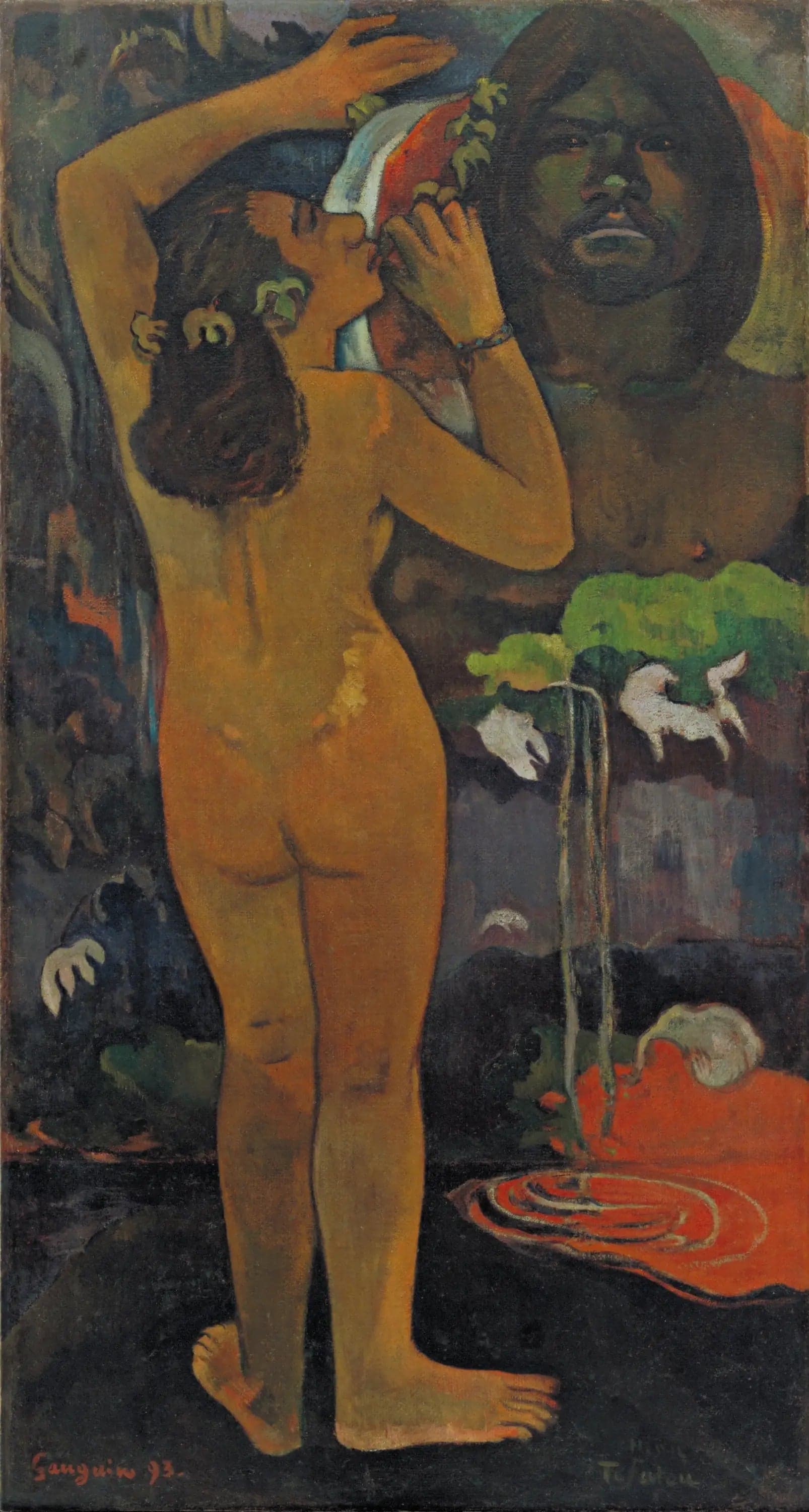
Hina Tefatou
- Original dimensions
- 62.2 x 114.3 cm
- Museum
- Museum of Modern Art
- Year
- 1893
Scene depicted
This painting reveals a young Polynesian woman, Hina, majestically surrounded by lush nature. She is both the central figure and a symbol of Tahitian culture, embodying beauty and serenity. Gauguin, with his vibrant palette, succeeds in evoking the peaceful spirit of island life while confronting us with the richness of its traditions.
Historical context
Created in 1893, during a trip to Polynesia, this painting is emblematic of the post-impressionist movement. Gauguin sought to capture the essence of island life in Tahiti, in a context marked by the search for artistic authenticity. Today, the canvas is located at the Museum of Modern Art, a place of worship for art lovers, where it continues to move visitors with its impressive dimensions.
Place in the artist's career
Hina Tefatou represents a pivotal moment in Gauguin's career. He is at this time in his Polynesian period, developing a unique style that resonates with his other works, such as "The Visionary" and "The Witches." This canvas bears witness to his artistic evolution, marked by a quest for spirituality and personal expression.
Anecdote
“I wanted to capture the innocent beauty of these souls. Each brushstroke is a breath of life, a cry of the soul.” These words from Gauguin evoke a morning when, awed by the beauty of the Tahitian landscapes, he picked up his brush to bring his masterpiece , Hina Tefatou, to life.