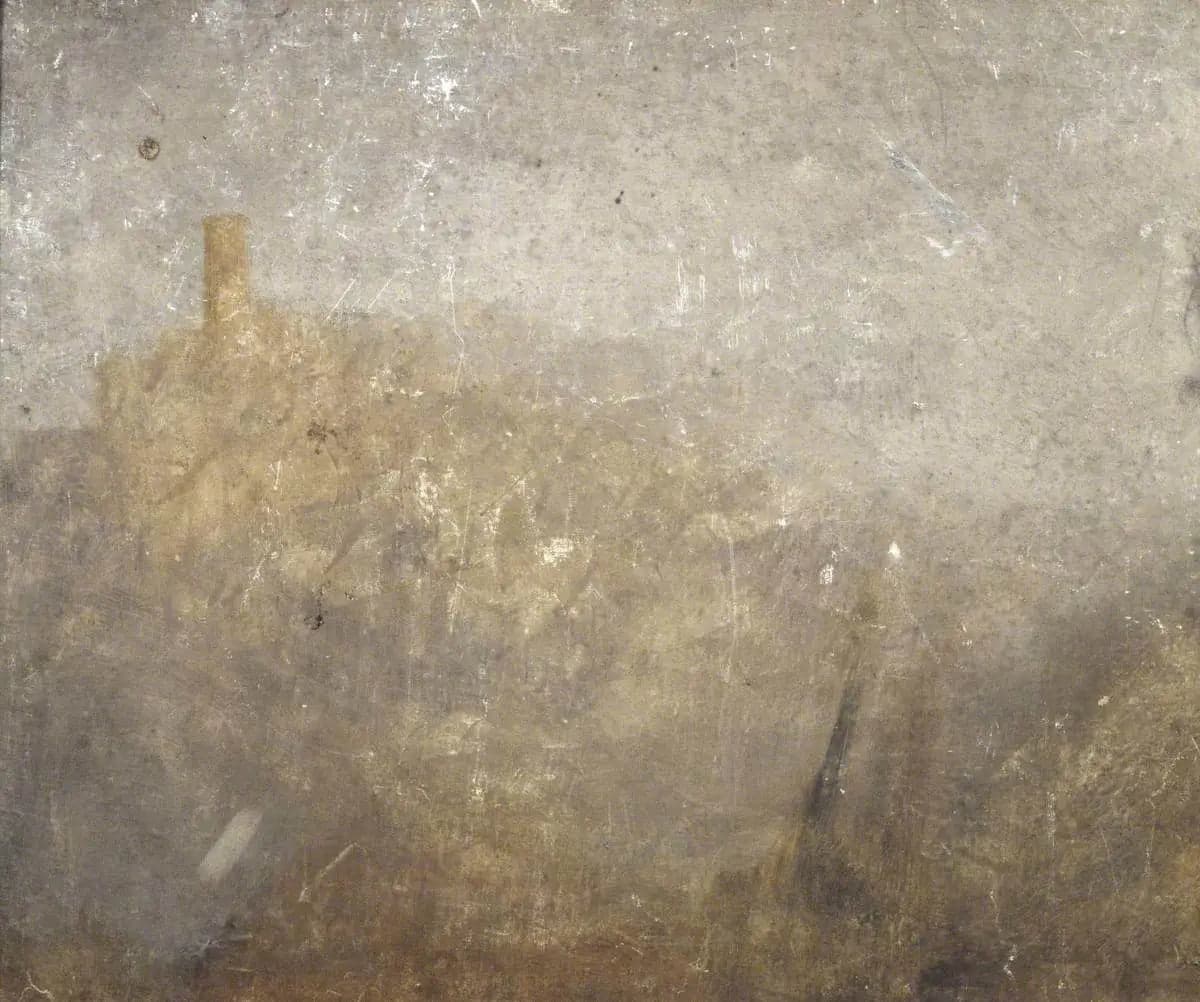
Hilly Landscape with Tower
- Original dimensions
- 42.2 x 52.4 cm
- Museum
- Tate
- Year
- 1828
Scene depicted
In this composition, Turner captures a moment where nature reveals itself in all its splendor. A tower stands proudly atop a hill, overseeing the surrounding landscape. The valleys, caressed by a golden light, seem to vibrate under the breath of a gentle wind. It is a painting that evokes the tranquility and grandeur of nature, a call to contemplation.
Historical context
Painted in 1828, this iconic work by the English master Joseph Mallord William Turner is set against the rich and vibrant backdrop of 19th century England. Turner, a pioneer of the Romantic movement, explores the rolling landscapes that surround him, offering both a personal and universal vision of nature. The painting is currently housed in the collections of the Tate museum in London, where it continues to inspire generations of admirers.
Place in the artist's career
This painting marks an important milestone in Turner’s career, revealing his transition from a classical style to a more free and Romantic exploration of landscapes. Compared to other works such as “The Fighting Temeraire” and “Rain, Steam and Speed,” one observes an evolution where his mastery of light and color unfolds with an ever-increasing intensity. Turner achieves here a remarkable stylistic maturity.
Anecdote
“Nature is the greatest master,” Turner used to say. It was during one of his early morning excursions, among the hills scented by the dew and the melodious song of birds, that he was struck by the beauty of a landscape, this delicate light radiating at the top of a tower. This emotion would become the driving force behind the evocative power of the painting we admire today.