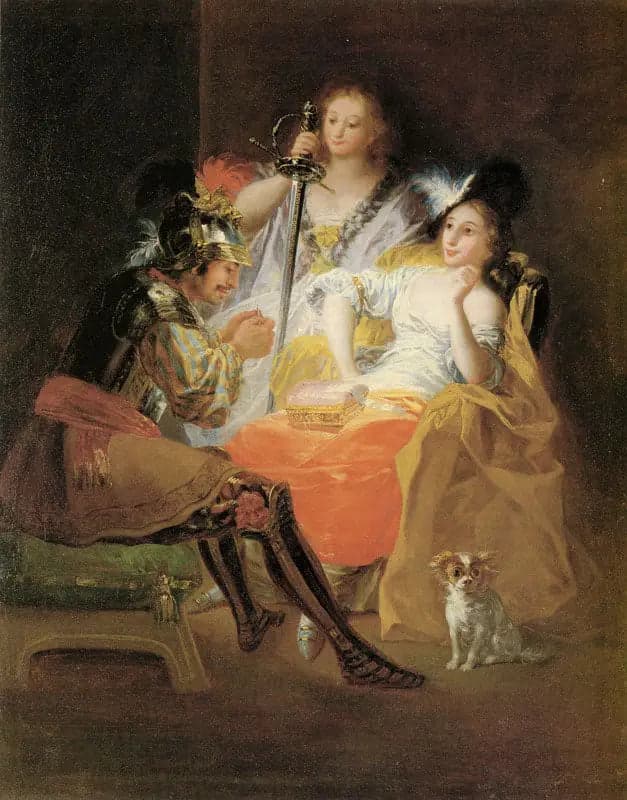
Hercules and Omphale
- Original dimensions
- 61.4 x 81 cm
- Museum
- Not specified
- Year
- 1784
Scene depicted
The painting features a composition rich in emotions, depicting the moment when Hercules, the mythological hero, finds himself grappling with Omphale, the queen of Lydia. The roles reverse during the narration: Hercules, usually so powerful, is portrayed as a servant, while Omphale dominates him with delightful malice. This reversal of roles, skillfully translated onto the canvas , engages us to reflect on notions of strength and vulnerability.
Historical context
Created in the heart of Spain during the romantic movement, Hercule et Omphale by Francisco de Goya stands out for its bold features and innovative use of light and shadow. This painting evokes a fascinating reflection on mythology and the human condition. Its story dates back to the late 18th century, a time when Goya was beginning to shape his unique style, which later propelled him among the great masters of painting. Today, the painting remains anonymous, but the legacy it carries is undeniable, with captivating dimensions of 61.4 x 81 cm that capture every gaze.
Place in the artist's career
Hercule et Omphale is situated at a turning point in Goya's career, marking his ascent to the peak of his artistic genius. Alongside La Maja Desnuda and Les Caprices , this painting reflects a gradual evolution towards a more deeply emotional and symbolic style, showcasing an artist in full creative maturity.
Anecdote
Goya is said to have once said: "True beauty lies in the simplicity of human emotions." Perhaps it is this thought that inspired him at the moment of creating this pictorial work . Imagine a clear morning with the sweet scents of nature, where Goya, contemplating the low light, glimpses in the depths of his mind the drama between Hercules and Omphale, a scene vibrant with passion and power.