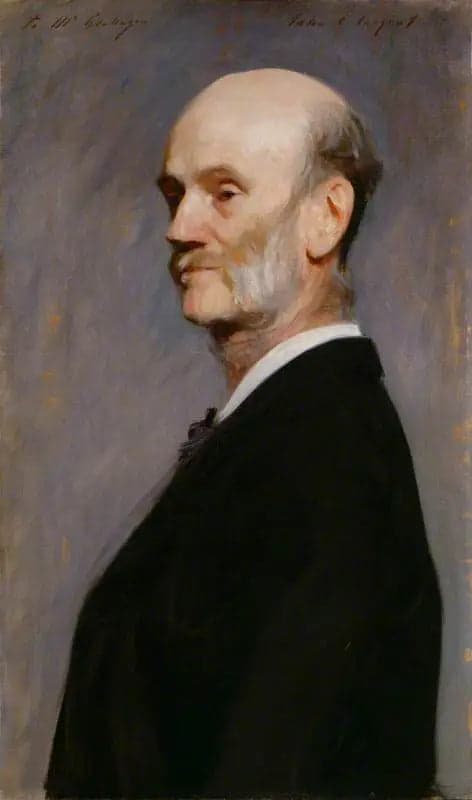
Hercule Brabazon Brabazon
- Original dimensions
- 43.1 x 72.4 cm
- Museum
- National Portrait Gallery
Scene depicted
In this painting, the elegance and timeless charm of Hercule Brabazon shine. Sargent offers us a composition where the model, dressed with a confident stature, seems to emerge from the shadows, immersed in quiet reflection. The light gently caresses the contours of his face, while the background is but a whisper of subtlety, further accentuating Brabazon's captivating presence.
Historical context
Created in 1904, in the heart of London, this remarkable painting skillfully merges the art of portraiture and psychological exploration. John Singer Sargent , an iconic figure of the Impressionist movement, captures not only the appearance of Hercule Brabazon but also the very essence of his soul. This canvas is now housed in the National Portrait Gallery, a sanctuary of art where the stories of faces are told through light and color.
Place in the artist's career
This painting represents a pivotal period in Sargent's career. After successful works like “Madame X” and before reaching the heights of his art with his landscapes, “Hercule Brabazon Brabazon” illustrates his mastery of portraiture. The painting is both a pinnacle of his style and a transition to a more free approach to forms and lights.
Anecdote
“In every face, there is a story to tell.” These words from Sargent resonate with unyielding depth. Imagine him one spring morning, strolling through the lush gardens of Chelsea, capturing glimmers of light that will play on his model's skin. It is then that the inspiration for this masterpiece was born, transforming a simple canvas into a true ode to human personality.