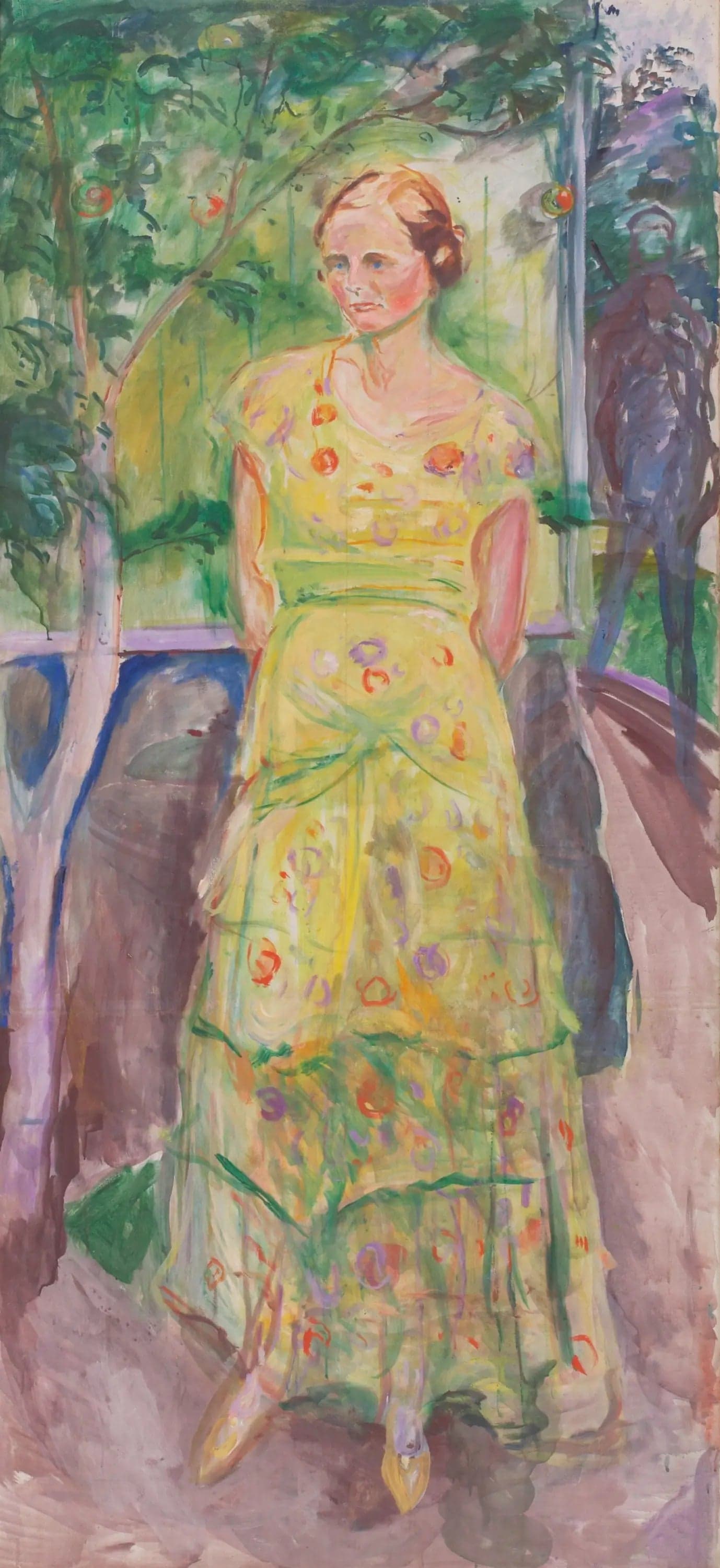
Henriette Olsen
- Original dimensions
- 94.5 x 204.5 cm
- Museum
- Munch Museum
- Year
- 1932
Scene depicted
The canvas “Henriette Olsen” depicts a female silhouette of unforgettable intensity. Emanating psychological depth, the work captures the very essence of womanhood, her gaze revealing muted and complex emotions. Munch, through this painting , explores the subtleties of the human soul, transforming an intimate scene into a universal reflection.
Historical context
Created in 1932 in the vibrant city of Oslo, this painting is emblematic of the expressionist movement, which transformed the artistic landscape of the early 20th century. The canvas is currently housed in the Munch Museum, a sanctuary dedicated to the work of this legendary artist. The canvas, measuring 94.5 x 204.5 cm, is both a testament to its time and a window into the human soul.
Place in the artist's career
This [title of the painting] represents a significant turning point in Munch's career, marking a period of artistic maturity. By juxtaposing it with other works such as “The Attraction” and “The Scream,” one perceives the evolution of his technique and emotional approach, making this pictorial work even more fascinating.
Anecdote
Edvard Munch once declared: “Art is an expression of emotions that cannot be put into words.” In creating this masterpiece , he stood before morning light filtering through a window, inspiring emotion and depth. The painting “Henriette Olsen” is born from a moment suspended in time, where each brushstroke evokes so many feelings.
Major exhibitions
Edvard Munch : portraits