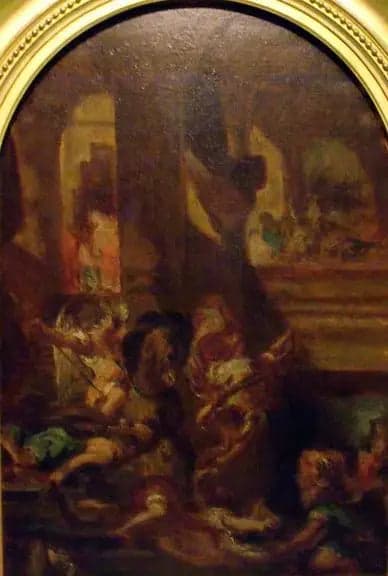
Heliodorus Driven from the Temple
- Original dimensions
- 485 x 751 cm
- Museum
- Saint-Sulpice Church in Paris
- Year
- 1857
Scene depicted
This captivating painting represents the dramatic moment when Héliodore, a plunderer seeking to desecrate the sanctuary, is confronted by a divine force. Between bursts of light and deep shadows, Delacroix makes palpable the tension between the profane and the sacred, inviting us to feel the emotional impact of each movement, each gaze. A work that transcends time, in a vibrant ballet of colors and emotions.
Historical context
This iconic painting, completed in 1857, is a gem of the Romantic movement, brilliantly illustrating spiritual turmoil and human passions. Nestled in the Saint-Sulpice Church in Paris, this canvas forms a lasting connection with its time and place. It embodies the artistic aspirations of a France eager for renewal, highlighting the cultural heritage of a nation in full effervescence.
Place in the artist's career
Héliodore Chased from the Temple represents a captivating turning point in Delacroix's career, marking his ascent to artistic maturity. Following the success of Liberty Leading the People and the melancholy of The Death of Sardanapalus , this painting stands as a masterpiece revealing Delacroix's growing mastery of emotion and storytelling. In parallel, one can compare the palpable atmospheres of this canvas with those of The Virgin's Hunt and Christ in the Garden of Olives, showcasing his incredible technical and expressive progression.
Anecdote
Delacroix, in a moment of introspection, reportedly said: “Art is a silent cry, an emotion captured by colors.” Imagine him, one spring morning, watching shadows play on the cobblestones of Paris, inspiration for his masterpiece emerging as he gazes at the divine light reflecting on the marble of ancient temples. This fleeting moment infused intense life into the painting that is Héliodore Chased from the Temple.