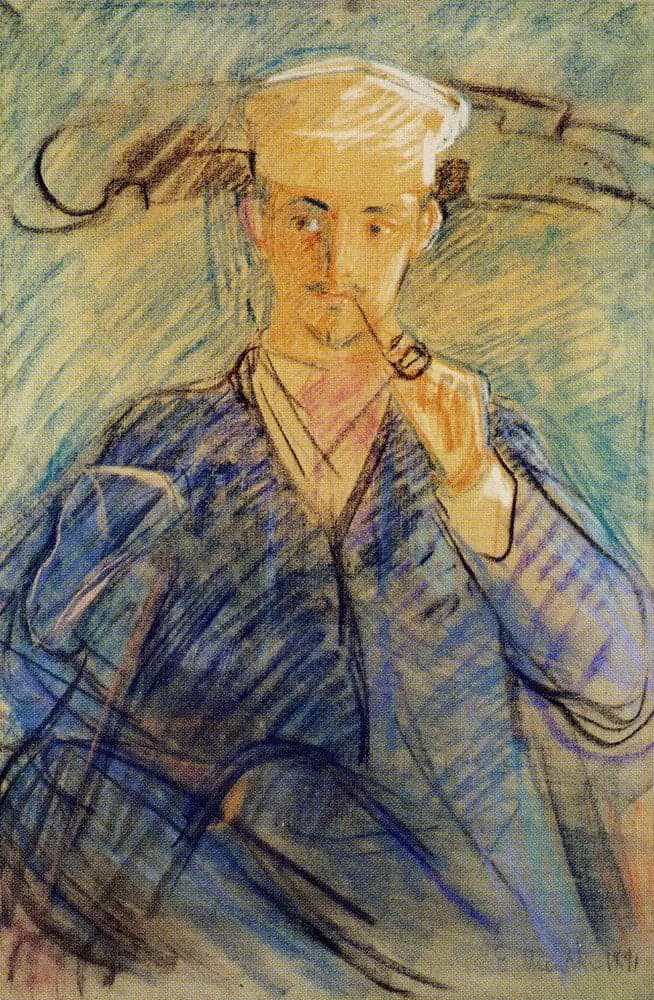
Helge Rode
- Original dimensions
- 96 x 198 cm
- Museum
- Moderna Museet
- Year
- 1908
Scene depicted
The painting Helge Rode is an ode to human beauty and the complexity of interpersonal relationships. Munch expresses through the delicate features of his subject an atmosphere imbued with depth and reflection. Every detail of this painting reveals the nuances of the feelings that unite beings, inviting the viewer to contemplate this mysterious and often inevitable bond.
Historical context
Created in the heart of the artistic effervescence of the early 20th century, the painting Helge Rode by Edvard Munch plunges its roots into a transforming Oslo. The expressionist movement, of which Munch is one of the pioneers, celebrates human emotions and subjectivity. This iconic canvas is now located at the Moderna Museet in Stockholm, a space dedicated to modern and contemporary art, testifying to the vitality of the work and its timeless message.
Place in the artist's career
The canvas Helge Rode is situated at a crucial turning point in Edvard Munch 's career, illustrating his transition to authentic artistic maturity. When compared to other masterpieces like The Scream and The Madonna , one can observe a constant evolution in the handling of emotions and human themes, illustrating his ongoing quest for truth in art.
Anecdote
“Painting is a symphony of colors, a song of forms,” said Munch. This quote resonates strongly when discussing the genesis of Helge Rode . It was on a misty morning, by the edge of a sparkling lake, that Munch found his inspiration. The encounter with a familiar face and the reflections in the water led him to immortalize this emotionally charged scene, true to the tragic and melancholic spirit of the composition .