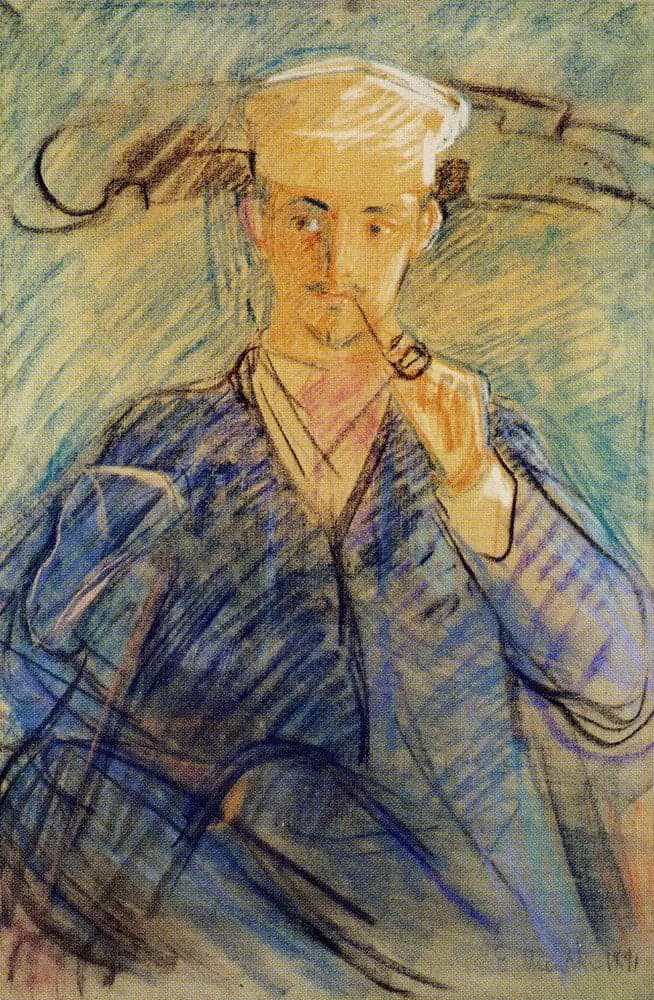
Helge Rode
- Original dimensions
- 54 x 80.5 cm
- Museum
- National Museum of History of Frederiksborg Castle
- Year
- 1891
Scene depicted
The painting “Helge Rode” by Edvard Munch is a work that illustrates a deeply introspective portrait, revealing the wounds of a soul yearning for compassion and understanding. The subject, anchored in soft light, conveys a palpable melancholy, while the details of the face seem to tell a captivating story of isolation and quest for identity. This composition is both a celebration of life and a reflection of human solitude.
Historical context
Created in 1891, this painting resides in the heart of the expressionist movement, during a vibrant time of artistic creativity. Coinciding with a cultural turning point in Oslo, this canvas evokes the torments of the human soul through the prism of Munch's personal experience. Currently exhibited at the National Museum of History of Frederiksborg Castle, this tableau captivates with its generous dimensions of 54 x 80.5 cm.
Place in the artist's career
“Helge Rode” strategically positions itself in the career of Edvard Munch , representing a bold exploration of his innovative style. Close to works such as “The Scream” and “The Madonna,” this painting bears witness to a marked technical evolution characterized by increased expressiveness. This period is one of artistic maturation where Munch sculpts his identity through distinct emotional contrasts.
Anecdote
“The painting is for me a cry emitted by my heart.” Edvard Munch might have whispered this during a nighttime stroll through the narrow streets of Christiania. A crackling fire, a woody scent floating in the cool evening air, and the glow of street lamps creating dancing shadows, all of this surely inspired him to capture the human essence in Helge Rode .