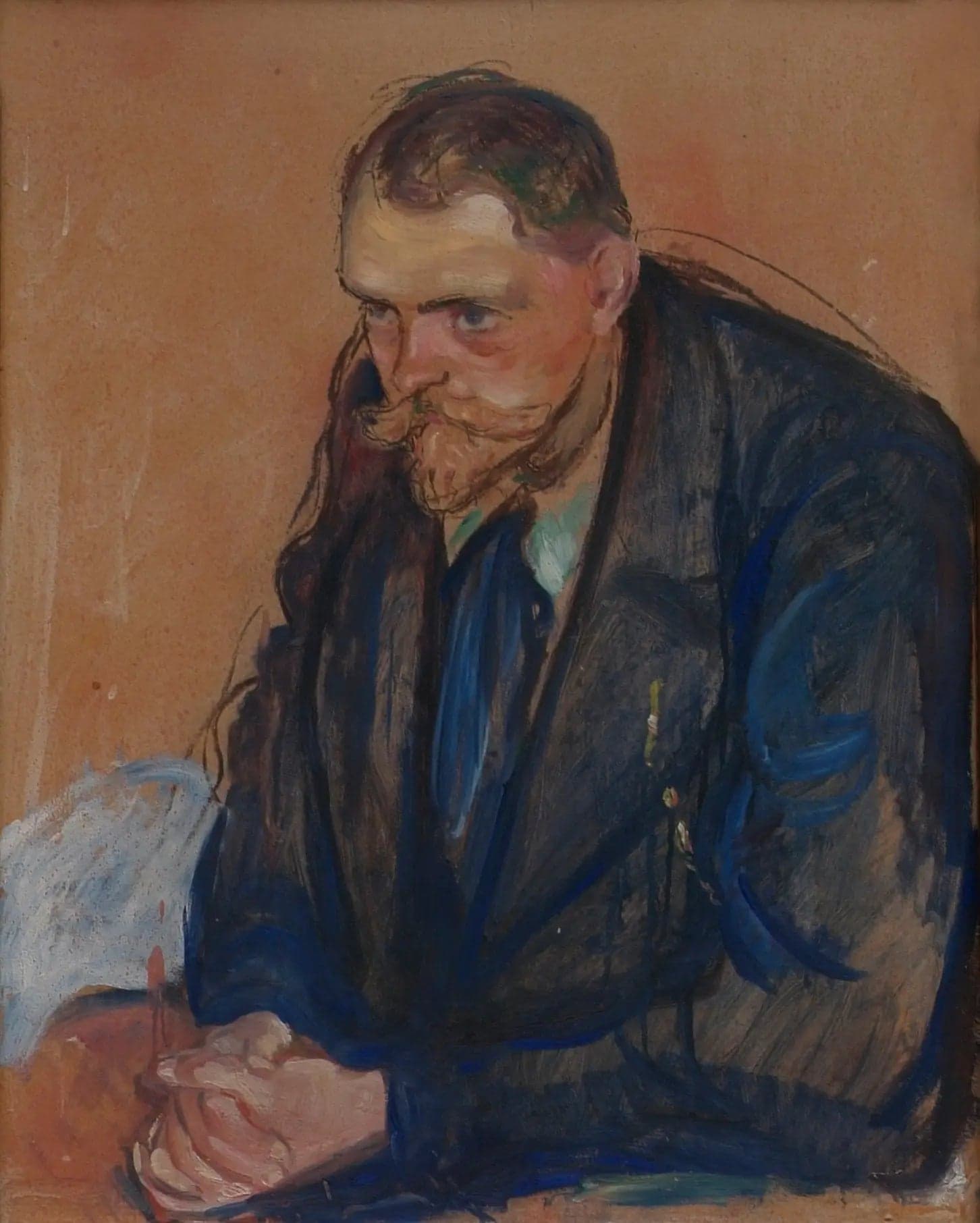
Helge Bäckström
- Original dimensions
- 62 x 81 cm
- Museum
- Thiel Gallery
- Year
- 1893
Scene depicted
“Helge Bäckström” is a work that transcends the simple portrait, revealing the inner emotions of a human being facing a tumultuous world. Munch uses the canvas to explore the complexities of human psychology, offering the viewer a journey into the heart of anguish and hope, always on the edge of light.
Historical context
Created in 1893, during a period marked by emotional upheavals and introspective reflections, this iconic painting belongs to the expressionist movement that emerged strongly in Norway. Munch, an emblematic figure of this era, captured the essence of human turmoil, placing this masterpiece at the heart of modern art conception. The painting currently resides at the Thiel Gallery in Stockholm, where it continues to inspire with its imposing dimensions of 62 x 81 cm.
Place in the artist's career
This painting is part of a pivotal period in Munch's career, marked by a transition from realism to expressionism . Alongside works such as “The Scream” and “The Madonna,” “Helge Bäckström” testifies to the profound artistic evolution of the artist, where sensitivity and introspection take precedence over mere representation.
Anecdote
“Every painting is like a confession,” Munch said during his reflections on his works. This painting was inspired one summer evening when he noticed the shadow of a face in a quiet alley of his childhood, symbolizing both serenity and melancholy. This fleeting moment nourished the soul of the painting, prompting it to capture the ephemeral.