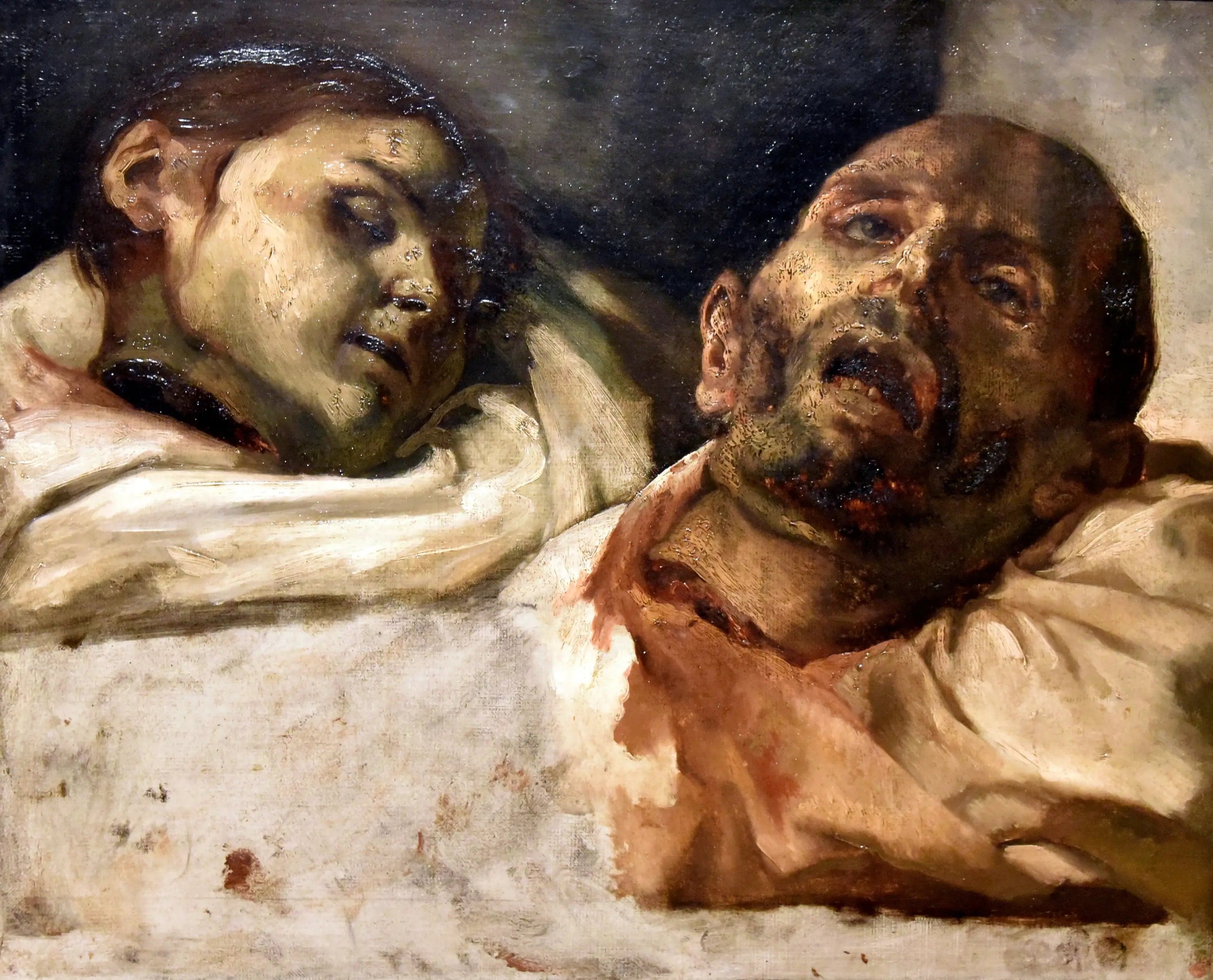
Headless
- Original dimensions
- 61 x 50 cm
- Museum
- Nationalmuseum
- Year
- 1818
Scene depicted
The painting “Headless Bodies” immerses us in a striking scene, a brutal representation of defeat and divine command, linking human mortality to the wrath of nature. Géricault explores the horror of war, illustrating decapitated heads, remnants of lost souls, bearing witness to a sublime visual and emotional shock. This painting , while lucid, questions sensitivity in the face of violence, awakening a timeless dialogue between art and reality.
Historical context
Artwork: Headless Bodies |BRK| Artist: Théodore Géricault |BRK| Year: 1818 |BRK| Museum: Nationalmuseum |BRK| Dimensions: 61 x 50 cm |BRK| Major Exhibitions: Nationalmusei franska samling |BRK|
Place in the artist's career
This painting , emblematic in Géricault's career, marks a turning point. It resonates with his expressive style in parallel to other great paintings such as “ The Raft of the Medusa ” and “ The Race of Free Horses ”, revealing a marked technical evolution characterized by increased emotional depth, foreshadowing his artistic maturity.
Anecdote
“Beauty often lies in the horrible,” Géricault once said, holding his brush like a scepter of Eros and Thanatos. In a silent alley, cradled by the whisper of shadows, he captured the essence of human tragedy. That morning, the light filtering through the clouds inspired a canvas where the themes of life and death would forever intertwine, giving birth to Headless Bodies .
Major exhibitions
Nationalmusei franska samling