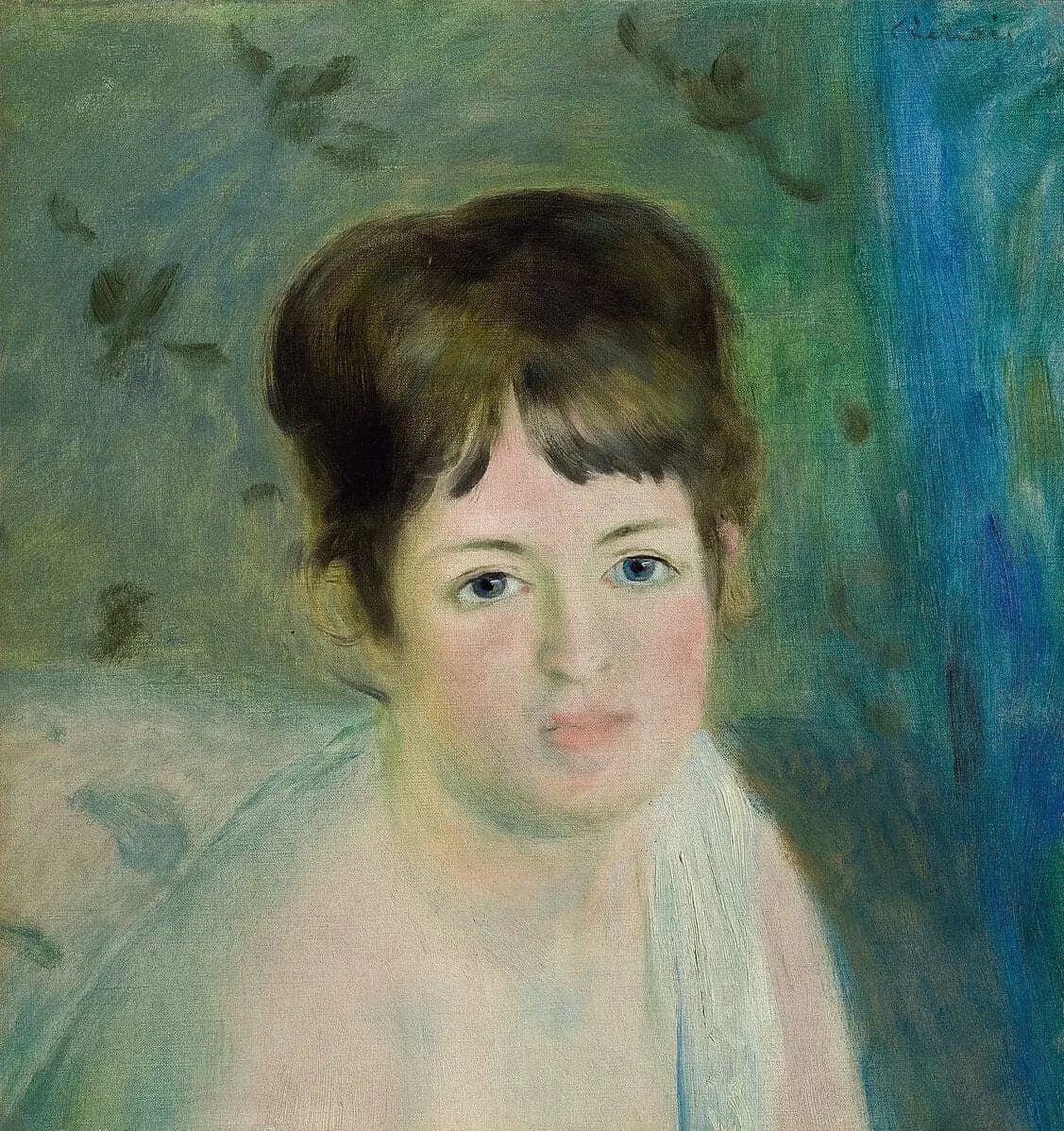
Head of Woman - Pierre
- Original dimensions
- 15.8 x 17.5 cm
- Museum
- Petit Palais
- Year
- 1917
Scene depicted
In this pictorial work , Renoir depicts the beauty of a woman through a gaze imbued with softness and mystery. The tight composition highlights the delicate features of the face, while the artistic blur evokes a dreamy atmosphere. One can almost feel the lightness of a breath and the stillness of a suspended moment, where time seems to stretch to celebrate the grace of the subject.
Historical context
Created in 1917, this painting is set against the tumultuous backdrop of World War I, while Paris, the cradle of the arts, continues to flourish as a beacon of hope and beauty. The canvas , now displayed at the Petit Palais , evokes the Impressionist movement of which Renoir was a pillar, a style characterized by its vibrant colors and radiant light.
Place in the artist's career
The Tête de femme is situated at a turning point in Renoir's career, where he merges his Impressionist approach with an increased sense of emotional depth. Compared to his canvases such as “Le Déjeuner des Canotiers” and later “La Grenouillère,” this canvas reveals his evolution towards a more intimate personalization of characters, without ever sacrificing the characteristic brightness of his style.
Anecdote
Renoir, with his unmatched charm, said: “Painting is like love, it cannot be taught.” Imagine him, crossing a delicate face at the turn of a spring garden, light filtered through the leaves, the scent of flowers mingled with the smell of damp earth, a source of inspiration for his canvas .