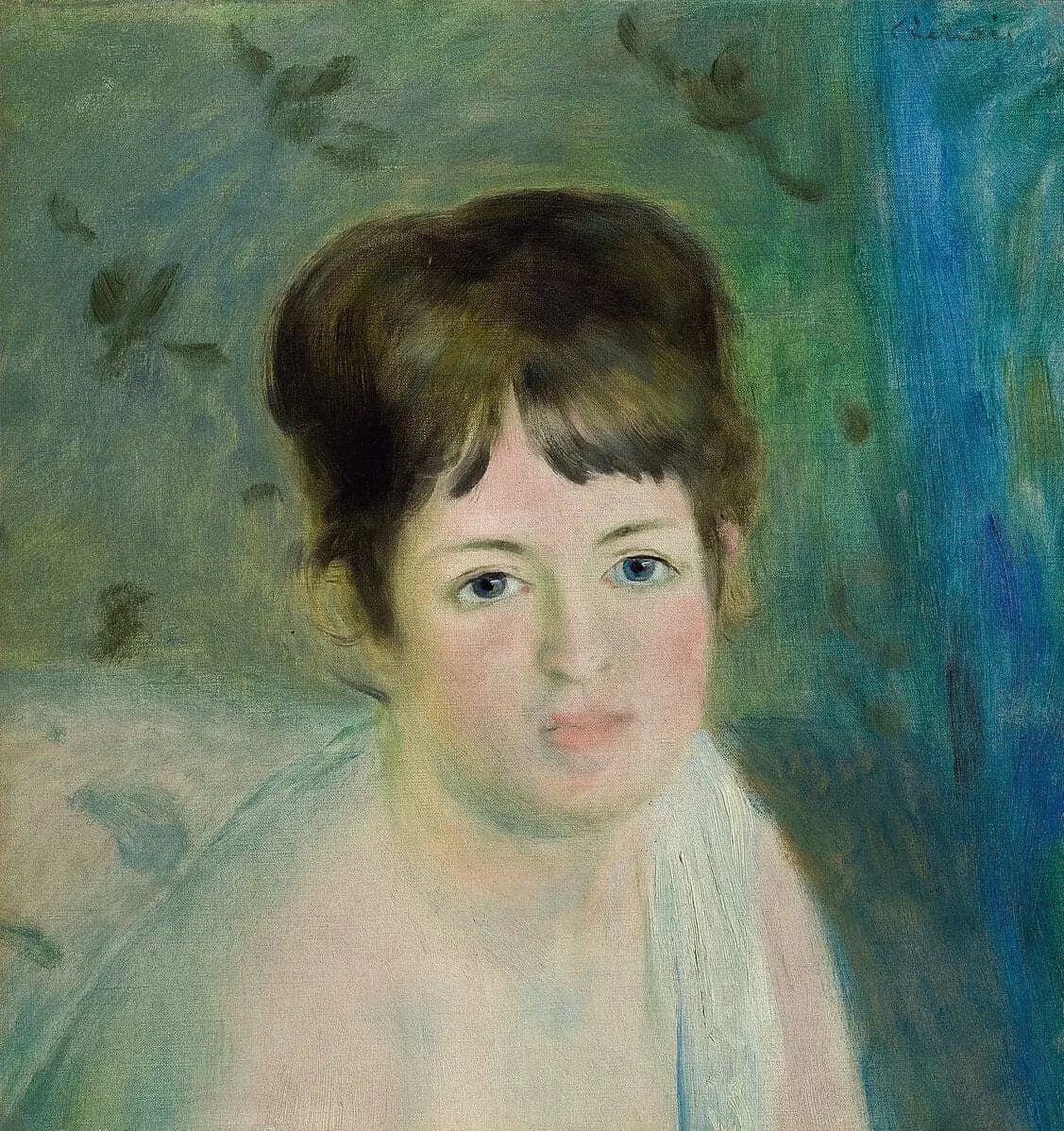
Head of Woman - Pierre
- Original dimensions
- 36 x 38.5 cm
- Museum
- Hermitage Museum
- Year
- 1876
Scene depicted
This canvas illustrates the delicacy and feminine grace, typical of Renoir's art. With soft features and a caressing light, it presents a woman's face, both mysterious and full of life, inviting the viewer to dive into her thoughts and emotions. It is a hymn to the timeless beauty of life, to femininity sublimated by an oil painting of exceptional quality.
Historical context
Created in 1876, this painting emblematic was born in the intoxicating setting of Paris, at a time when the Impressionist movement was beginning to take shape with strength. This pictorial work was conceived during a period of artistic renaissance , capturing light and movement in an unprecedented way. Today, the canvas is preserved at the Hermitage Museum in Saint Petersburg, where its brilliance continues to dazzle visitors.
Place in the artist's career
The Tête de femme stands as a central piece in Renoir's artistic evolution. As he explores the nuances of Impressionism , this canvas marks a turning point where light becomes a character in its own right. Alongside 'Danse à la Ville' and 'Les Baigneuses', this work testifies to his ability to play with light and color, a true pinnacle of his Impressionist period.
Anecdote
“Art is a cry that comes from the depth of the soul,” Renoir might have said while recalling the inspiration that guided him during the creation of this masterpiece . Imagine a sunny morning, the laughter and sweetness of spring floating in the air. This is how the magic of Tête de femme manifested, capturing a fleeting moment of eternal beauty.