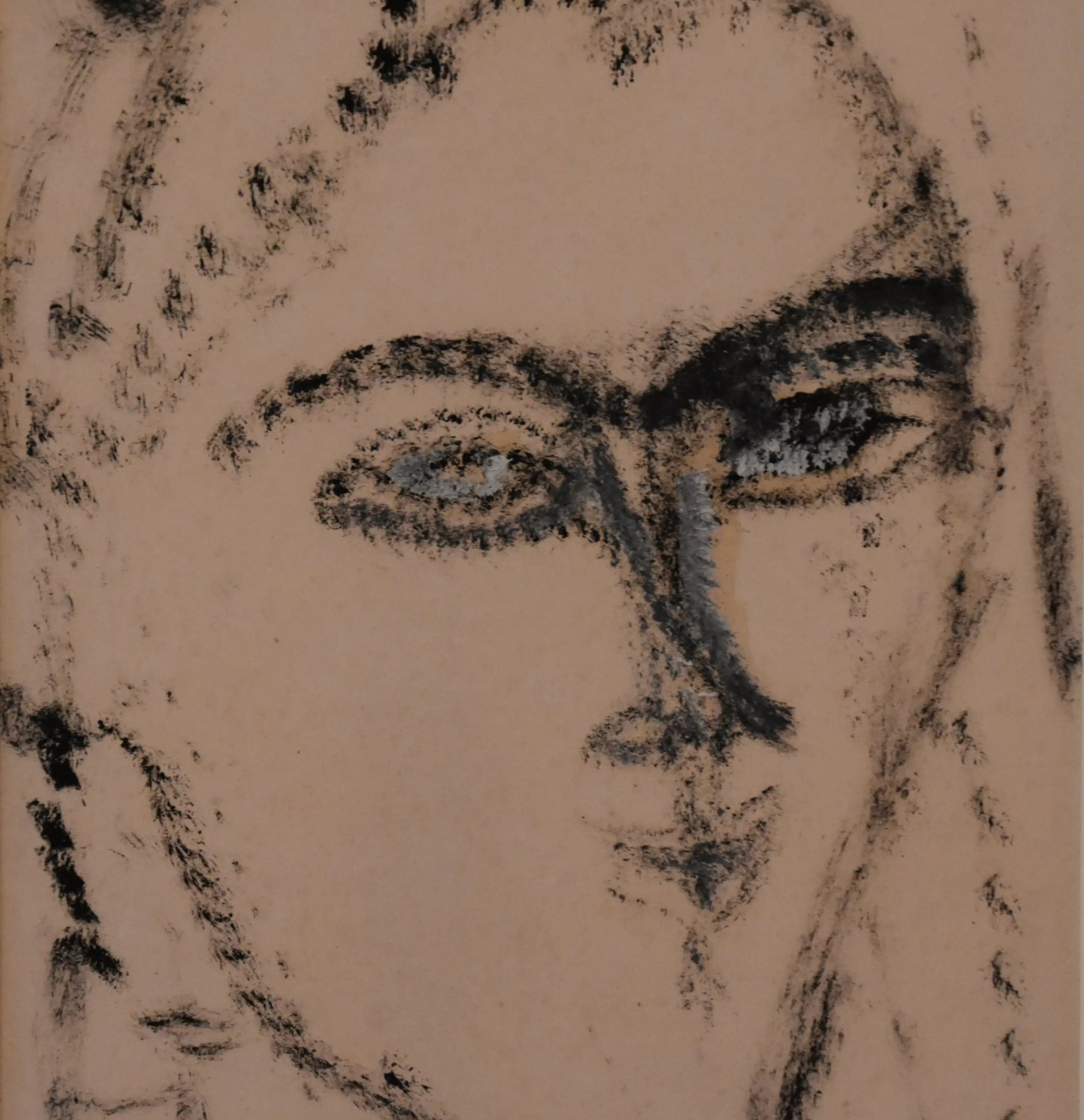
Head of Woman. Kiki?
- Original dimensions
- 26 x 43 cm
- Museum
- Thyssen-Bornemisza Museum
- Year
- 1915
Scene depicted
The painting "Head of Woman. Kiki?" depicts a female face, with distorted features, typical of Modigliani's style. Here, Kiki is represented in a contemplative pose, her gaze imbued with mystery and melancholy. The elongated contours and warm colors evoke a certain sensuality, imbuing the canvas with an intimate and soft atmosphere. This masterpiece denotes a search for beauty, transcending the simple female face to question the essence of being.
Historical context
This painting , created in 1915, emerges in the heart of Paris, a cradle of artistic innovation during the first half of the 20th century. In an artistic environment led by the modern movement, Modigliani develops a unique style that transcends the conventions of the time. The painting is now preserved at the Thyssen-Bornemisza Museum , where it continues to inspire generations. Its intimate dimensions enhance the emotional impact of the work.
Place in the artist's career
Head of Woman. Kiki? represents a pivotal moment in Modigliani's career, where he merges his characteristic style with greater emotional depth. In parallel with his other works such as "The Violinist" and "Female Nude," this painting reflects an evolution towards a simplification of forms and a richer palette, a turning point towards a more personal expression of his art.
Anecdote
Modigliani once said: "Every portrait I paint is a secret dialogue with the soul of the subject." This thought resonates deeply in Head of Woman. Kiki? , where the artist, in a moment of grace, immortalizes Kiki, muse and lover, in a disarming simplicity, capturing her vibrant spirit in an alley adorned with autumn light.