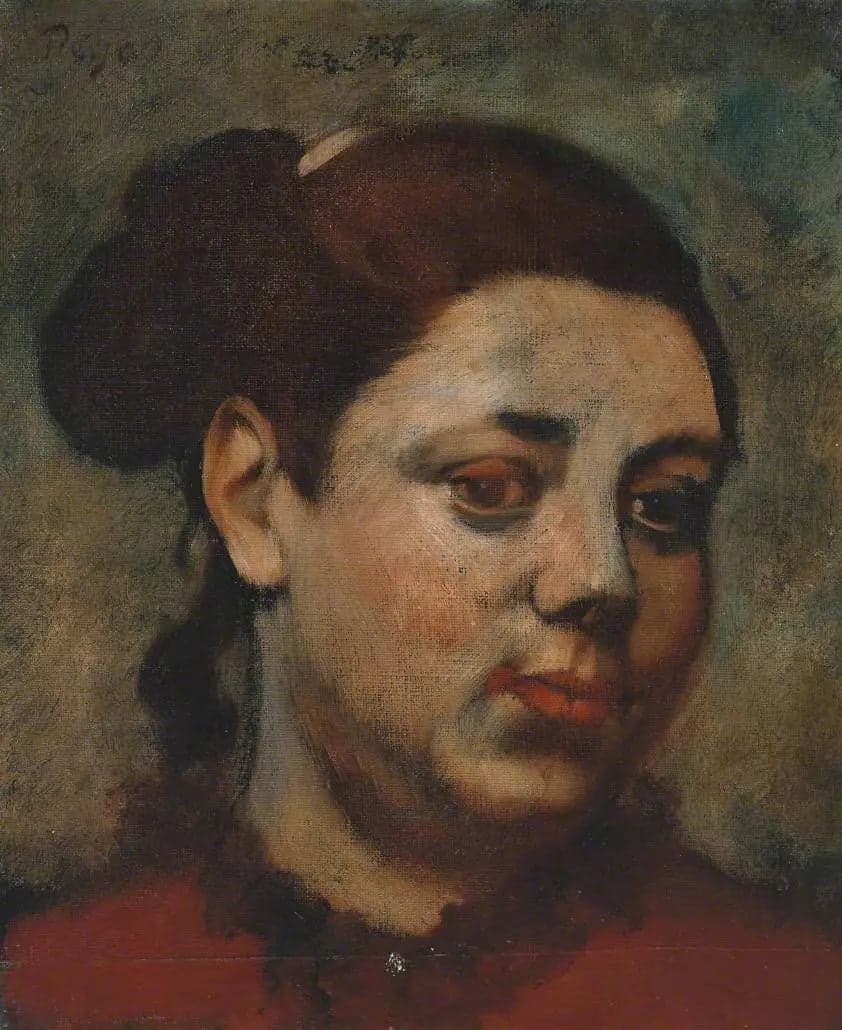
Head of Woman
- Original dimensions
- 17.5 x 19.7 cm
- Museum
- Tate
- Year
- 1873
Scene depicted
In the painting Tête de femme , Degas explores female psychology through a simple portrait. The silhouette of the woman stands out, illuminated by a soft and enveloping light. This work becomes a witness to a reflection on the beauty and complexity of the feminine soul, illustrated by a delicate composition that questions the viewer about the intimacy of the scene. The emotional depth conveys an intriguing atmosphere, offering a glimpse into the inner life of its model.
Historical context
Created in 1873, the painting titled Tête de femme finds its origin in Paris, a nerve center of artistic innovation and cultural fermentation. Edgar Degas , an emblematic figure of the Impressionist movement, captures here the intimacy and expressiveness of a woman, reflecting a vibrant era where art breaks free from conventions. Currently exhibited at the Tate , this canvas measuring 17.5 x 19.7 cm embodies the very essence of modern pictorial work.
Place in the artist's career
Tête de femme is part of Degas's artistic maturity period, where his style begins to evolve towards more introspective compositions. Alongside other masterpieces such as L'Absinthe and Danseuse au repos , this canvas shows an increasing exploration of movement and light, revealing an evolution in his pictorial approach while remaining true to his Impressionist heritage.
Anecdote
Degas once declared: “Art is a silent poetry.” While strolling through the streets of Paris one spring morning, he crossed the gaze of a woman, a fleeting moment that nourished his imagination. This ephemeral encounter resonates in Tête de femme , where each brushstroke evokes the softness of morning light on the female face, a moment captured in time.