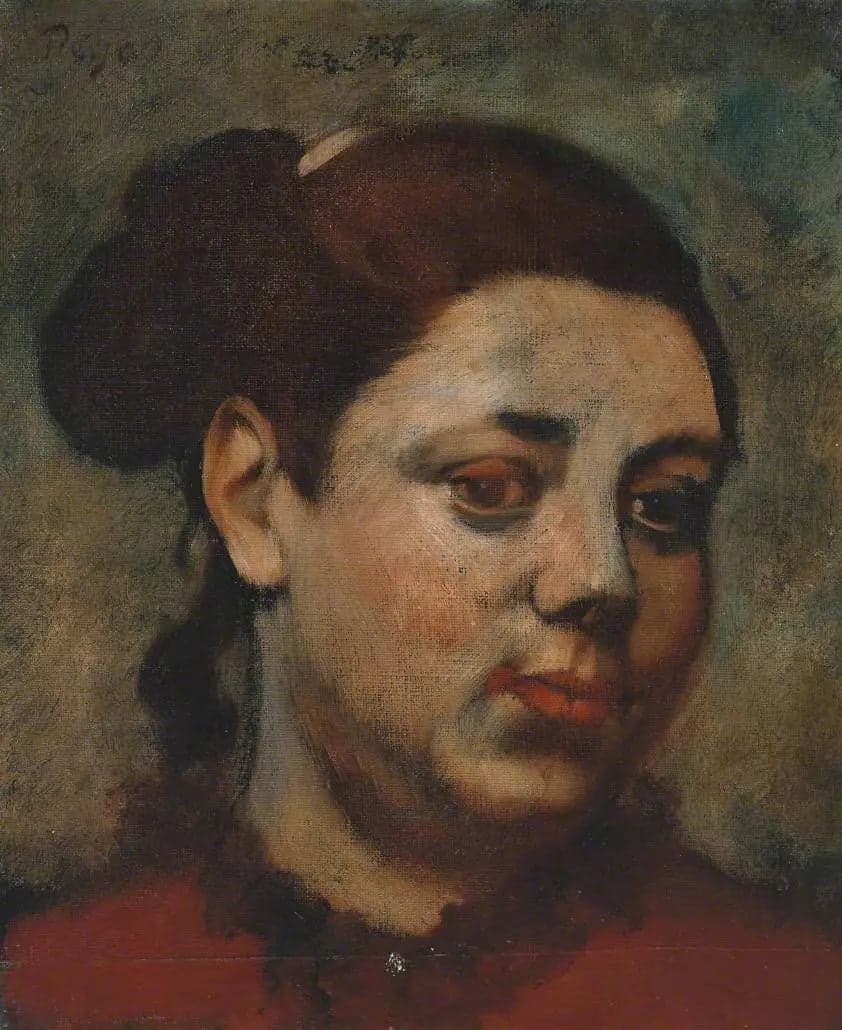
Head of Woman
- Original dimensions
- 32.1 x 32.1 cm
- Museum
- Tate
- Year
- 1874
Scene depicted
The painting “Tête de femme” reveals a woman with a contemplative demeanor, seemingly absorbing the world around her. Her face, delicately shaped by chromatic choices and plays of light, invites reflection. Through this work, Degas evokes not only a figure but an atmosphere filled with mystery, an invitation to seize the moment before it fades away.
Historical context
Created in 1874, during a period of intense creativity in Paris, Degas's painting is part of the impressionist movement. This canvas , exhibited at the Tate museum in London, reflects a time when light and movement were boldly explored. The work, modestly sized at 32.1 x 32.1 cm, captures the gaze with sensitivity and finesse.
Place in the artist's career
This canvas represents a crucial step in Degas's career, between his early explorations of dance and his mastery of portraiture. Alongside works like “La classe de danse” (1874) and “Les danseuses” (1890), this achievement shows his evolution, from the search for spontaneity to a more introspective and mature approach.
Anecdote
“Dance was my first muse, but life itself offered me this face,” Degas might have said one spring morning upon meeting the gaze of a woman on a Parisian street. This fleeting moment deeply nourished the emotion conveyed by his canvas , capturing a silent sweetness and ephemeral beauty.