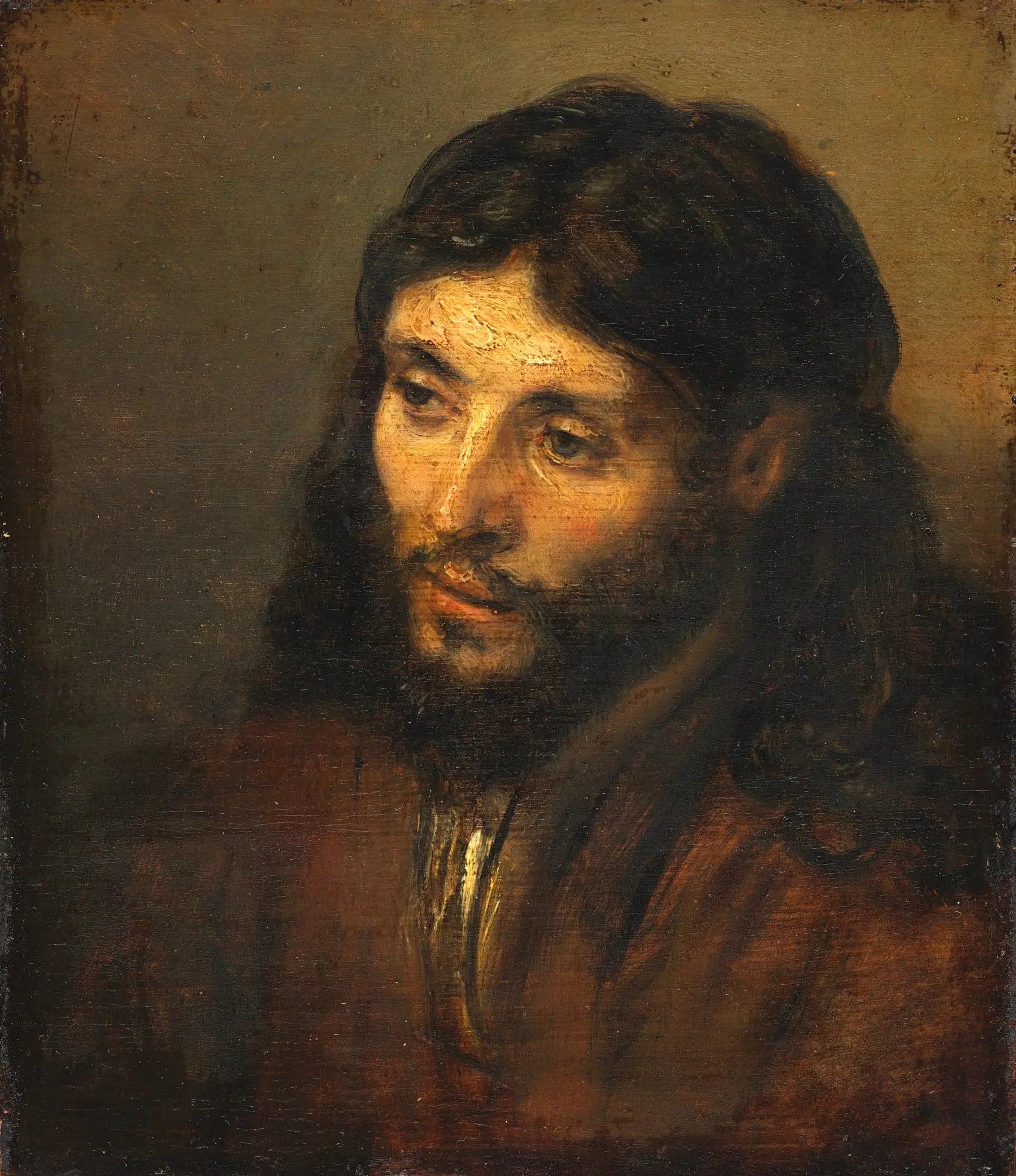
Head of Christ
- Original dimensions
- 20.4 x 25.5 cm
- Museum
- Fogg Art Museum
- Year
- 1656
Scene depicted
In this pictorial work , Rembrandt offers an intimate and poignant vision of Christ, the features of the face revealing immense spiritual depth. The canvas invites us to contemplate this majestic figure, illuminated by a divine light, while a delicate halo of mystery surrounds it. The powerful and penetrating gaze of Christ captures the essence of compassion and wisdom, touching the viewer in a surge of reflection and empathy.
Historical context
Created in 1656, this painting is the result of an era marked by the Dutch baroque , an artistic movement that flourished in the Netherlands. Tête du Christ embodies the mastery of Rembrandt in capturing emotional and spiritual subtleties. Currently, this canvas is preserved at the Fogg Art Museum , a must-see for art lovers. Its dimensions, although modest, testify to a striking inner grandeur.
Place in the artist's career
Tête du Christ is part of a decisive phase in the career of Rembrandt , illuminating his journey with remarkable artistic maturity. At that time, he had already created other masterpieces such as The Night Watch and The Lunch of Cornelis de Graeff , illustrating a significant evolution in his mastery of light and shadow as well as in the emotional intensity of his paintings .
Anecdote
“I seek to capture the soul of the subject, to reveal the invisible.” This quote resonates as an echo of the inspiration of Rembrandt during the creation of Tête du Christ . Imagine a spring morning in Amsterdam, with the diffuse light reflecting on the wet cobblestones, as a portraitist spots a face imbued with serenity. This touch of genius, born from the intensity of a moment, makes this painting exceptionally vibrant.