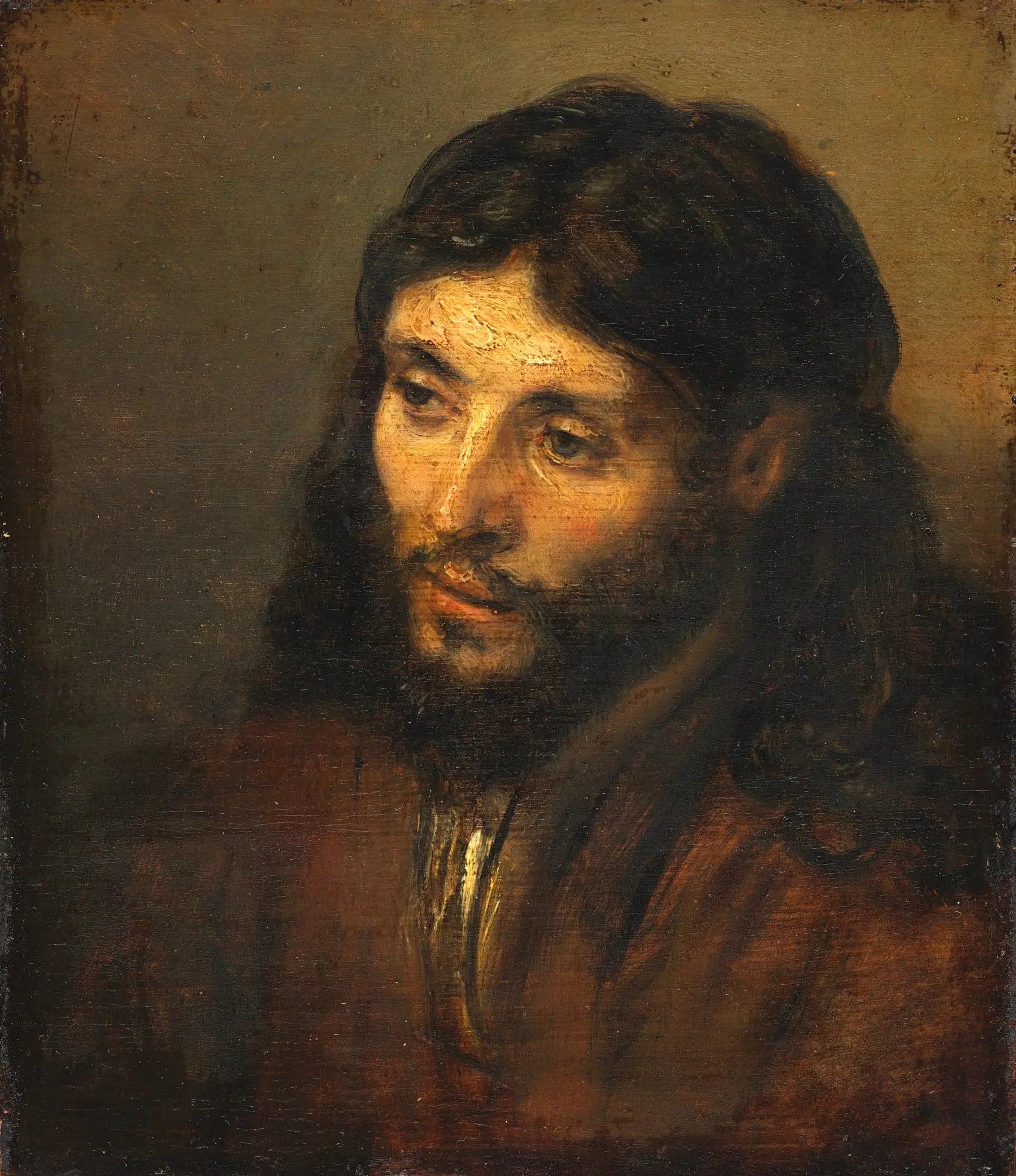
Head of Christ
- Original dimensions
- 21 x 25.5 cm
- Museum
- Bredius museum
- Year
- 1650
Scene depicted
In this work, Rembrandt captures the very essence of spirituality. Christ, with a striking serenity, seems to plunge his deep gaze into the souls of the spectators, inviting us to reflect on faith and sacrifice. This canvas draws us into a silent dialogue, where each gaze becomes a prayer, a quest for meaning.
Historical context
Created in 1650 in the heart of Amsterdam, the painting "Tête du Christ" is part of the baroque movement, an eloquent reflection of a time vibrant with emotions and spirituality. This canvas is preserved in the Bredius museum, offering visitors a precious glimpse into the embodiment of faith and humanity. With dimensions of 21 by 25.5 cm, this pictorial work exudes an intimacy that captivates and fascinates at first glance.
Place in the artist's career
“Tête du Christ” represents a crucial turning point in the career of Rembrandt , a testament to unparalleled artistic maturity. At this time, the artist explores themes of light and shadow, as evidenced by his other iconic paintings such as “The Night Watch” and “The Anatomy Lesson of Dr. Tulp,” thus showing the evolution of his technique with an ever more palpable emotion.
Anecdote
“I paint what I see, but I seek the hidden soul behind the features.” The face of Christ, encountered one spring morning on a trembling canvas, became for Rembrandt the embodiment of divine compassion. Thus, this painting emerged from the depths of the artist, connecting spirit and matter in a delicate dance.