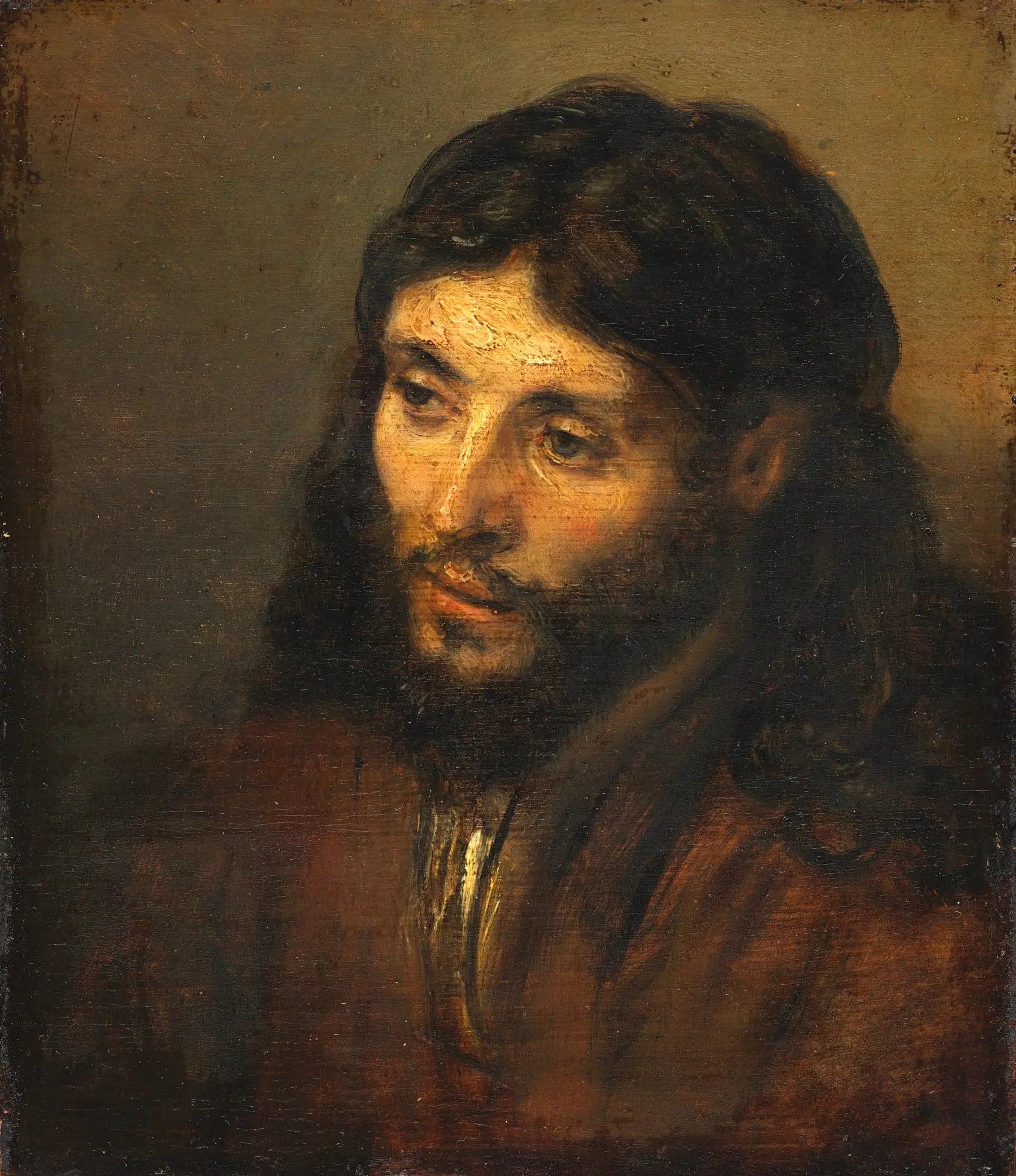
Head of Christ
- Original dimensions
- 19 x 24 cm
- Museum
- Musée biblique
- Year
- 1650
Scene depicted
The canvas “Tête du Christ” focuses on the introspective expression of a majestic Christ. The artist manages to capture a rare psychological depth, conveyed by a gaze imbued with serenity and suffering. The soft light caresses his face, evoking a delicate balance between humanity and divinity, thus inserting the viewer into an atmosphere of silent prayer.
Historical context
Created in 1650, this painting emblematic belongs to the movement of baroque , an artistic movement that celebrates drama and emotion. Made in the city of Amsterdam, then the epicenter of culture and art, this canvas remains exhibited in the famous Musée biblique. Its dimensions, 19 x 24 cm, accurately capture the spiritual intensity of the subject in a delicate format.
Place in the artist's career
This painting is at the heart of Rembrandt 's career, marking a period of full maturity. Alongside works such as “The Night Watch” and “The Anatomy Lesson,” the Tête du Christ testifies to a technical evolution where the mastery of light and shadow reveals the emotional depth of the characters, pulsing with a life of its own.
Anecdote
“The light that emerges from the shadow reveals the soul,” said Rembrandt . Imagine him, one spring morning, contemplating faces in the street, inspired by the ephemeral beauty of humanity. This deep emotion marked the genesis of his masterpiece , the Tête du Christ , a work where every brushstroke breathes the spiritual quest.