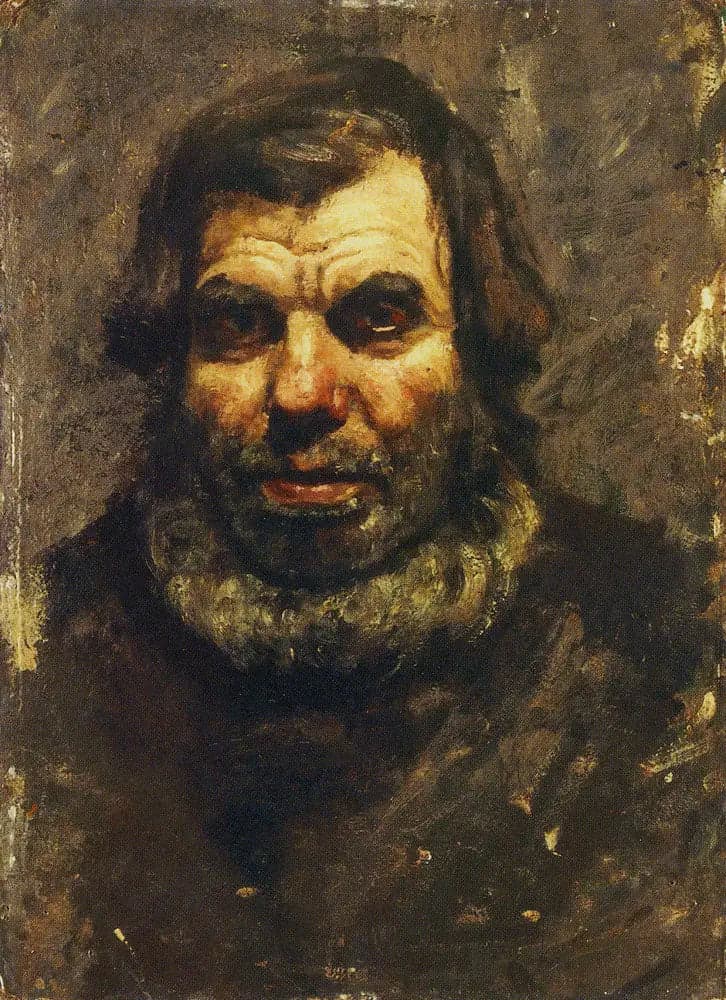
Head of Bearded Old Man
- Original dimensions
- 33 x 46 cm
- Museum
- Not specified
- Year
- 1883
Scene depicted
In this painting, Munch depicts an old man's face, frozen in an expression that seems to tell stories of pain and memories. This canvas highlights the fragility of life and the strength of memory, a passage that evokes psychological depth, making the scene even more captivating.
Historical context
Created in 1883, this painting emerges from a significant period in the city of Oslo, Norway, where Munch draws his inspiration from the expressionist movement. The work, representing a poignant moment of the human condition, questions aging and solitude, taking place in a cultural context where anxiety and deep emotions emerge as central themes. The current location of this painting remains unspecified, thus enhancing the mystery surrounding it.
Place in the artist's career
Tête de vieillard barbu fits into Munch's maturation phase, where he begins to explore darker themes, as in The Scream (1893) or The Madonna (1894-1895). Each painting represents a step in his artistic journey, marking his transition to unprecedented expressive mastery.
Anecdote
“I capture emotions above all, the canvas must vibrate with life.” Munch is said to have declared this on a sweet April morning, as he observed an old man in an alley. This face marked by time nourishes the composition of Tête de vieillard barbu, imbued with poignant melancholy.