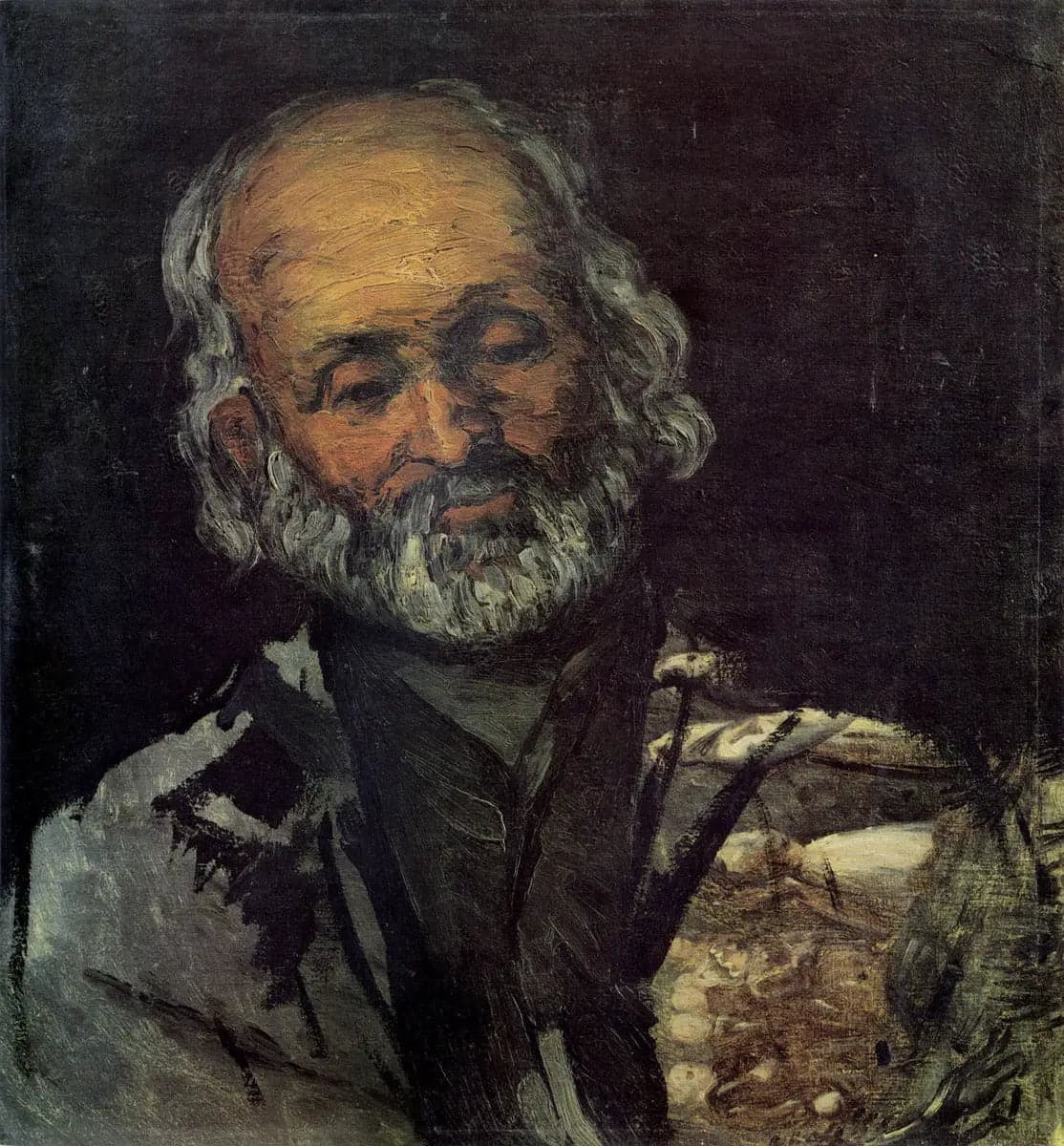
Head of an Old Man
- Original dimensions
- 48 x 51 cm
- Museum
- musée d'Orsay
- Year
- 1866
Scene depicted
This canvas depicts an old man whose weathered face expresses emotional complexity, a wisdom emanating from each brushstroke. The soft light caresses the marked features, revealing not only an individual but a symbol of humanity, combining vulnerability and strength. Cézanne focuses on the soul of the subject, transcending the simple portrait to create a reflection on the human condition.
Historical context
Created in 1866, in Paris, this painting is emblematic of the post-impressionist movement, captivating the spirit of the time with its freedom of interpretation and exploration of form. At that time, the French capital was the home of artistic revolutions, where a new approach to viewing the world emerged. Currently housed at the musée d'Orsay , this canvas reveals a sensitive and psychological dimension.
Place in the artist's career
This painting is situated at the beginning of Cézanne's career, marking a phase of maturation where he breaks free from academic rules. Alongside his other canvases , such as “The Card Players” and “The Montagne Sainte-Victoire,” the work reveals a technical evolution, highlighting his path towards abstraction and the deconstruction of perspective.
Anecdote
Paul Cézanne once stated: “I want to convey the emotion I perceive in nature.” It was during a morning walk, upon encountering the face of an old man, that the inspiration for this pictorial work came to him. This fleeting moment and the depth of that gaze are reincarnated in the evocative power of Tête de vieillard .