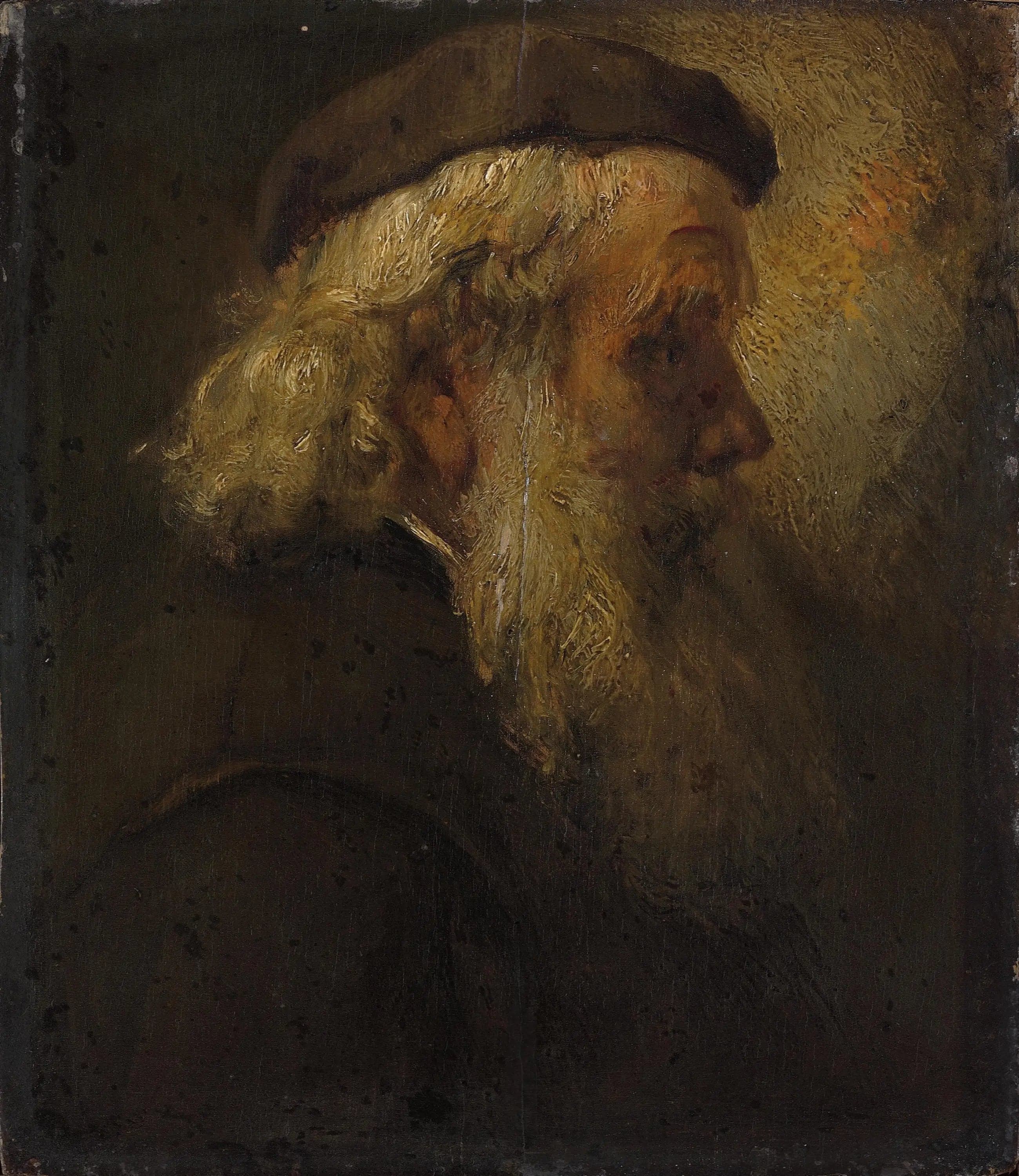
Head of an old bearded man in a beret, side view
- Original dimensions
- 17.5 x 20.5 cm
- Museum
- Villa De Laak
- Year
- 1640
Scene depicted
This painting illustrates an old man, bearded and wearing a beret, captured in a moment of deep reflection. The way Rembrandt plays with light to shape the features of the face testifies to his incredible talent for extracting the very essence of his subjects. Every detail, from the fold of his skin to the sparkle in his eyes, transforms into a visual narrative that transports the observer into the intimacy of his world.
Historical context
Created in 1640, this painting is located in the heart of the Netherlands, a region approximately as vibrant and rich in light as the painting itself. Rembrandt , master of light and shadow, belongs to the artistic movement of Baroque , which is distinguished by its ability to capture human emotions. The work is currently preserved in the Villa De Laak museum, allowing visitors to admire this exceptional canvas that combines psychological depth and mastered technique.
Place in the artist's career
Tête d'un vieil homme barbu en béret is a significant milestone in Rembrandt 's career, representing a time when he refines his style. Compared to other paintings such as The Night Watch and The Return of the Prodigal Son, this work reveals his evolution towards greater introspection and humanity. Indeed, he sheds superficial ornamentation to explore deeper and darker themes.
Anecdote
“Light is the voice of painting , it tells us invisible stories.” This quote could perfectly summarize the inspiration that led Rembrandt to create this masterpiece . Imagine him one spring morning, wandering the streets of Amsterdam, crossing the gaze of an old man whose time-worn face seemed to tell everything, a soul laden with stories.