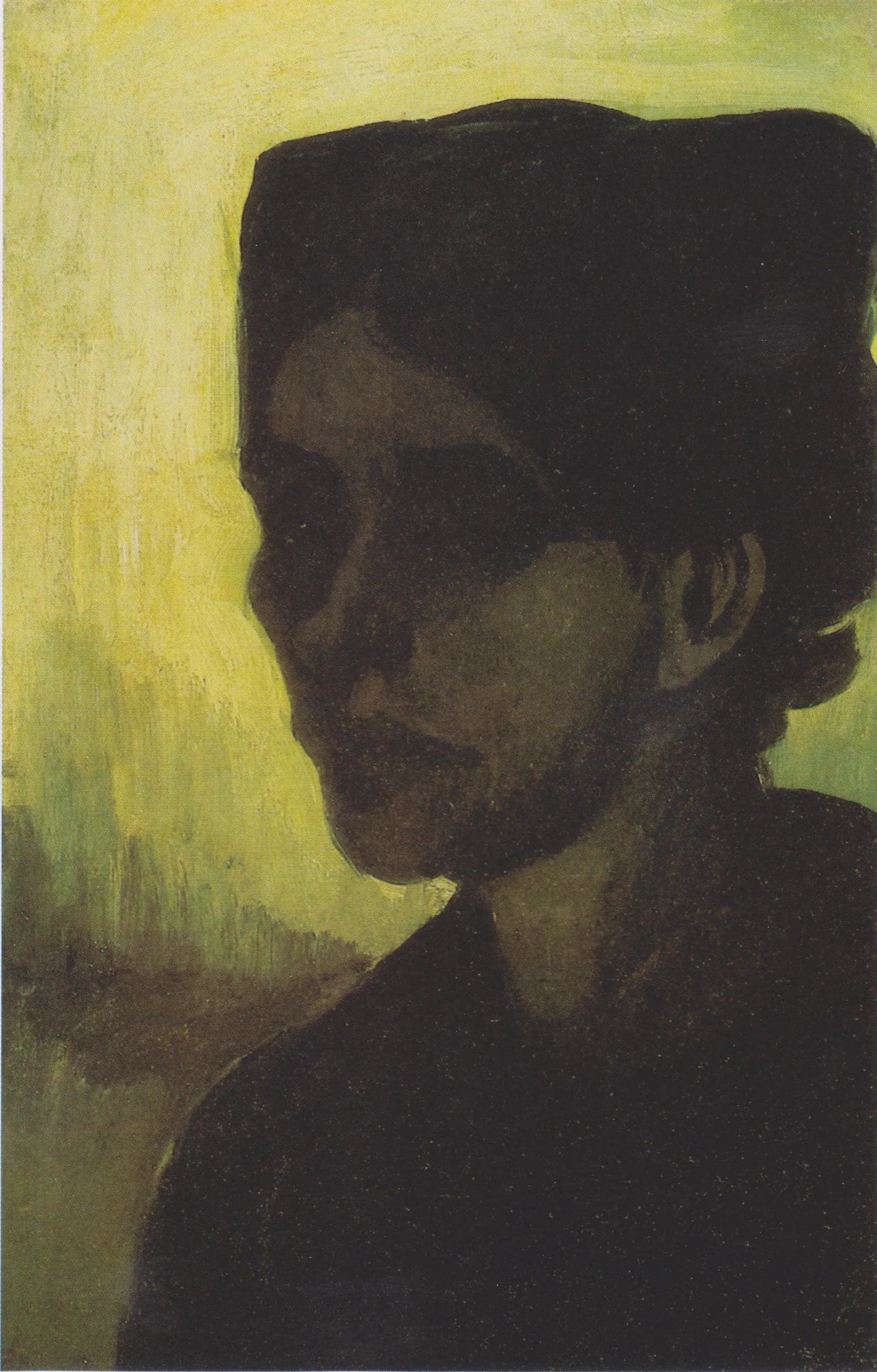
Head of a Woman
Scene depicted
“Woman's Head” is a pictorial work that captures the essence of everyday life through the portrait of a woman whose thoughtful gaze evokes deep introspection. The choice of poses and the soft light enveloping the subject suggest curiosity and emotional complexity, typical of Van Gogh's style.
Historical context
Created in 1885 in Nuenen , this canvas is emblematic of the realism movement. At that time, Vincent van Gogh sought to capture the authenticity of everyday life through his works. The painting , currently displayed at the Kröller-Müller Museum , measures 25.5 x 36 cm and represents a significant stage in his artistic journey.
Place in the artist's career
This painting is situated at a time when Van Gogh boldly explores his techniques. Compared to “ The Potato Eaters ” and “ The Starry Night ”, one can observe an evolution towards bolder colors and increased expressiveness, marking his artistic journey.
Anecdote
“Painting is for me like a window open to the soul.” These words resonate with the story of the painting “Woman's Head.” Imagine a spring morning, where Vincent locks eyes with a woman in a quiet alley, capturing her quiet strength. This encounter merges with the deep emotion conveyed by the canvas .