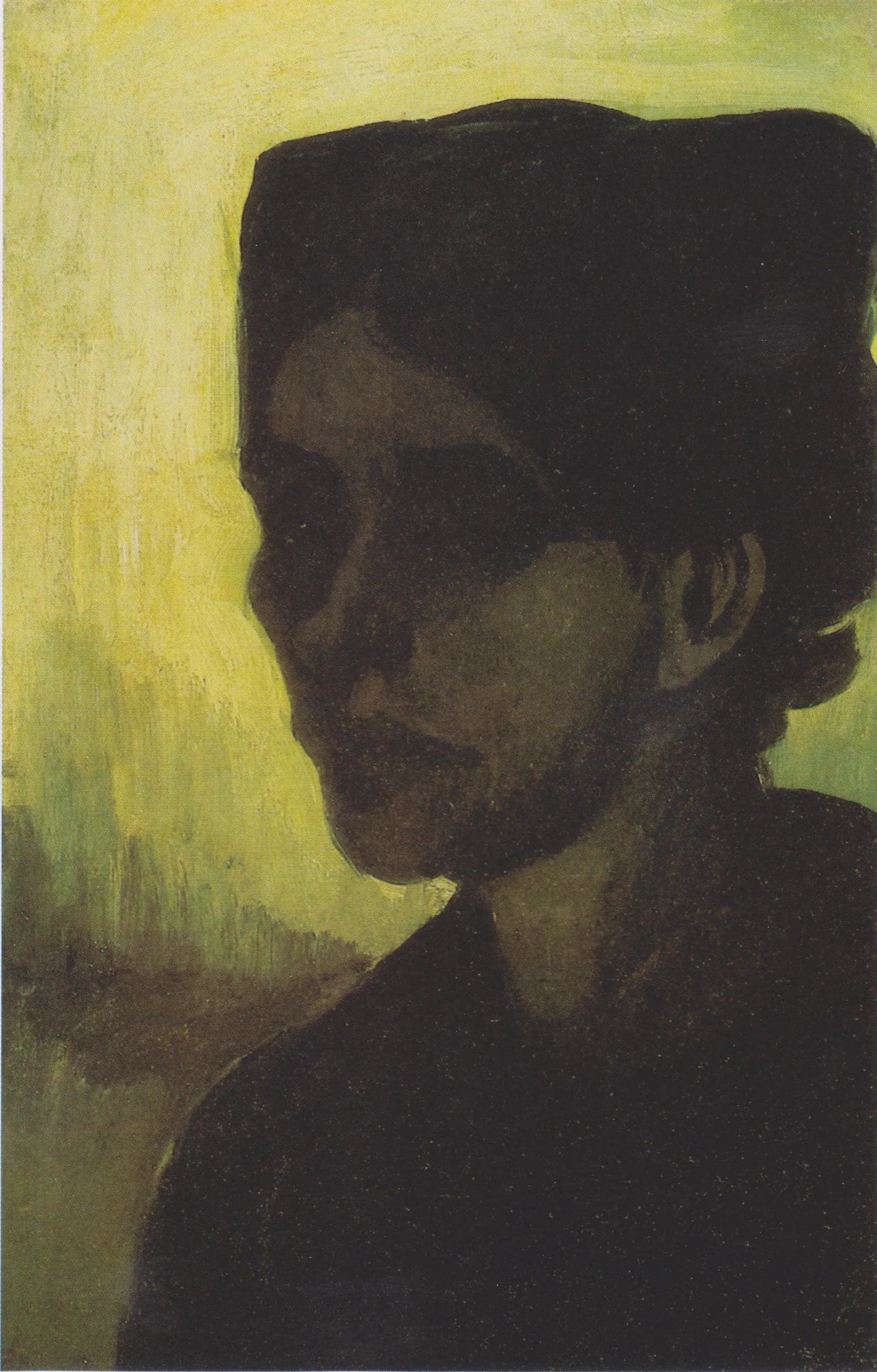
Head of a Woman
Scene depicted
This pictorial work depicts a woman's face, revealing both softness and melancholy. Van Gogh, through his inimitable style, manages to transform a simple representation into an exploration of emotions, inviting each viewer to dive into the depth of feelings and thoughts. The captivating gaze of the woman seems to tell us a story, a shared intimacy that resonates far beyond the surfaces.
Historical context
Created in 1885 in Nuenen , the painting Woman's Head is part of the post-impressionist movement, an artistic movement that values subjectivity and color. At this time, Van Gogh awakens to his vocation in the heart of the Netherlands, where he already explores human emotions through the prism of color and light. Today, the canvas is exhibited at the Kröller-Müller Museum , an iconic place that pays tribute to the artist's work, measuring 26 x 39 cm.
Place in the artist's career
Woman's Head marks an important milestone in Van Gogh's career. Far from the later flamboyant paintings, this canvas testifies to a period of quest and experimentation. In parallel with The Potato Eaters , we observe the evolution of an artist in search of his identity, oscillating between raw realism and intense expression.
Anecdote
Van Gogh often stated: "Color is the key to life," thus reflecting his obsession with color and light. He painted Woman's Head while immersing himself in the intimacy of faces encountered during his walks in the Dutch countryside. This fleeting moment, captured on canvas, transcends ages and continues to evoke the depth of human souls through his vibrant brushstrokes.