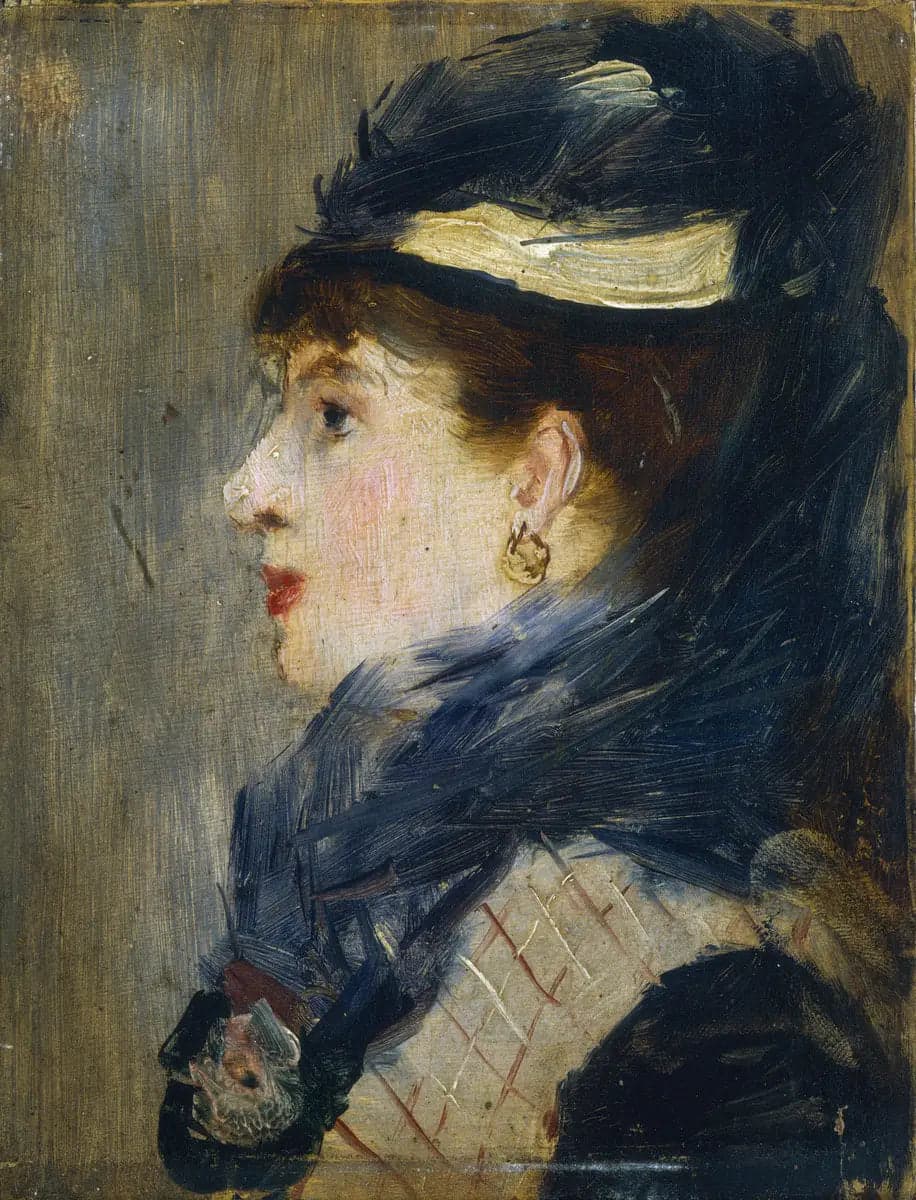
Head of a Woman
- Original dimensions
- 11.4 x 15 cm
- Museum
- National Gallery of Art
- Year
- 1879
Scene depicted
In the canvas “Tête de femme,” Manet depicts a captivating portrait, where the delicacy of the features is expressed through plays of shadow and light. The woman's gaze, both mysterious and serene, invites the viewer to dive into her deep thoughts. The composition rests on a sober background, thus highlighting the beauty of a pure face, capturing the very essence of femininity. This pictorial work embodies a moment of grace frozen in time, an ode to fleeting beauty.
Historical context
Created in 1879, in a Paris vibrant with artistic innovations, this painting is part of the Impressionist movement, marking a crucial time of renewal. The city of light, Paris, is the cradle of this canvas that captures the essence of a fleeting moment, and the work proudly rests today at the National Gallery of Art , where it continues to move visitors. Its dimensions, discreet yet powerful, make this canvas even more unique in the vast panorama of art.
Place in the artist's career
“Tête de femme” marks a turning point in the career of Édouard Manet , situated in a period of artistic maturity. This painting is positioned between his famous canvas “Le Déjeuner sur l'herbe” and the poignant “Olympia,” illustrating an evolution towards more intimate and personal themes. Manet, through this canvas , reveals his technical skills and unique vision, rooted in the Impressionist movement.
Anecdote
Édouard Manet once said: “True painting is that which speaks to the soul directly.” This masterpiece was born on a summer afternoon, illuminated by the golden light filtering through the windows of a studio. The face of a young woman, with timeless beauty, crossed his gaze, awakening the ardor of his creativity. This fleeting moment found its vibrant reflection in Tête de femme , where each brushstroke tells a story.