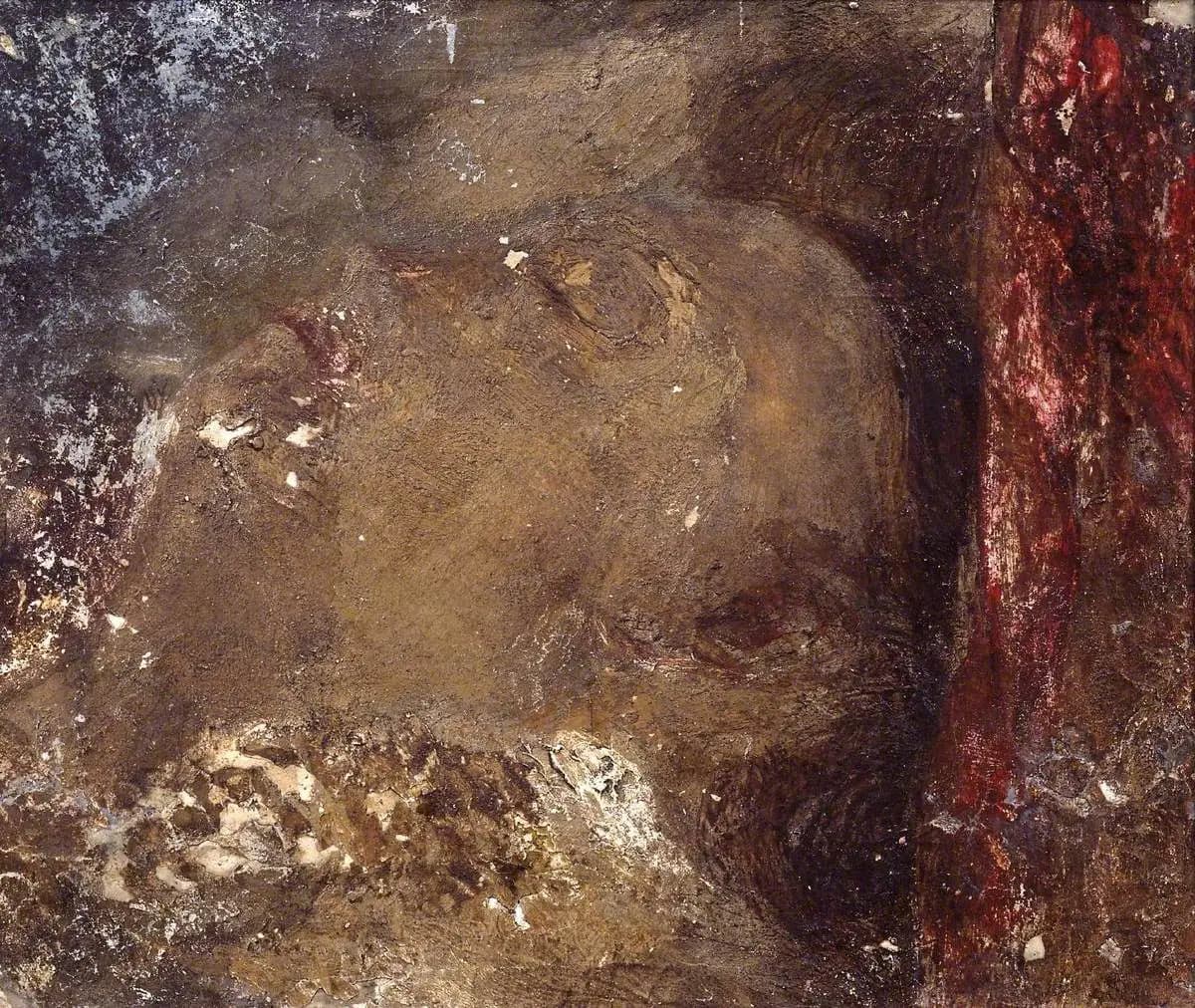
Head of a Person Asleep
- Original dimensions
- 24.4 x 30.2 cm
- Museum
- Tate
- Year
- 1835
Scene depicted
The painting “Head of a Person Asleep” delicately and evocatively represents the face of a man immersed in sleep. The soft and peaceful features reveal a soothing serenity, while the light plays on his contours. Each brushstroke transforms this simple scene into a reflection on rest, introspection, and the dreams that inhabit our subconscious.
Historical context
Created in 1835, this painting emblematic comes to life in a bustling London, at the heart of the artistic and romantic movements. Turner, at the height of his career, uses this canvas to explore the depths of the human soul, capturing in this slightly dreamy canvas the intimacy of a fleeting moment. Currently displayed at the Tate museum, the composition fascinates with its generous dimensions that invite escape.
Place in the artist's career
“Head of a Person Asleep” marks a turning point in Turner’s career, illustrating his mastery in emotional escape and light. This canvas perfectly fits into the artist's maturity period, echoing other significant works such as “The Raft of the Medusa” and “The Storm” which also testify to his attachment to light and atmosphere.
Anecdote
“Light is the key to all emotions.” Turner recalls a sunny afternoon in his country house, where he was struck by the vision of a sleeping friend, his face illuminated by golden rays. This intimate moment infused his painting with a delicacy found in the masterpiece , reflecting the luminous inspiration that is unique to him.