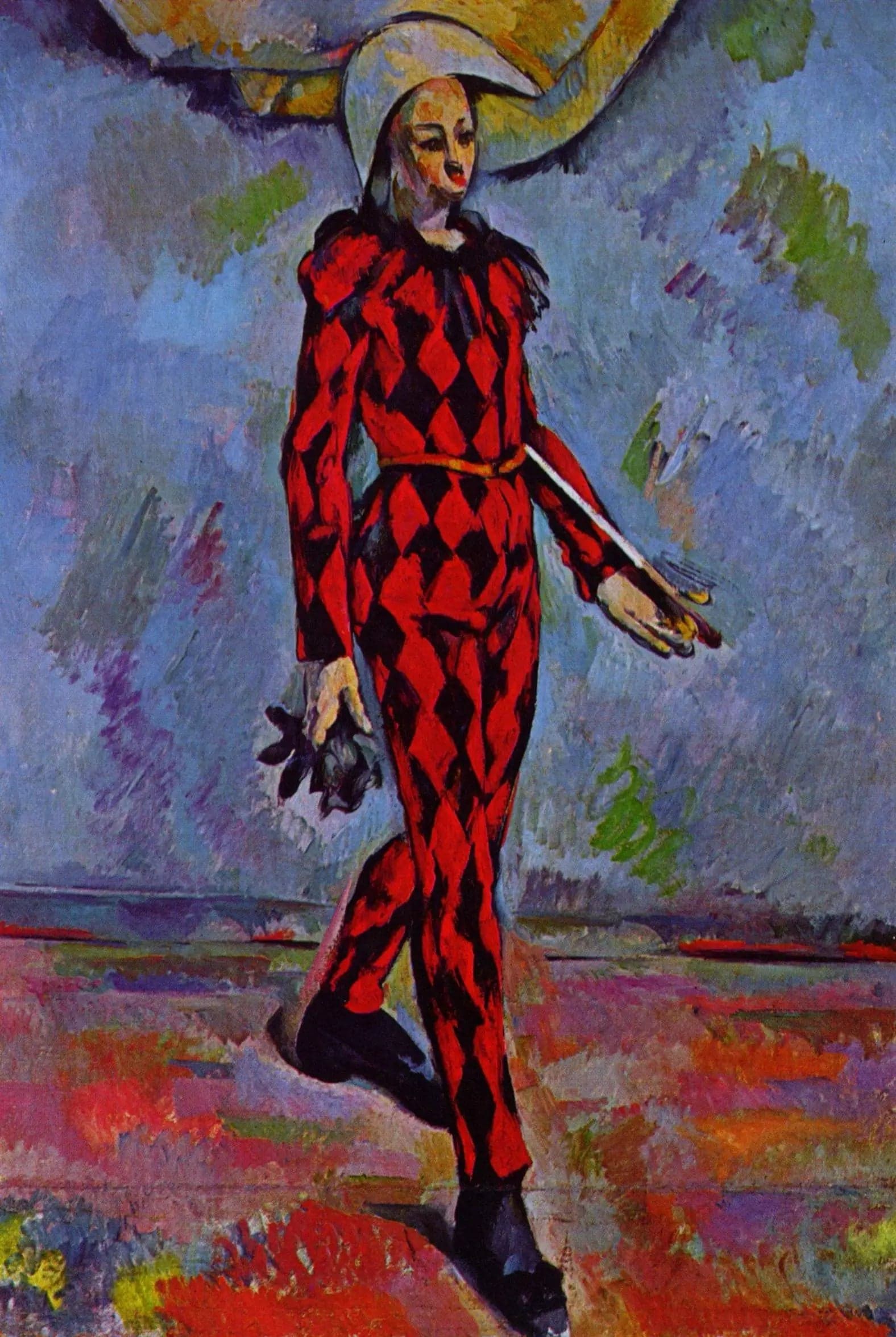
Harlequin
- Original dimensions
- 47.2 x 62.3 cm
- Museum
- Pola museum
- Year
- 1889
Scene depicted
At the heart of this canvas , the Harlequin reveals himself as an emblematic character, representing the world of theater and commedia dell'arte, carried by a playful energy. The juxtaposition of his bright colors against more neutral tones plays a central role, evoking a dance between movement and color, symbolizing the complexities of human existence.
Historical context
Created in 1889, Harlequin is an iconic painting that belongs to the post-impressionist movement, a period when Cézanne laid the foundations of artistic modernity. This pictorial work, currently preserved at the Pola museum , is signed by an artist who managed to capture the essence of his time while adding his personal touch. The canvas , measuring 47.2 x 62.3 cm, interacts with the warm lights and shadows of Southern France, where Cézanne drew his inspiration.
Place in the artist's career
In Cézanne's career, Harlequin represents a turning point, demonstrating his mastery of forms and colors before reaching his full artistic maturity visible in works like The Large Bathers and Mont Sainte-Victoire . It is here that he began to formalize his own visual language, transforming fleeting impressions into a more structured painting .
Anecdote
“Every brushstroke is an invitation to see the world differently,” Cézanne might have said while recalling the wonder felt on a summer day in Aix-en-Provence, observing the nuances of the sky through the leaves. It is in this enchanting atmosphere that Harlequin was born, capturing a trivial scene while transfiguring reality into a vibrant composition .