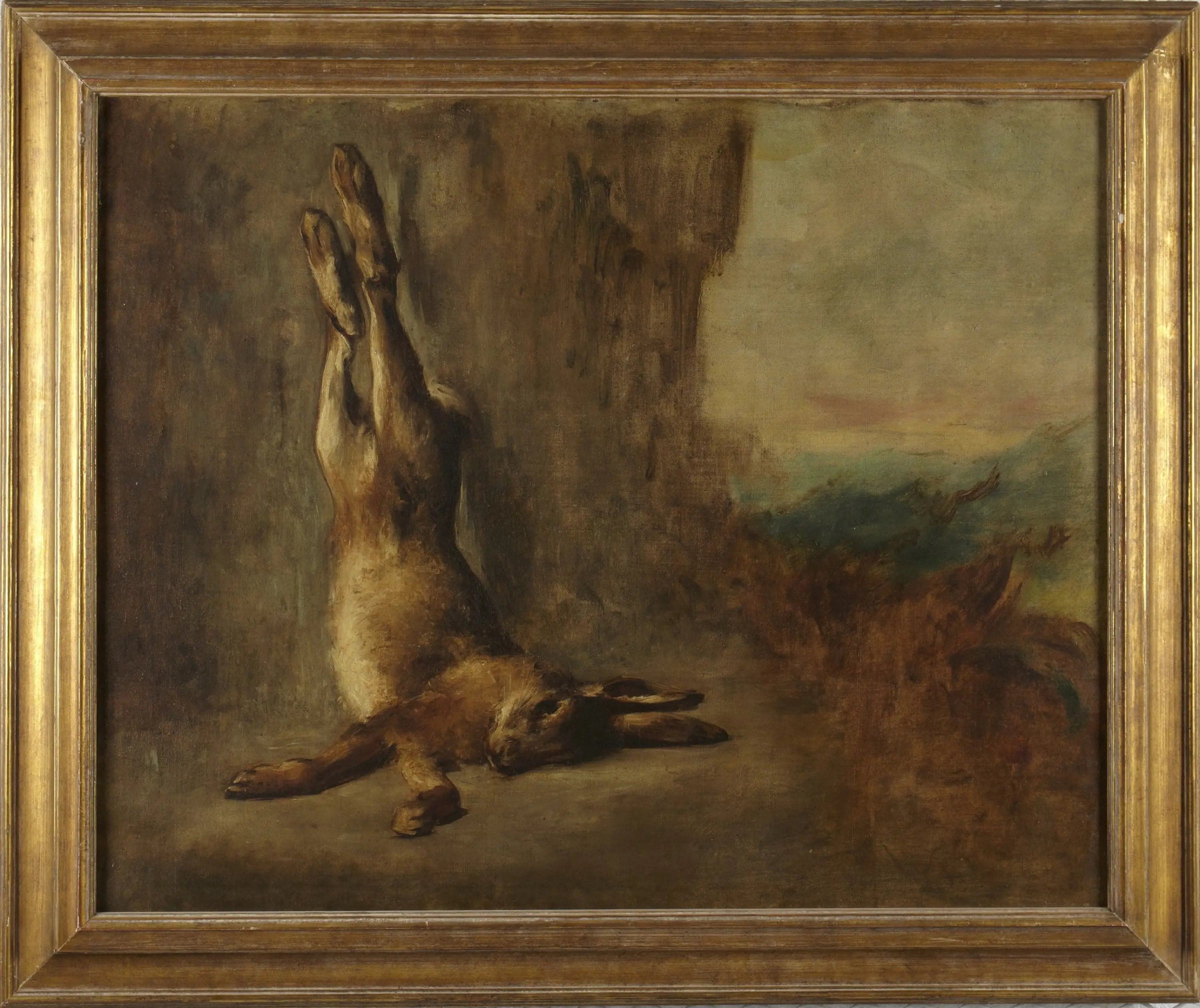
hare
- Original dimensions
- 94.3 x 75.7 cm
- Museum
- Princeton University Art Museum
Scene depicted
In the painting “Hare,” Delacroix immortalizes the fleeting grace of a hare, both a symbol of the wild nature and a testament to the ephemeral beauty of life. The composition of this painting evokes movement and speed, where each brushstroke reflects the energy and vitality of the animal, anchoring the viewer in a suspended moment.
Historical context
Artwork: Hare |BRK| Artist: Eugène Delacroix |BRK| Museum: Princeton University Art Museum |BRK| Place of Creation: France |BRK| Dimensions: 94.3 x 75.7 cm |BRK|
Place in the artist's career
“Hare” stands as a fundamental chapter in Delacroix's career, marking a phase of stylistic maturity. Echoing other notable works such as “ Liberty Leading the People ” and “ The Massacre of Chios ,” this work illustrates the evolution of his pictorial technique: a shift from dramatic narration to a deeper attachment to the representation of the living.
Anecdote
“Nature is an open book, and each glance is a page.” This phrase could summarize Delacroix's inspiration in painting Hare . Imagine him, one spring morning, wandering through the forest, listening to the birdsong and capturing the liveliness of a hare in his sketch. From this intimate encounter will arise a work that transports the viewer to the heart of nature.