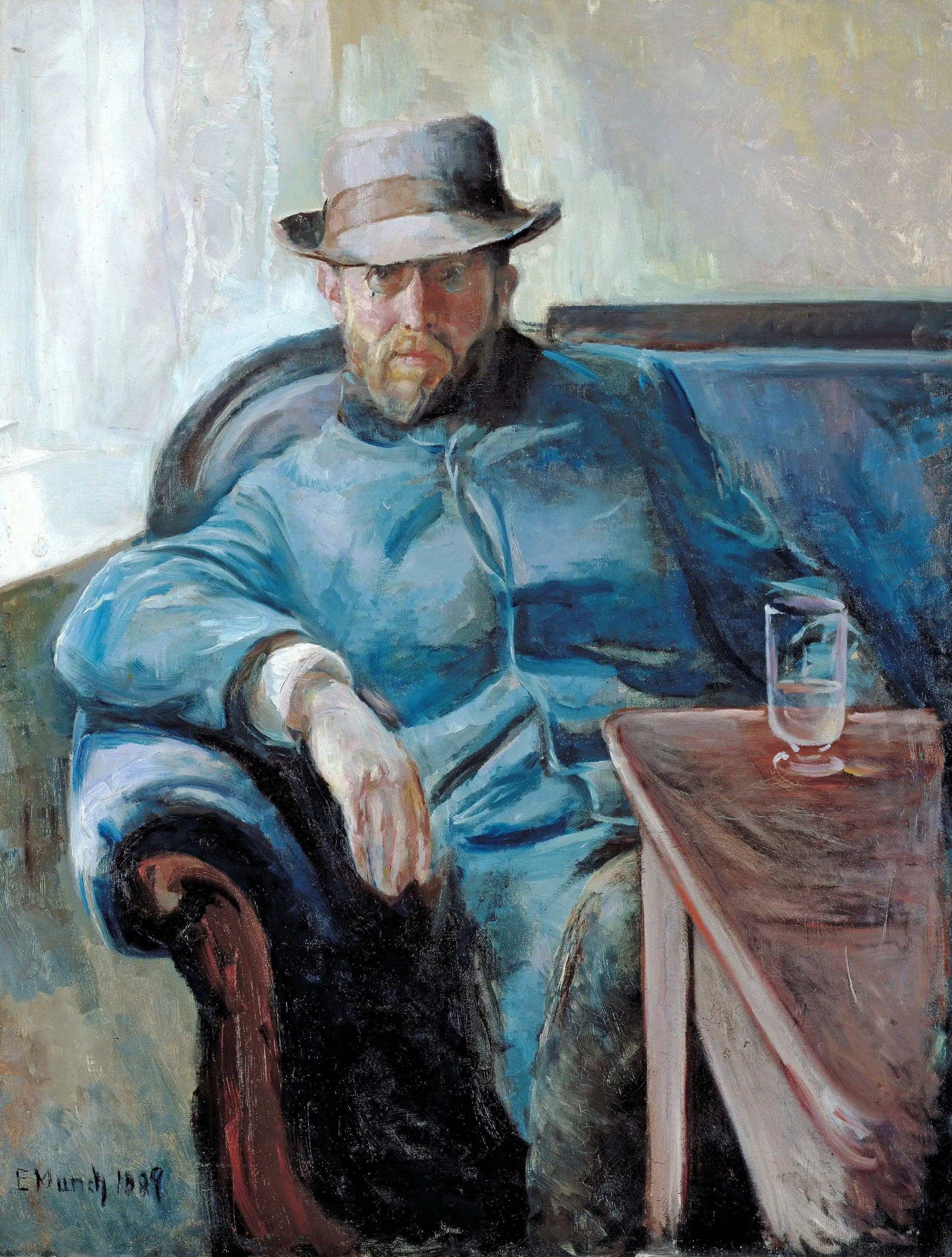
Hans Jæger
- Original dimensions
- 84 x 109 cm
- Museum
- National Gallery of Oslo
- Year
- 1889
Scene depicted
In this painting , Munch pays tribute to Hans Jæger, a controversial figure and fervent advocate for artistic freedom. The composition is striking: Jæger, deep in thought about his worldview, evokes the depth of human feelings in the face of social norms. The dark hue of the background accentuates the contrast with Jæger's illuminated face, creating a visual and emotional tension that calls for contemplation.
Historical context
Created in Oslo, Norway, in 1889, the painting "Hans Jæger" is part of the expressionist movement that began to emerge at that time. Under the watchful eye of Edvard Munch , this canvas resonates with the social and creative tensions of the late 19th century, offering a true dive into the human soul. The painting , currently exhibited at the National Gallery of Oslo, measures 84 x 109 cm. It is a captivating visual testimony of the artistic perceptions of the time.
Place in the artist's career
“Hans Jæger” is situated at a pivotal moment in Edvard Munch 's career, marking the transition from his early explorations to stylistic maturity. Alongside The Scream and The Madonna , this painting testifies to his technical evolution towards more emotionally charged compositions. Each work, a step in a vibrant creative journey, resonates with a new depth.
Anecdote
“Life must be lived as a work of art,” said Munch. Perhaps on a spring morning, while walking down a street in Oslo, he encountered Hans Jæger, an emblematic figure of the artistic scene, and felt the creative impulse that would nourish this painting . This meeting awakened in him vivid emotions, which powerfully resonate in the journey of the canvas .
Major exhibitions
1880s in Nordic painting