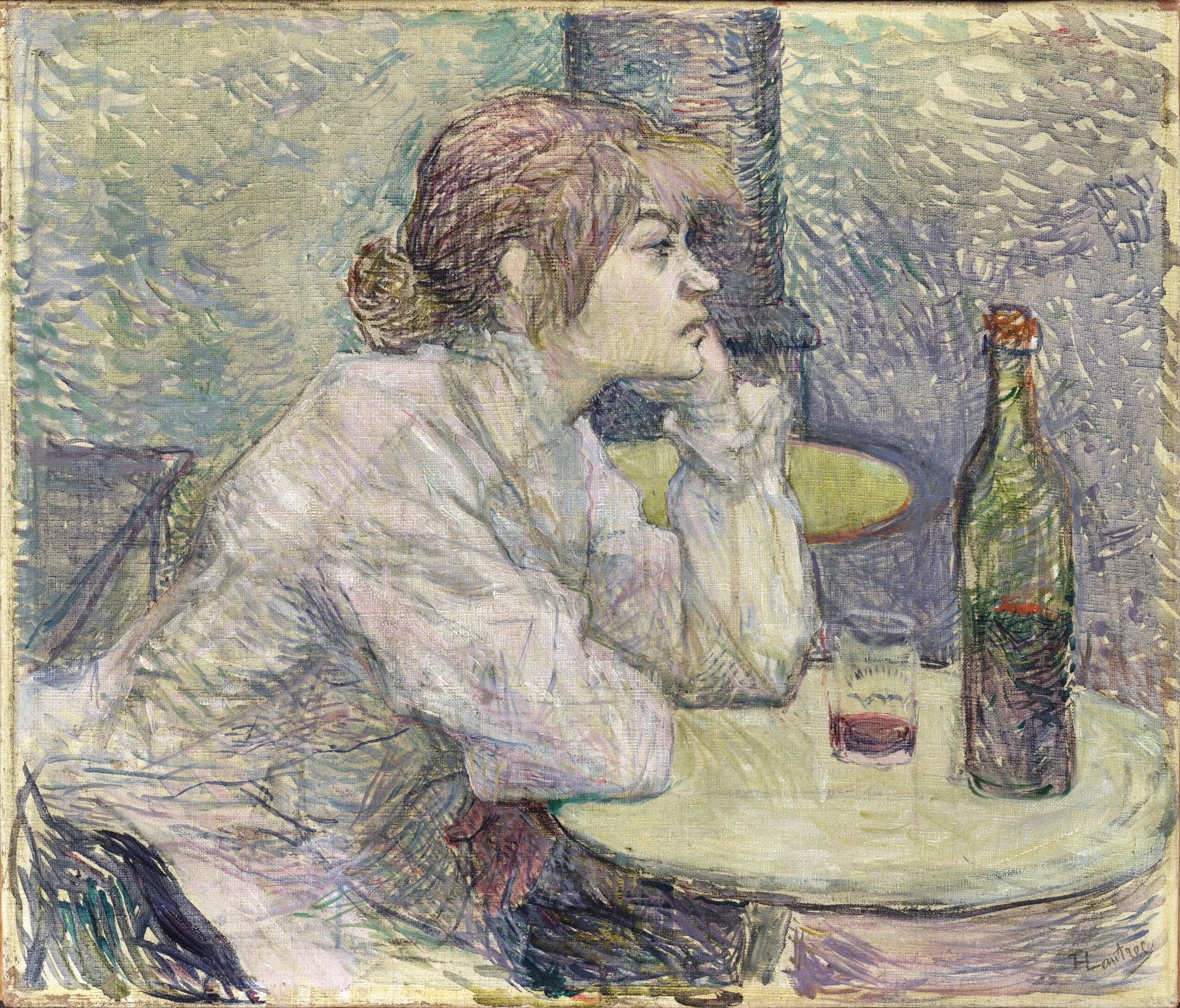
Hangover - Henri de Toulouse
- Original dimensions
- 55 x 47 cm
- Museum
- Fogg Art Museum
- Year
- 1889
Scene depicted
The painting “Hangover” offers us a scene of intimacy that is both powerful and delicate. We discover a woman, visibly worn out from a night of celebration, immersed in a luminous melancholy. With a lost gaze, she seems to reminisce about the highlights of the night that led her to this state. The composition, both bold and touching, evokes the contrasts of modern life, reminding us that behind every smile sometimes lies a deep sadness.
Historical context
Created in 1889, this painting masterfully immerses us in the Paris of the late 19th century, a vibrant time marked by the Impressionist movement. Toulouse-Lautrec, a charismatic figure of modern art, draws inspiration from the tumultuous nightlife to bring this iconic canvas to life, which is currently housed at the Fogg Art Museum . Its dimensions, 55 by 47 cm, offer a striking panorama where reality and emotion intertwine.
Place in the artist's career
“Hangover” is part of a pivotal period in Toulouse-Lautrec's career, reflecting his empathetic genius and unique vision of society. Alongside other paintings like “The Moulin Rouge” and “In Bed: The Kiss,” this canvas represents a stylistic evolution towards a more intimate and psychological exploration of subjects, marking his journey towards artistic maturity.
Anecdote
“Every evening is a painting that is created in shadow and light” could have been said by Toulouse-Lautrec, capturing the very essence of his painting . This quote resonates particularly with the genesis of his masterpiece , one drunken evening where laughter and the clinking of glasses mingled with the intoxicating fragrances of the city's perfumes.