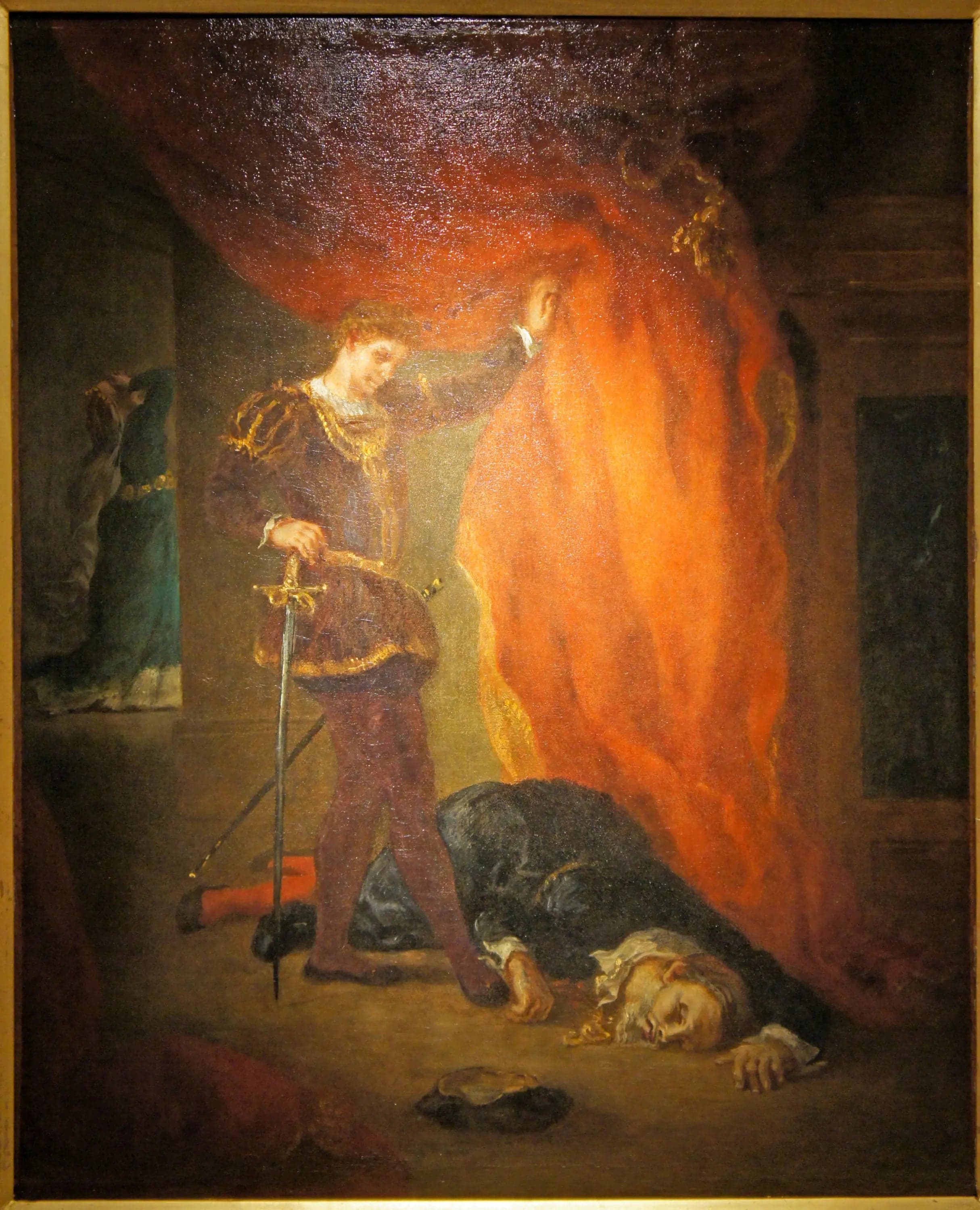
Hamlet before the body of Polonius
- Original dimensions
- 48 x 59.5 cm
- Museum
- Museum of Fine Arts in Reims
- Year
- 1855
Scene depicted
This powerful composition depicts Hamlet facing the lifeless body of Polonius, a scene charged with dramatic tension. The player of shadows and intrigues that is Hamlet, knowing the sudden rupture between ambition and suffering, embodies the internal struggle that resonates with our own battles. It is a moment of revelation, a point of gravity where tragedy meets deep reflection on the human condition.
Historical context
Created in 1855, this painting emblematic of Eugène Delacroix is part of the romantic movement, characterized by intense emotions and a deep reflection on human nature. The painting is currently housed in the Museum of Fine Arts in Reims , an ideal setting for this work that speaks to us of the torments of the soul. This masterpiece, with its dimensions of 48 x 59.5 cm, captures the tragic essence of the Shakespearean scene it represents.
Place in the artist's career
“Hamlet before the Body of Polonius” stands as an important milestone in Delacroix's career. This painting marks the peak of his romantic period, where the artist masters the expression of human emotions. Alongside works such as “ Liberty Leading the People ,” it illustrates Delacroix's ability to combine action, color, and light, highlighting his technical evolution over the years.
Anecdote
“Art is the reflection of the human soul, a canvas where its deepest emotions are painted.” In a small workshop bathed in light, on a clear morning, Delacroix could not yet imagine the echoes that his painting would find through the ages. Inspired by the intensity of Shakespeare's text, he was driven to immortalize the moment when Hamlet, torn by grief and betrayal, discovers the body of Polonius.