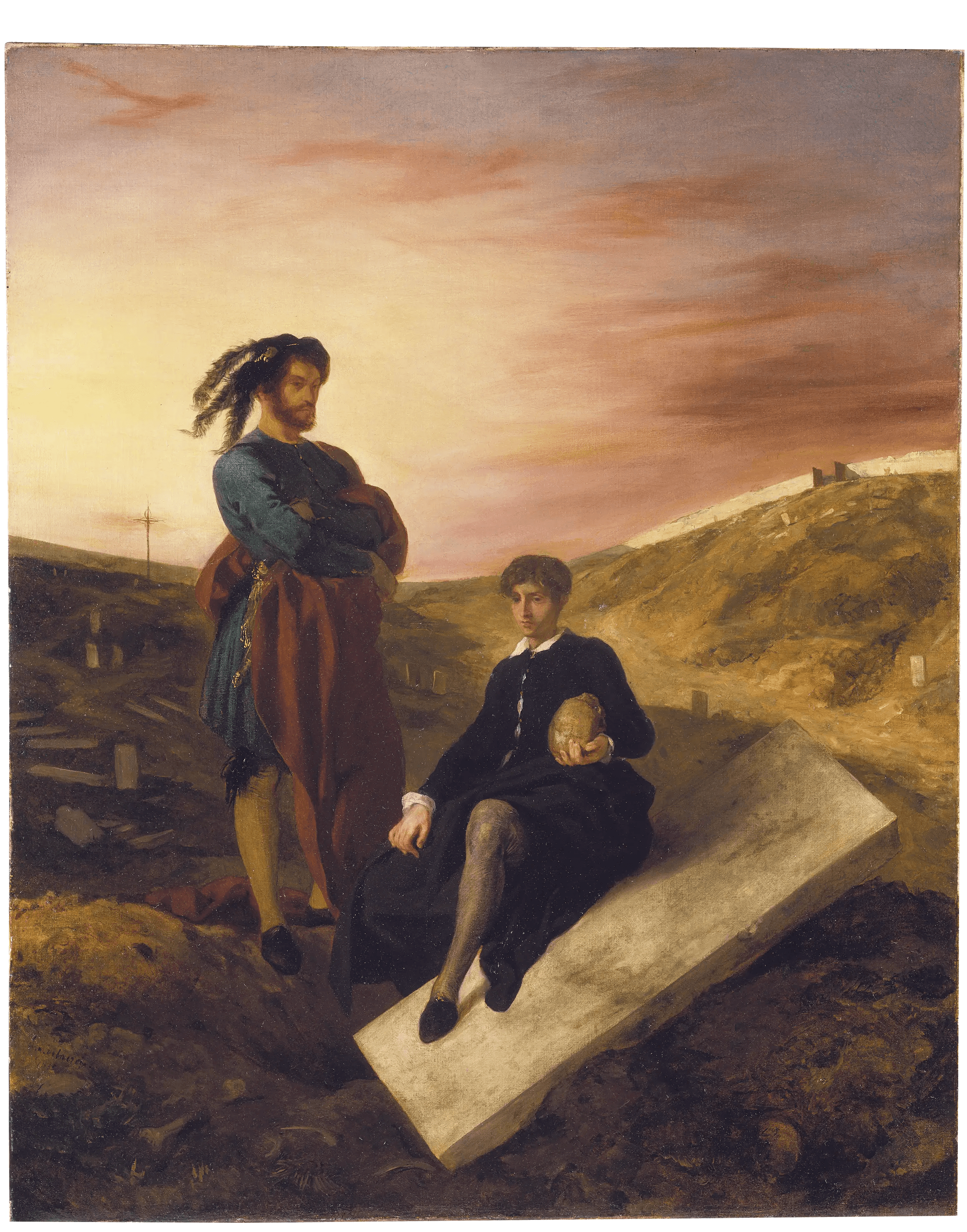
Hamlet and Horatio in the Cemetery
- Original dimensions
- 65.4 x 81.5 cm
- Museum
- room 942
- Year
- 1839
Scene depicted
The painting “Hamlet and Horatio in the Cemetery” illustrates a poignant scene from the Shakespearean tragedy. Prince Hamlet and his friend Horatio, faced with death and contemplating fate, pay tribute to the deceased. The skulls, symbols of mortality, engage in a silent dialogue between the two characters. This intense composition explores the themes of life and death, rooted in an atmosphere of melancholy and reflection.
Historical context
Painted in Paris at the heart of the 19th century, Hamlet and Horatio in the Cemetery is an emblematic work of the Romantic movement. This canvas, created by the genius of Eugène Delacroix , emerges from an era of historical and cultural upheaval. Today, this painting is displayed in room 942 of a museum where it attracts the attention of art enthusiasts. The dimensions of 65.4 x 81.5 cm highlight the majesty of this intense and emotive artwork .
Place in the artist's career
Hamlet and Horatio in the Cemetery marks a turning point in Delacroix's career, representing a period of artistic maturity. This painting brilliantly follows “ Liberty Leading the People ” and precedes “ The Massacre at Chios ,” illustrating the technical and emotional evolution of the artist. In this work , Delacroix masters light and shadow, approaching an unprecedented dramatic realism.
Anecdote
Delacroix once stated: “Art must move, it must be a flame in the darkness.” This burning passion is felt in every brushstroke of this masterpiece . Inspiration struck at the first light of a sunny morning as he wandered through a Parisian cemetery, absorbing the unique atmosphere that permeates this scene. This original emotion is palpable in the evocative power of the painting .
Major exhibitions
Salon of 1839