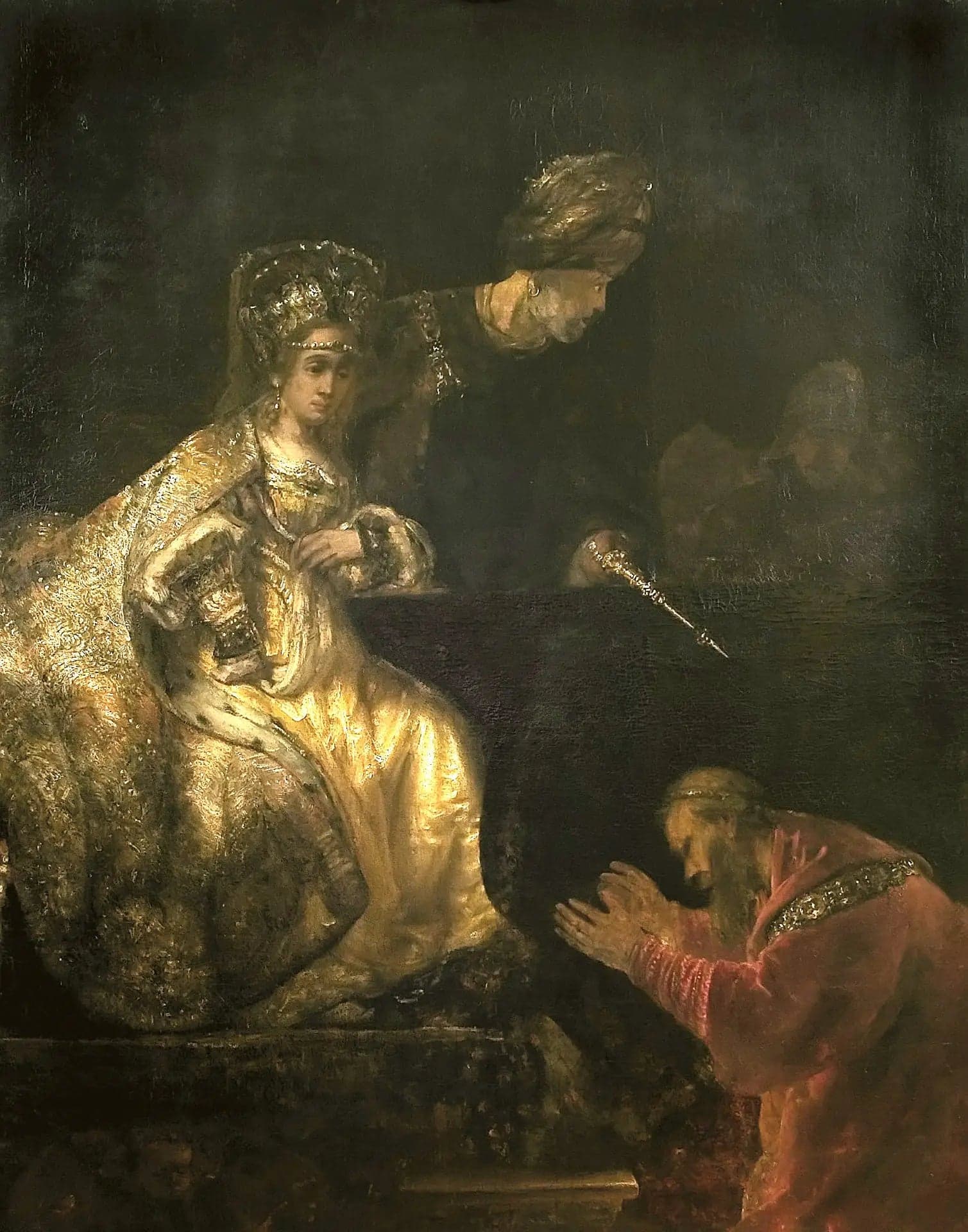
Haman Pleads with Esther to Spare His Life
- Original dimensions
- 186 x 236 cm
- Museum
- National Museum of Art of Romania
- Year
- 1660
Scene depicted
This painting illustrates a poignant moment from the biblical book of Esther, where Haman, filled with despair, implores the queen to grant him mercy. The palpable tension between Haman's anxiety and Esther's dignity creates an emotional dynamic that transcends the centuries, opening a timeless dialogue on power, compassion, and redemption.
Historical context
Created in 1660, this painting masterfully comes to life in the heart of Amsterdam, a city in the midst of artistic effervescence during the Dutch Golden Age. This iconic masterpiece belongs to the baroque movement, reflecting a time when light and human expression took on great importance. Today, this canvas is carefully preserved at the National Museum of Art of Romania, where its impressive dimensions of 186 x 236 cm make it a centerpiece.
Place in the artist's career
“Haman pleads Esther to save his life” represents the pinnacle of Rembrandt 's career, consolidating his status as the undisputed master of light and shadow. By contrasting it with creations like “The Anatomy Lesson of Dr. Tulp” and “The Night Watch,” we discern the evolution of his style, moving from more factual representations to compositions imbued with emotional intensity.
Anecdote
“Art must speak to the soul,” said Rembrandt , and this work is its essence. The inspiration for this masterpiece may have been born one April morning, when the sweet scent of spring flowers rose in the air, while an old, indissoluble tale took shape in his mind. The strength of human emotions, captured here, underscores the spiritual closeness the artist had with his subject.