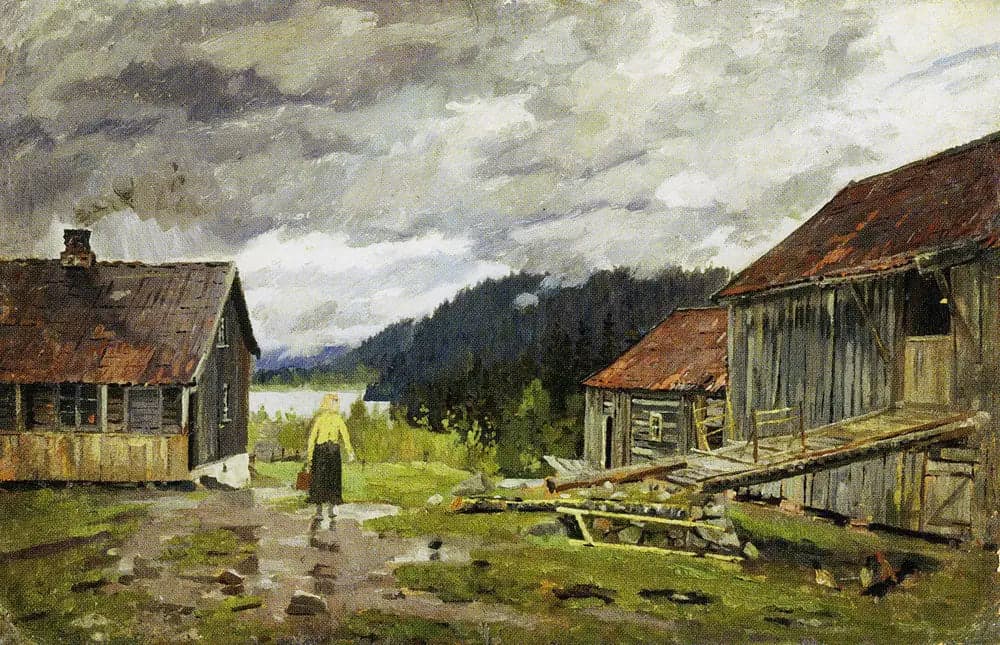
Hakloa in Maridalen
- Original dimensions
- 46 x 30.5 cm
- Museum
- Not specified
- Year
- 1881
Scene depicted
The painting, "Hakloa in Maridalen," depicts a captivating landscape, where a peaceful village blends into the backdrop of the surrounding hills. The vibrant hues of the trees and skies create a dialogue between nature and humanity. Each brushstroke evokes memories, moments of tranquility, and the echo of a world in harmony with itself. In this scene, it is easy to perceive Munch's unique touch, paying homage to the simple yet profound beauty of Norwegian rural life.
Historical context
Created in 1881, the painting "Hakloa in Maridalen" is set in a rich artistic context, at the heart of Norway. The painting takes its roots in the enchanting landscapes of Maridalen, where the soft morning light caresses the earth and vibrates the natural colors. Edvard Munch , an iconic figure of symbolism and post- impressionism , captures an atmosphere filled with emotion in this timeless canvas . Currently, its precise location in a museum remains undisclosed, but its dimensions testify to the delicacy of the composition.
Place in the artist's career
Positioning this painting among Munch's early works, it heralds the promise of a remarkable artistic future. Just like "The Scream" and "The Madonna," two other iconic paintings , "Hakloa in Maridalen" reveals a technical evolution – the integration of light and emotion. Through these pieces, Munch sculpts an atmosphere that transcends time and space.
Anecdote
"Nature has always been my refuge." These words still resonate in the minds of those who contemplate this pictorial work . Inspired by a calm morning, Munch captured the serenity of Maridalen, a place that spoke to him. The meeting of the discreet sounds of nature and the scents of wildflowers allowed him to create this masterpiece imbued with magic.