Hail Mary
- Original dimensions
- 87.6 x 113.7 cm
- Movement
- nabi
- Museum
- Metropolitan Museum of Art
- Year
- 1891
Scene depicted
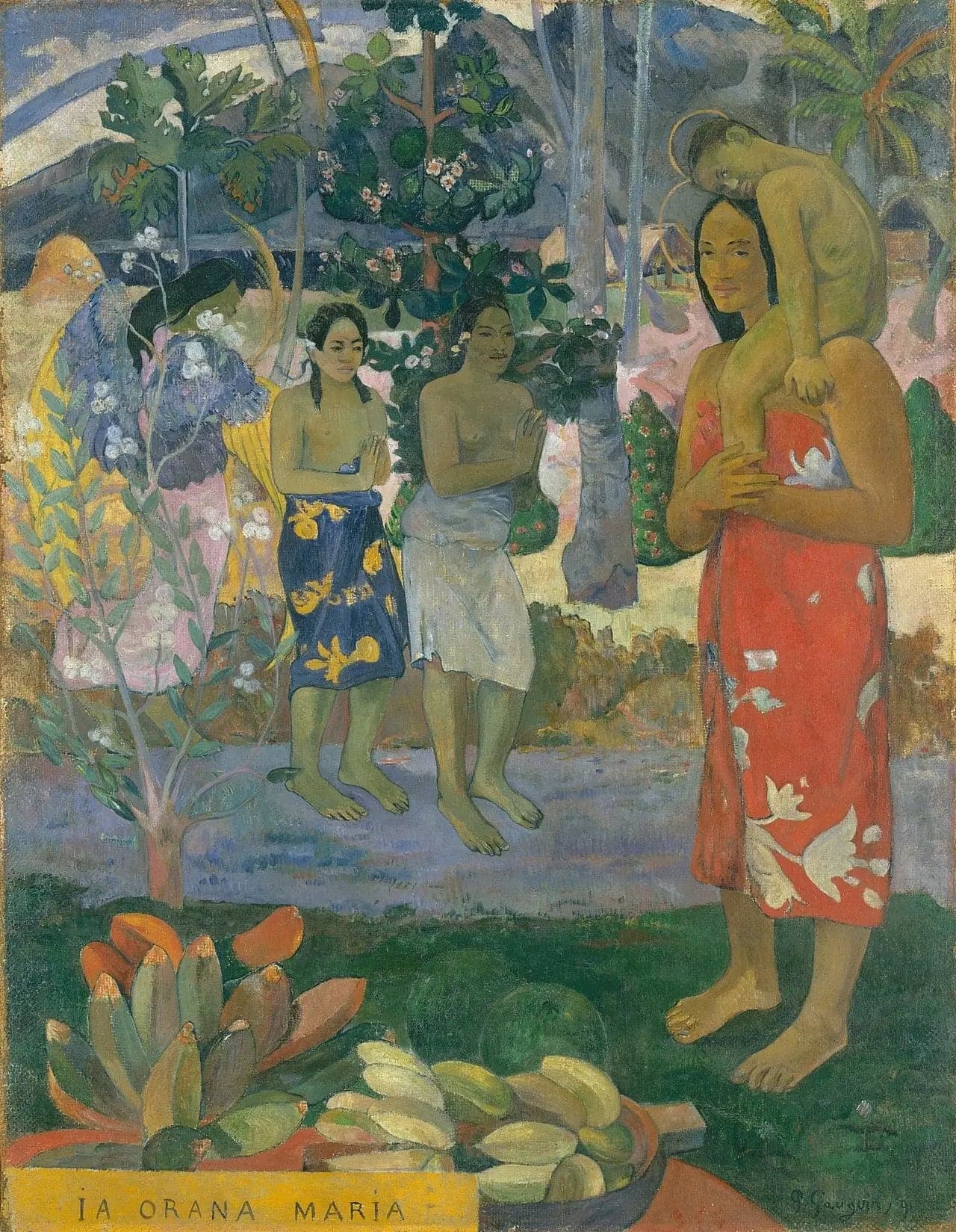
In this painting , Gauguin invites us to contemplate a scene imbued with spirituality and serenity. In the foreground, the Virgin Mary is beautifully highlighted, surrounded by lush vegetation that echoes the life bursting with vibrant colors. The work testifies to a dialogue between Christian traditions and the Tahitian marine spirit, an unprecedented fusion that transcends time and space.
Historical context
Created in 1891, this canvas is the mirror of an era rich in artistic explorations. Located in the prestigious Metropolitan Museum of Art , this painting measuring 87.6 x 113.7 cm immerses us in the nabi movement, characterized by its vibrant colors and spiritual tenderness. This artwork , the fruit of imagination and experience on the island of Tahiti, evokes a moment when art sought to transcend the visible.
Place in the artist's career
Ia Orana Maria stands as a significant work in Gauguin's career, reflecting his unique stylistic quest. A remarkable transition between his beginnings as an impressionist artist and his flourishing as a leader of the nabis, this painting resonates alongside La Vision du Sermon and Le Christ jaune , representing the deep quest for emotion that will mark his artistic journey.
Anecdote
“I wanted to capture the soul of these distant lands,” Gauguin said while reminiscing about his stay in Polynesia. One spring morning, as he walked along the Tahitian shores, he was struck by the serene beauty of the landscapes and the tranquility of the inhabitants. This painting , Ia Orana Maria , is the result of this revelation, a vibrant tribute to the sweetness of island life.