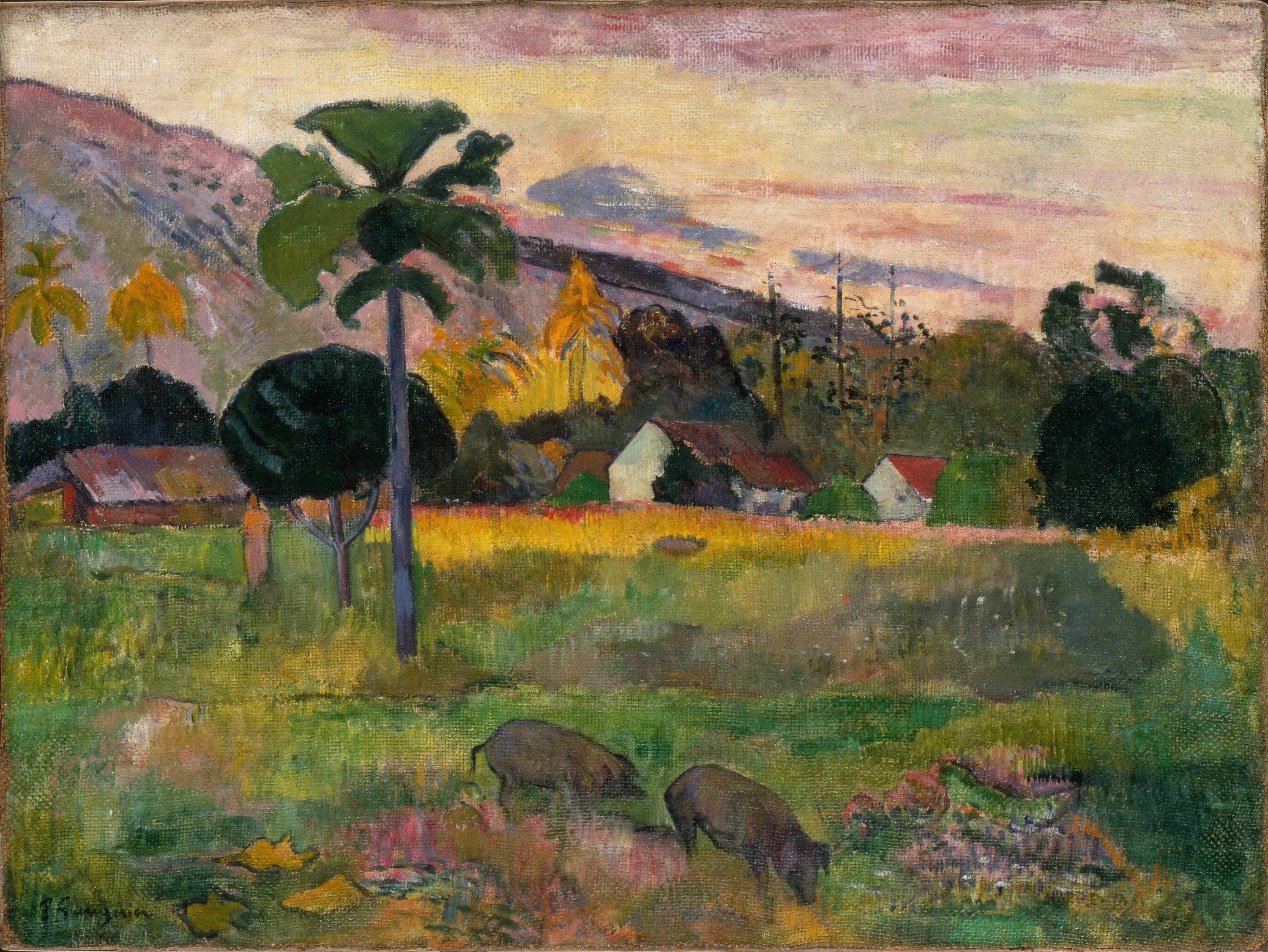
Haere Mai
- Original dimensions
- 91.4 x 72.4 cm
- Museum
- Solomon R. Guggenheim Museum
- Year
- 1891
Scene depicted
In this painting, Gauguin offers us a scene imbued with mystery where human figures blend with the lush nature. The composition evokes a warm welcome, an invitation to explore the depths of Polynesian culture. The silhouettes, dressed in traditional robes, seem to weave a harmonious connection with the environment, thus revealing the soul of the scene.
Historical context
Created in 1891, this magnificent painting is a testament to Gauguin's travels in Tahiti, immersed in a culture vibrant with colors and emotions. The painting results from the post impressionist movement, where the search for personal expression takes precedence over realistic representation. Currently, this canvas is preserved at the Solomon R. Guggenheim Museum in New York, an iconic city in the art world.
Place in the artist's career
Haere Mai represents a turning point in Gauguin's career, a stylistic peak in his quest for authentic artistic expression. During this period, he creates iconic works such as Vision after the sermon and The Yellow Christ , which mark his technical and emotional evolution.
Anecdote
“Colors speak, they are the language of emotions,” Gauguin might have said while contemplating the sunrise over the Tahitian beaches, as a gentle breeze caressed his face. In this suspended moment, he drew inspiration to create his masterpiece , Haere Mai , a work where the vibrant light and enchanting figures invite serenity.