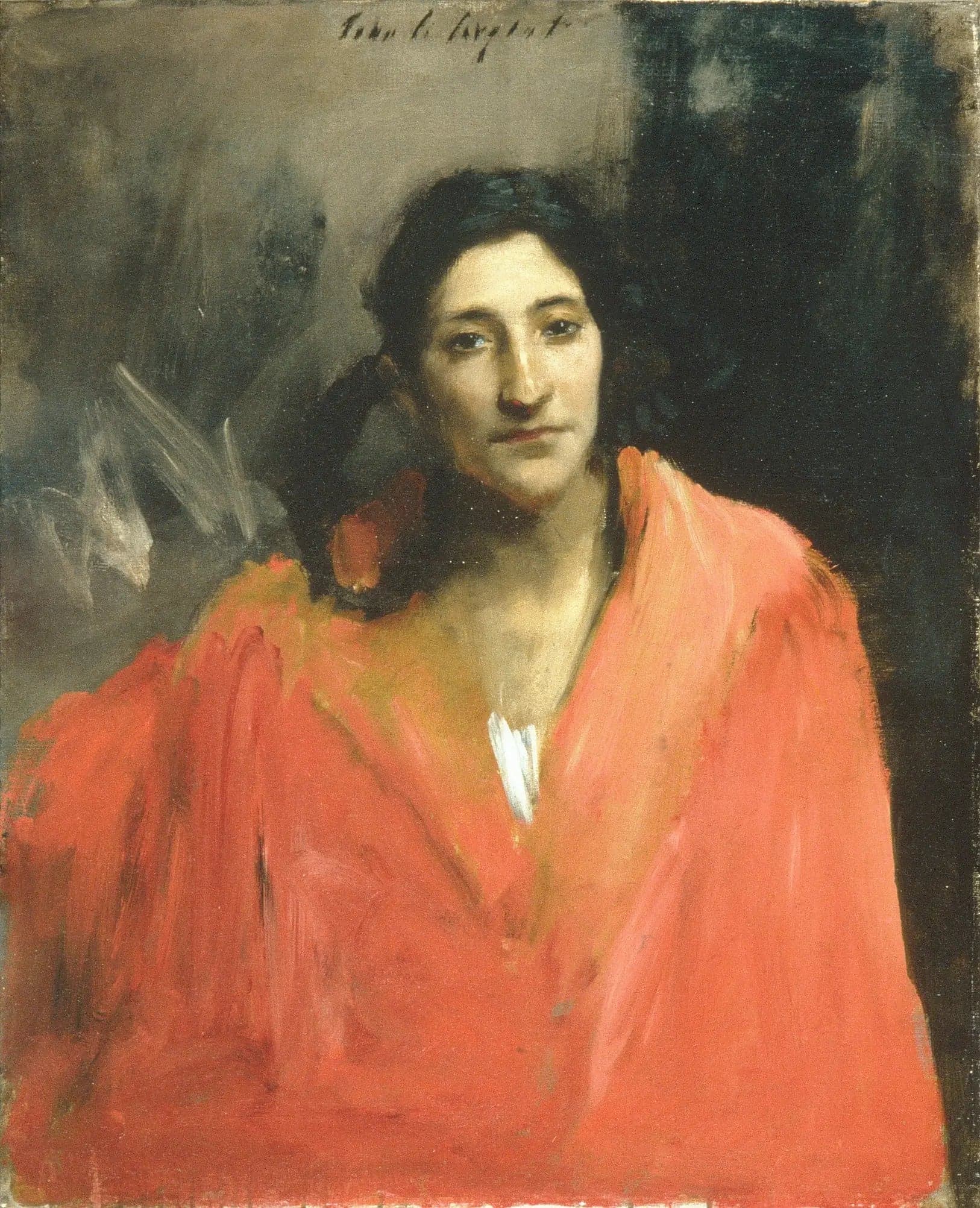
Gypsy
- Original dimensions
- 60 x 73.7 cm
- Museum
- Metropolitan Museum of Art
- Year
- 1876
Scene depicted
The painting "Gitana" reveals a gypsy woman, draped in vibrant fabrics, with a gaze that is both proud and mysterious. A portrait of striking beauty, she embodies freedom and the bohemian spirit, themes dear to Sargent. The meticulous details, both in expression and movement, infuse the work with palpable life, capturing the elegance of a rich and dynamic culture.
Historical context
Created in 1876, in the vibrant city of Paris, this work is a sublime illustration of the Impressionist movement. At that time, Paris is the nerve center of contemporary art, a place that bubbles with innovation and visual experimentation. The painting , exhibited at the Metropolitan Museum of Art in New York, captures the essence of an era while referring to the uniqueness of an artist who will mark the history of painting.
Place in the artist's career
This painting is situated at a turning point in Sargent's career, reflecting his rise in the artistic world. Like "Carnation, Lily, Lily, Rose" and "The Daughters of Edward Darley Boit," it testifies to his growing mastery of light and color, as well as his development as a recognized portraitist.
Anecdote
John Singer Sargent once confided: "Every brushstroke can make a note of beauty sing in a universe of chaos." It is in a sunny alley in Granada that he encounters the captivating gaze of a gypsy woman, inspiring the strength and beauty of his masterpiece . This fleeting moment, imbued with a delicate summer atmosphere, is captured in this canvas .