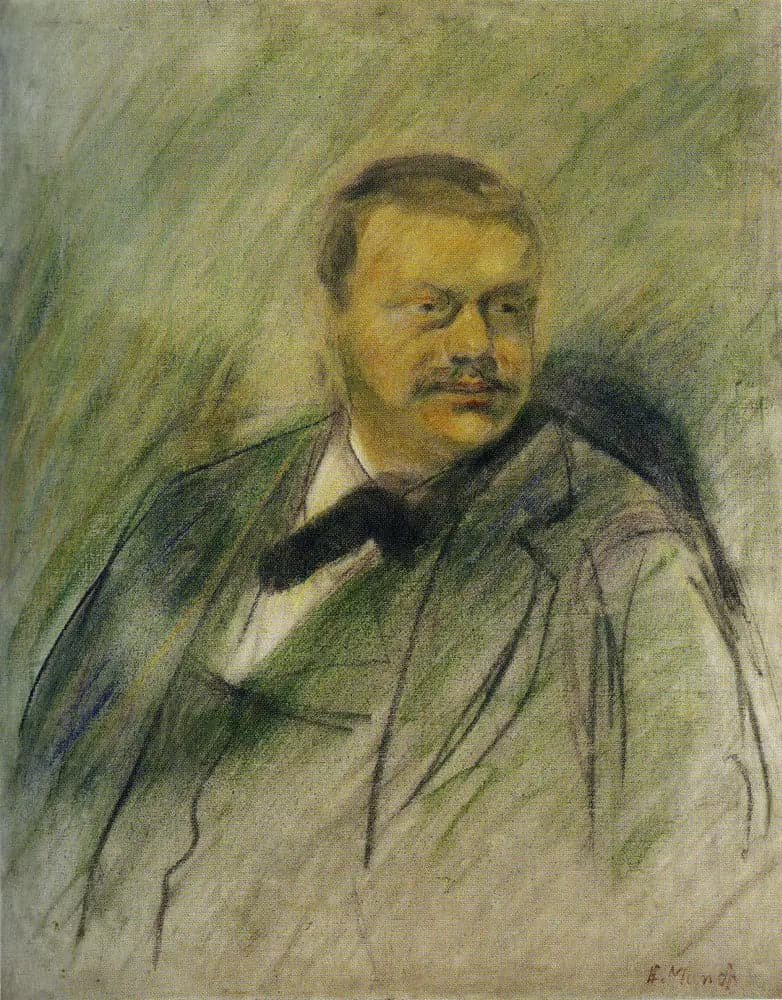
Gunnar Heiberg
- Original dimensions
- 59.5 x 73.5 cm
- Museum
- Not specified
- Year
- 1891
Scene depicted
The painting “Gunnar Heiberg” depicts an intimate and striking scene, where humanity intertwines with introspection. At the heart of this pictorial work, lines and colors come together to evoke raw emotions, unfinished dreams, and untold stories. The composition plays with perspectives, inviting the viewer to identify with the figures that populate this mysterious scene.
Historical context
Created in 1891, at the crossroads between the 19th century and the beginnings of modernism, Gunnar Heiberg is situated in the flourishing context of Norway, where Edvard Munch , an iconic figure of symbolism , draws unique inspiration. The painting emerges during a period of profound emotional and social upheaval, revealing the tensions and human passions.
Place in the artist's career
Gunnar Heiberg stands as a significant milestone in Munch's career, marking a transition to a period of creative maturity. When compared to works such as The Scream and The Madonna , one observes a technical evolution where emotional depth and visual complexity are enhanced, reflecting the intensity of his artistic universe.
Anecdote
“A painting should be like a silent cry of the heart,” Munch might have said, at the dawn of a spring morning, contemplating the city around him. Each brushstroke in Gunnar Heiberg evokes the subtle dance between anguish and hope, capturing the fleeting essence of a significant encounter, a glance exchanged that shakes certainties.
Major exhibitions
Edvard Munch : portraits