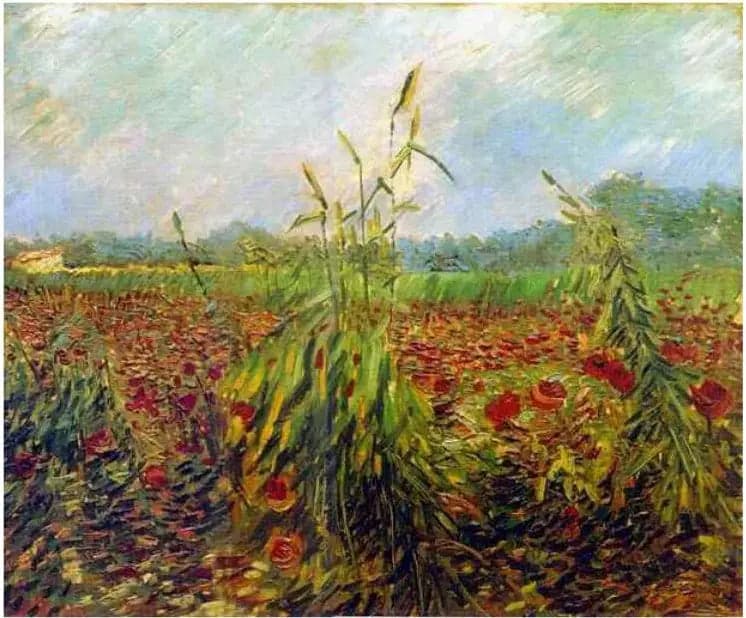
Green Wheat Ears
Scene depicted
In this canvas , Van Gogh depicts lush green wheat ears, swaying in a gentle breeze. The shades of green, harmoniously arranged, capture the ephemeral beauty of nature. The artist, awed by the power of the fields, retranscribes the vibrant energy emanating from each blade, creating a dialogue between man and his environment.
Historical context
Created in 1888 in the charming city of Arles , this painting is emblematic of the post-impressionist movement, a trend that emancipates itself from academic conventions. The canvas is currently housed at the Israel Museum and measures 65 x 54 cm. It reflects a time when Vincent van Gogh sought to translate the intensity of human emotions through nature.
Place in the artist's career
Green Wheat Ears is at the heart of the Arles period, where Van Gogh reaches a stylistic peak. Unlike his earlier works such as The Starry Night or The Sunflowers , this masterpiece reveals an evolution towards inner peace, a synthesis of emotions through nature, unveiling the creative genius of the artist.
Anecdote
“Nature is an eternal painting that calls us to contemplation,” said Van Gogh, absorbing the vibrant colors of his surroundings. It was on a sunny morning, surrounded by the golden fields of wheat ears, that the artist drew inspiration for this pictorial work . The softness of the light and the warm midday air permeate every brushstroke, making this composition unforgettable.