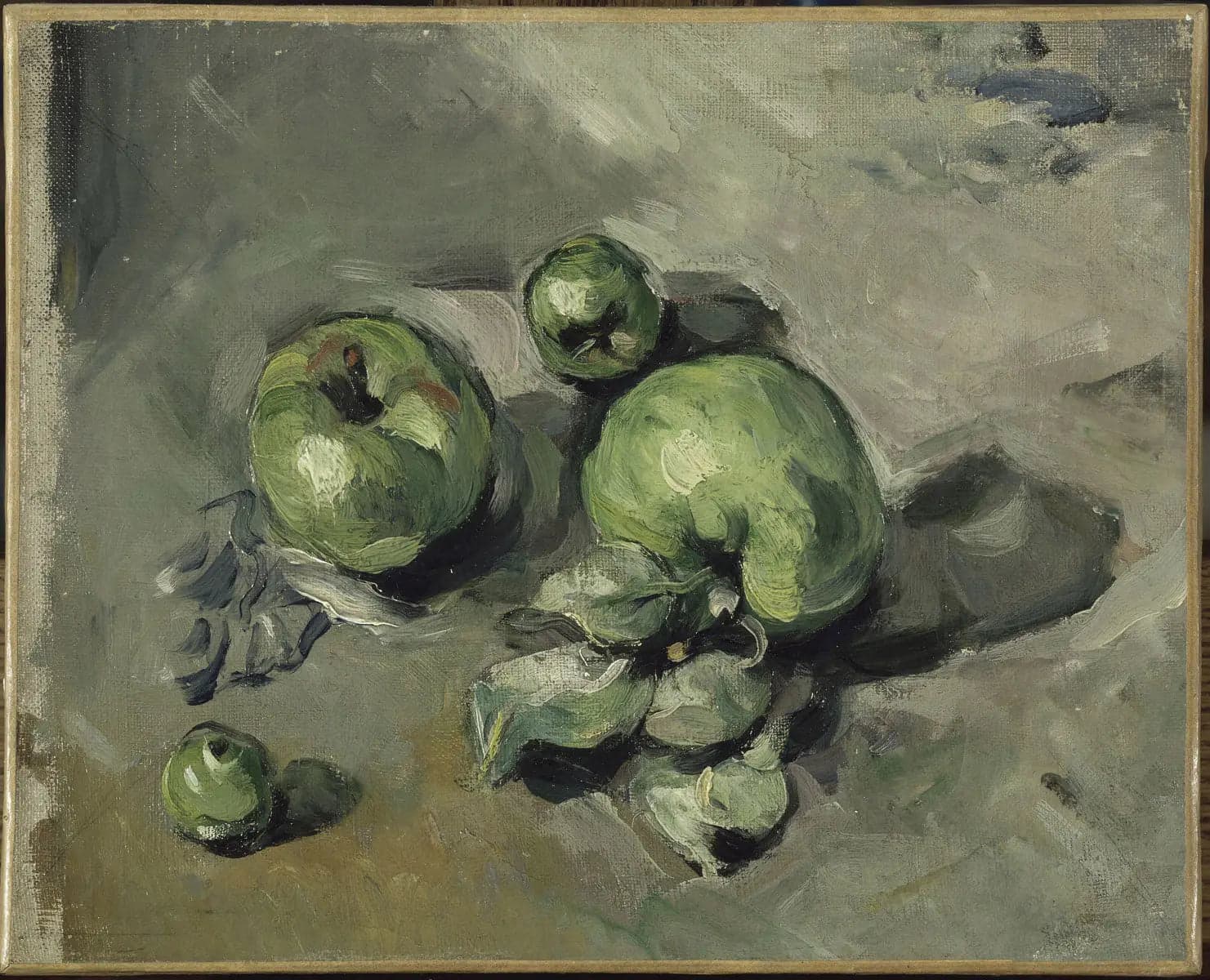
Green Apples
- Original dimensions
- 32 x 26 cm
- Museum
- Orsay Museum
- Year
- 1873
Scene depicted
In this painting, Cézanne reinvents the classic still life, carefully placing green apples on a table, illuminated by delicate light. Each fruit becomes a bearer of a narrative, a symbol of simplicity to untainted beauty. The harmony of forms and the balance of colors evoke a palpable serenity, a perfect alchemy between nature and art.
Historical context
Created in 1873, this painting is set in the vibrant backdrop of Provence, where the sun caresses the orchards and colors flourish. Paul Cézanne , an iconic figure of Post- Impressionism , brings this canvas to life at the Orsay Museum , a Parisian sanctuary of art. The painting, measuring 32 x 26 cm, tells a story of simplicity and harmony through everyday elements.
Place in the artist's career
This painting stands as a pivotal moment in Cézanne's career, heralding his distinctive style. Often compared to his famous composition “The Large Bathers” and his painting “Still Life with Apples,” Green Apples testifies to his growing mastery and bold exploration of color and form.
Anecdote
“Painting is a means of capturing the soul of the world,” Cézanne said in his reflections. Inspired by the surrounding mountains and the golden light of spring mornings, he often painted his still lifes in a quiet alley of his hometown, dreaming of transcribing this magic onto canvas. This quest for emotional escape deeply permeates Green Apples.