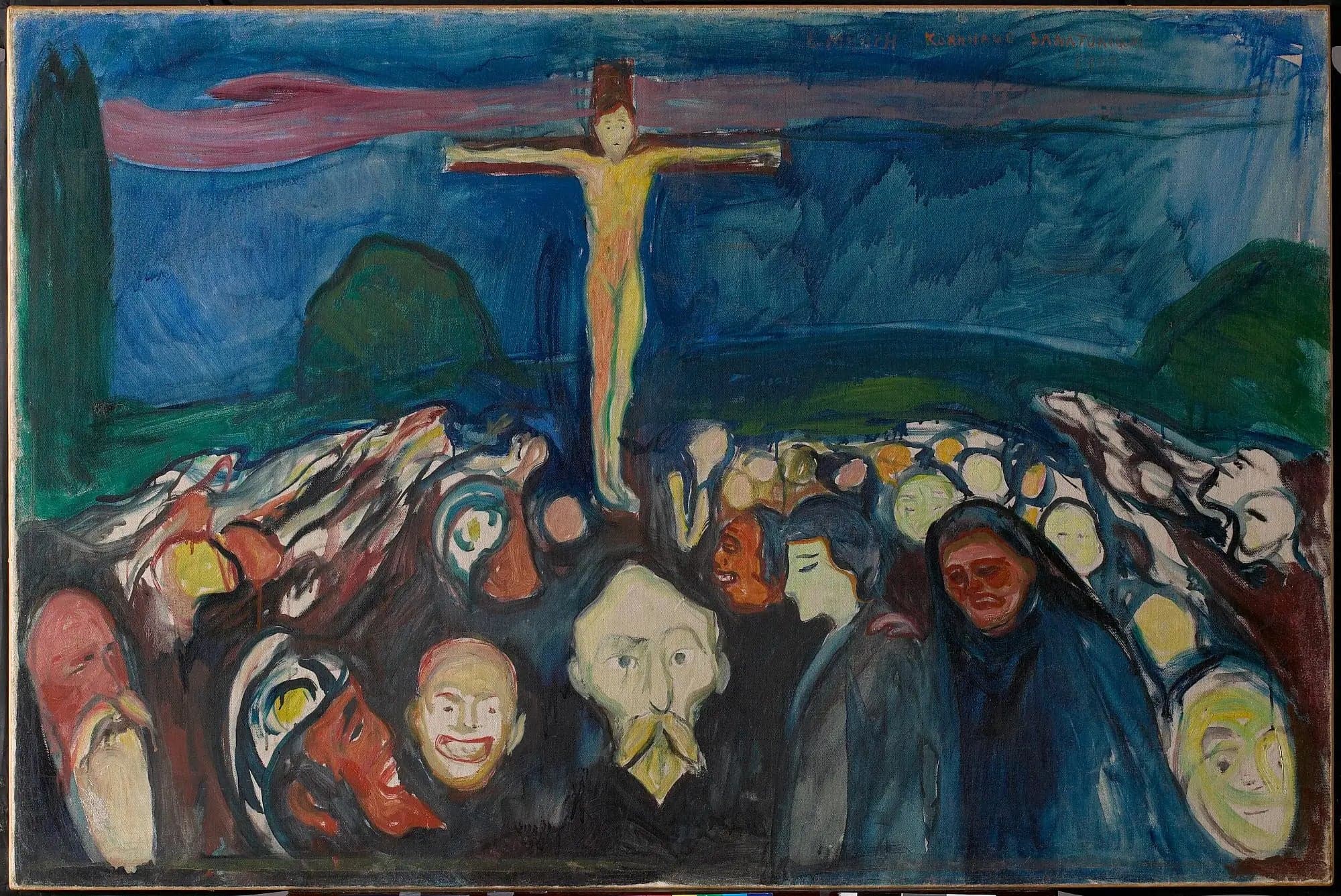
Golgotha
- Original dimensions
- 120 x 80 cm
- Museum
- Munch Museum
- Year
- 1900
Scene depicted
“Golgotha,” an iconic painting by Edvard Munch , immerses us in a scene imbued with mystery and gravity. Against this dramatic background, the imposing silhouette of a cross stands out, surrounded by spectral figures, symbolizing human suffering. The palpable atmosphere evokes the struggles of the soul in the face of fatality, like a timeless echo of the human condition. The composition of this painting questions the viewer about the universal themes of pain and redemption.
Historical context
Created in Oslo, the heart of Norway, in 1900, the painting "Golgotha" is situated at the peak of the expressionist movement. At that time, Edvard Munch , tormented by his own personal experiences, managed to capture the anguish and beauty of human existence. This canvas is now preserved in the Munch Museum, thus offering privileged access to the soul of its creator.
Place in the artist's career
“Golgotha” positions itself as one of the masterpieces of Edvard Munch's mature period, materializing a perfect synthesis between technique and emotion. Compared to “The Scream” and “The Madonna,” this composition reveals a remarkable stylistic evolution, where the search for emotional depth asserts itself more than ever, elevating the intensity of his artistic language.
Anecdote
“When a man is confronted with suffering, he is often called to become an artist. Every brushstroke is a cry of the soul.” This phrase could represent the depth of inspiration behind “Golgotha.” Inspired by a grim panorama on a misty morning, Munch captured a vision of pain and redemption, making this pictorial work touching and powerful.