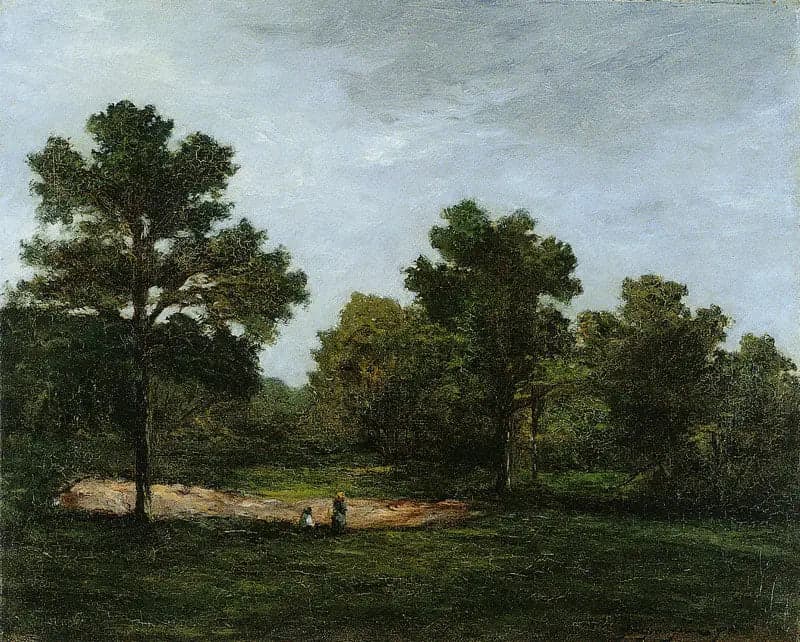
Glade I
- Original dimensions
- 46 x 38 cm
- Museum
- Not specified
- Year
- 1873
Scene depicted
"Clearing I" depicts a serene scene, where nature seems to converse with the viewer. Majestic trees stand tall, while golden light filters through the foliage, creating a subtle play of shadows and light. The elements of nature blend harmoniously, inviting deep contemplation. The overall composition evokes a peaceful atmosphere, a promise of escape and soothing.
Historical context
Created in 1873, at the heart of the artistic effervescence of the late 19th century, the painting "Clearing I" is rooted in the post-impressionist movement. Paul Gauguin , then based in Paris, draws inspiration from the surrounding nature, capturing the light and vibrant colors of the French countryside. This canvas , which combines form and color, represents a bold attempt to explore a new way of seeing the world. Currently, its exact location remains uncertain, but its dimensions testify to its visual impact.
Place in the artist's career
This canvas finds its place at the beginning of Gauguin's career, marking a decisive turning point towards a more individualistic and expressive style. In parallel with his other iconic works such as "Vision after the Sermon" and "The Night," "Clearing I" illustrates the artist's evolution towards a fresher and more vibrant pictorial language, marked by a new sensitivity.
Anecdote
“Each canvas is an open window to another reality,” said Paul Gauguin . Inspired by calm mornings where the gentle breeze brushed against his skin, he conceived "Clearing I" at the crossroads between the tranquility of nature and artistic expression. This moment of peace, imbued with soft light and shimmering colors, resonates in every brushstroke of this canvas .