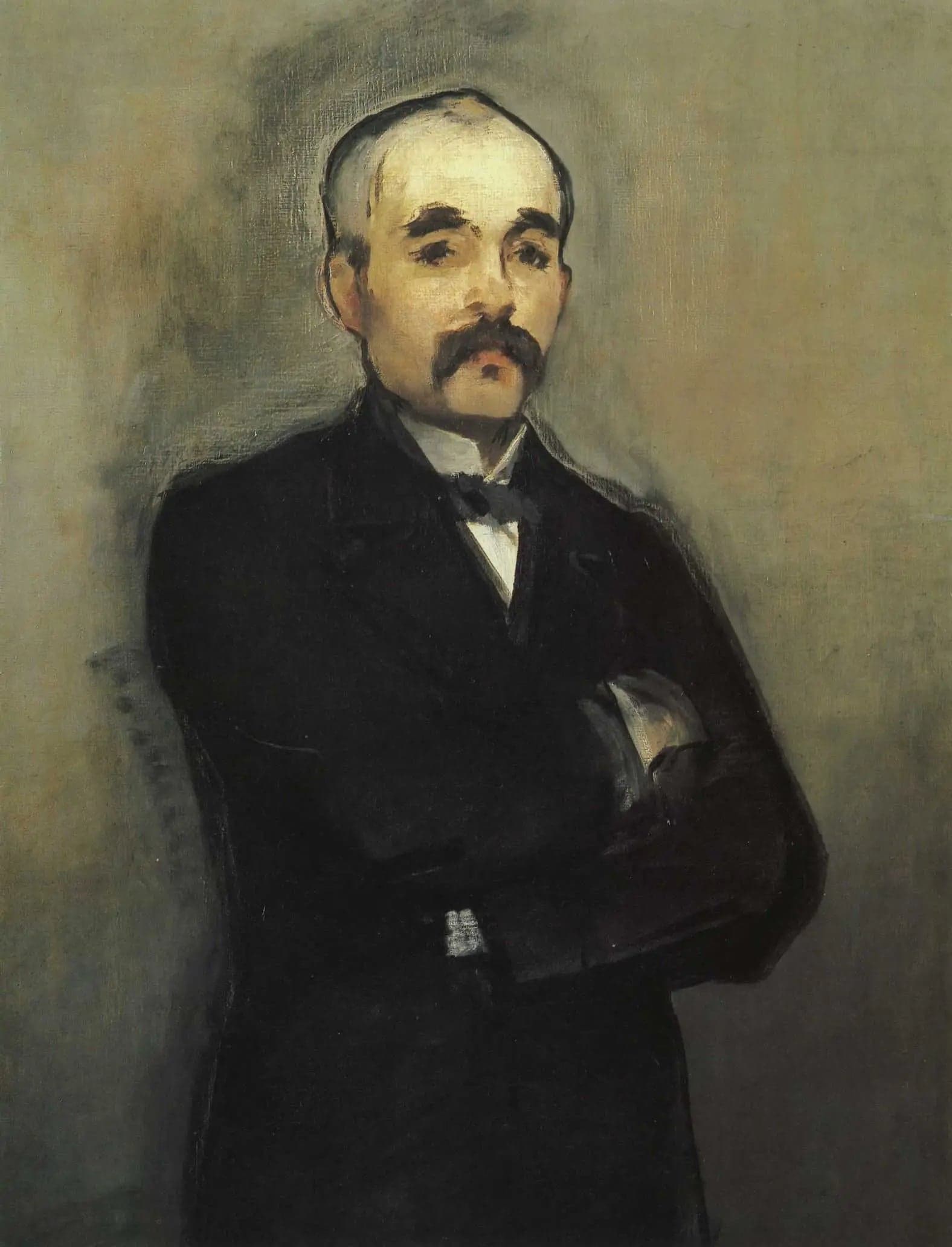
Georges Clemenceau
- Original dimensions
- 74 x 94.5 cm
- Museum
- Louvre Museum
- Year
- 1879
Scene depicted
The painting immerses us in the heart of a precious moment, capturing the personality of Georges Clemenceau in all its splendor. Manet, with unique mastery, immortalizes the penetrating gaze of this influential figure, while creating an atmosphere that evokes politics and the future of France. Every detail, every shadow, adds to the captivating narrative of this painting.
Historical context
Created in Paris, a cradle of art and culture, in 1879, the painting “Georges Clemenceau” embodies the effervescence of the Impressionist period. At that time, the city is a laboratory of ideas, where bold artists seek to capture light and life in their paintings . This masterpiece, currently on display at the Louvre Museum , attracts attention not only for its powerful subject but also for its innovative technique, rooted in the artistic movement that revolutionized painting of its time.
Place in the artist's career
“Georges Clemenceau” represents an important milestone in the career of Édouard Manet , positioning the artist between his early Impressionist explorations and his later, bolder works. This painting can be paralleled with “Luncheon on the Grass” and “Olympia,” revealing his technical and emotional evolution over time, with an increasing mastery of social themes and characters.
Anecdote
“Life is a painting that I draw with my emotions,” said Édouard Manet , thus evoking the intensity of his creative process. Imagine him, on a bright morning, crouched at the perfect angle of his golden light, while a familiar face inspires him to create this iconic pictorial work. This exploration of the soul of Georges Clemenceau intertwines with his inspirations, revealing the full depth of his art.