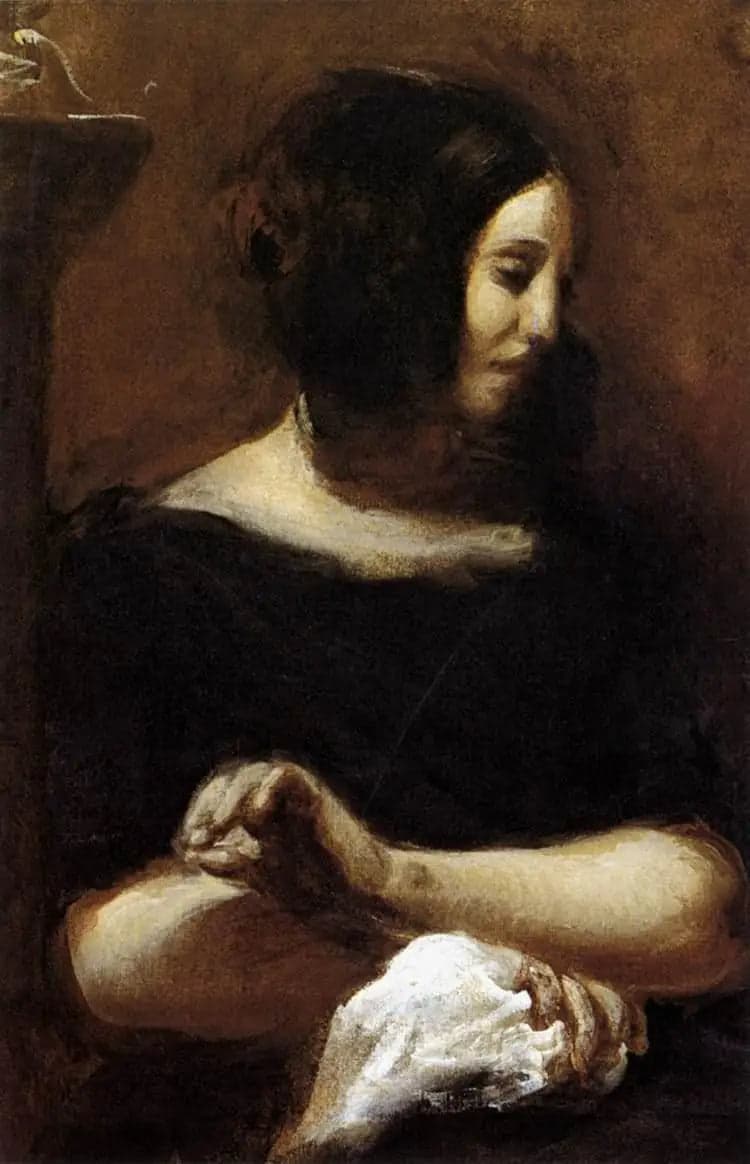
George Sand
- Original dimensions
- 56.5 x 78 cm
- Museum
- Ordrupgaard
- Year
- 1838
Scene depicted
In this painting , Delacroix depicts an evocative scene, where the spirit of George Sand is captured in all its splendor. She is surrounded by books and natural elements that symbolize her passion for literature and her love for nature, weaving together a narrative that is both personal and universal.
Historical context
Created in 1838, this exceptional painting is set in the vibrant heart of Paris, an iconic city of the romantic movement. The painting is currently housed in the Ordrupgaard museum, where it radiates timeless beauty. This pictorial work, a product of an era where emotion and nature dominate, captures the very essence of romanticism and the fervor of its creation.
Place in the artist's career
This work represents a milestone in the career of Eugène Delacroix . It testifies to his artistic maturity, at the crossroads between his promising beginnings in romanticism and his ultimate masterpieces such as “ Liberty Leading the People ” and “ The Massacres of Scio ”, showing both stylistic and emotional evolution.
Anecdote
“Art must be the most sublime expression of the soul!” would have said Eugène Delacroix one spring morning, sitting at his table, brushes in hand. It was at this precise moment that the composition of George Sand came to life, inspired by the reading of the poignant writings of the author, leaving an indelible mark on this work.