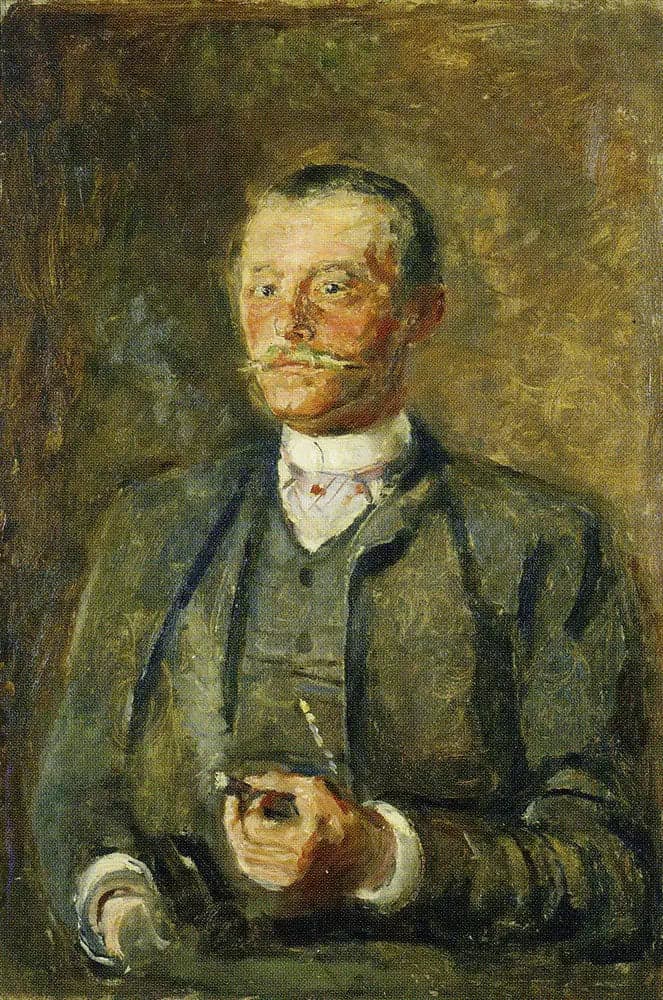
Georg Stang
- Original dimensions
- 59 x 90 cm
- Museum
- Not specified
- Year
- 1889
Scene depicted
The painting “Georg Stang” is distinguished by its emotional intensity, relating the subject, a human figure, to its environment. This enchanting painting depicts a scene where the warmth of light and shadow dance together, narrated by the anxious gaze of its protagonist, thus engaging in the observation of the world around them.
Historical context
Created in 1889, this canvas embodies a crucial moment of the expressionist movement that was emerging in Norway. It is in Oslo, amidst artistic and social upheavals, that Munch shaped a significant work, a testament to his time. Although the hosting museum is not specified, the painting has managed to transcend time, leaving an indelible mark.
Place in the artist's career
Situated at a turning point in his career, the painting “Georg Stang” is a prelude to the upcoming success of Edvard Munch . This prototype of expressionism resonates with other works, such as “The Scream” and “Madonna,” which mark evolutions in his treatment of human emotions, revealing an unparalleled sensitivity each time.
Anecdote
“I explore the human soul through my paintings ,” Munch said, referring to his artistic quest. It was on a spring morning, cradled by the whispers of the streets of Oslo, that the inspiration for this masterpiece came to him. The urgency to capture the melancholy of beings, where light brushes against shadows, permeates every brushstroke of the painting .